

A Partnership Reaching New Orbits
The space relationship between India and the United States has moved from intermittent handshakes to a full-fledged strategic embrace. While cooperation dates back decades, recent initiatives have injected unprecedented momentum. The U.S.-India Initiative
on Critical and Emerging Technology (iCET) and India's signing of the Artemis Accords are cornerstones of this new era. These frameworks go beyond single missions, creating pathways for deeper integration in areas like human spaceflight, semiconductor development for space systems, and joint exploration. This strategic alignment was underscored by high-level meetings at ISRO headquarters in Bengaluru in August 2026, advancing civil and commercial cooperation. The partnership is now a core component of both nations' foreign policy, designed to build a tech ecosystem that favors democratic values.
The Commercial Frontier
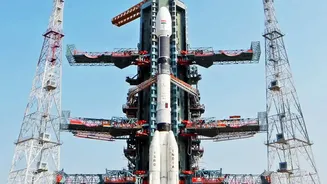
One of the most significant benefits for India lies in the burgeoning commercial space economy. The US partnership acts as an accelerant for India's private space sector, which has grown from a single startup in 2014 to over 200 today. Collaboration provides Indian companies with access to American capital, technology, and a vast global market. The Indian government's move to liberalize foreign direct investment (FDI) in the space sector complements this, making it easier for US firms to invest and form joint ventures. This synergy aims to establish India as a global hub for low-cost satellite and rocket manufacturing, allowing US companies to diversify their supply chains while Indian firms scale up their operations. The goal is ambitious: to dramatically expand bilateral geospatial trade and integrate Indian startups into the global space industry.
Advancing India's Human Spaceflight Dream
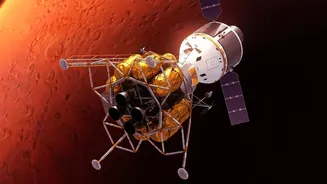
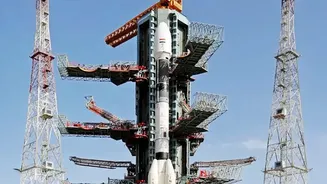
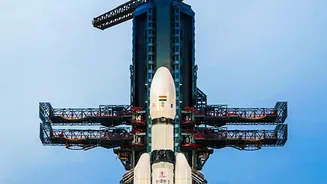
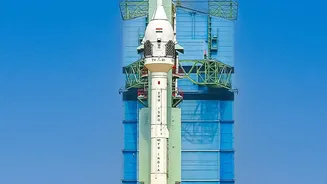
For years, sending an Indian into space has been a national ambition. The US partnership is turning this dream into a tangible reality. A landmark agreement will see ISRO astronauts receive advanced training at NASA's Johnson Space Center. This collaboration is set to culminate in a joint mission to the International Space Station (ISS), which will mark a historic milestone for both countries. The knowledge and experience gained from these missions are invaluable for India's own Gaganyaan program, providing critical insights into crew safety, life support systems, and long-duration mission planning. More recently, NASA invited ISRO to join its program to build a base on the Moon, a direct result of the trust built through the Artemis Accords.
A Strategic Counterweight in the Cosmos
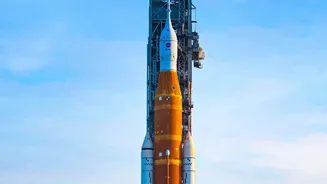
The geopolitical context of the India-US space partnership cannot be overlooked. As space becomes an arena for strategic competition, this alliance serves as a counterbalance to China's growing influence. India's decision to join the US-led Artemis Accords, a framework that notably excludes China and Russia, signals a clear strategic choice. This collaboration enhances both nations' abilities in satellite surveillance and establishes shared norms for responsible behavior in space. For India, which faces a complex regional security environment, this partnership is a form of strategic diversification. It provides access to advanced technology and intelligence-sharing capabilities that bolster its national security posture, creating a balance of power in the Asian space domain.
Beyond Launch: Access to Critical Technology
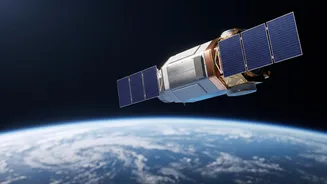
While ISRO is renowned for its cost-effective launch capabilities, the partnership with the US provides access to a new tier of cutting-edge technology. Joint missions like the NASA-ISRO Synthetic Aperture Radar (NISAR), designed to map the Earth's surface with unprecedented detail, exemplify this technological synergy. Collaboration under frameworks like iCET and its successor, TRUST (Transforming the Relationship Utilizing Strategic Technology), facilitates the transfer of knowledge in critical areas. By aligning with the interoperability standards of the Artemis Accords, India ensures its space infrastructure is compatible with global systems, avoiding technological isolation and paving the way for more seamless participation in future international missions.