




What is the Crew Escape System?
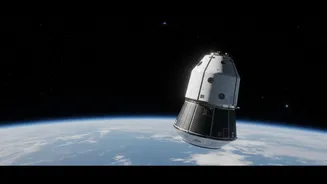
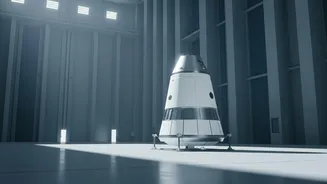
The Crew Escape System, or CES, is a critical safety feature designed to pull the Gaganyaan crew module—the capsule carrying the astronauts—away from its rocket in the event of a catastrophic failure on the launchpad or during ascent. Think of it as a highly
advanced ejection seat, but instead of ejecting a single pilot, it jettisons the entire multi-tonne crew capsule to a safe distance. The system's sole purpose is to ensure astronaut survival, even if the mission itself must be aborted. It is positioned at the very top of the launch vehicle and is engineered for one thing: explosive speed.
Anatomy of a High-Speed Escape
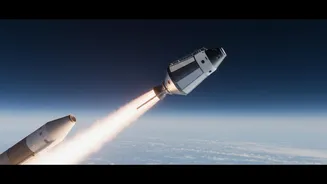
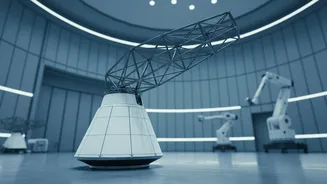
The Gaganyaan CES is a 'puller' type system, meaning it sits above the crew module and literally pulls it away. This is achieved through a cluster of powerful, quick-acting solid rocket motors. These motors are designed with high burn-rate propellants that ignite and deliver immense thrust almost instantaneously. Key components include Low Altitude Escape Motors (LEM) and High Altitude Escape Motors (HEM), designed for different abort scenarios, as well as pitch motors that steer the capsule away from the failing launch vehicle. An Integrated Vehicle Health Management system, a complex network of sensors, serves as the brain, detecting any anomaly that could endanger the crew and triggering the abort sequence within milliseconds.
Seconds to Safety: The Abort Sequence
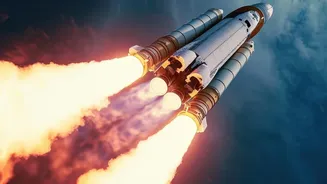
If an emergency is detected, the abort sequence is brutally fast and automatic. The escape motors fire with incredible force, producing an acceleration up to 10 times that of Earth's gravity (10 Gs). This immense power is necessary to outpace the failing rocket and create a safe separation distance in the shortest possible time. Once the capsule is clear, the escape system jettisons itself. Then, a carefully choreographed sequence of parachutes begins to deploy. First, drogue parachutes stabilize the module and slow it down from high speeds. Following this, the main parachutes unfurl, reducing the capsule's speed for a gentle splashdown in the sea.
Surviving Immense Forces
Experiencing 10 Gs of force is physically extreme. To ensure the astronauts can withstand it, their seats are designed to recline, placing them in what engineers call a "child in cradle" orientation—lying on their backs. This position ensures the immense force is distributed across the entire back and chest, pushing them into their seats rather than pulling blood away from the brain, which could cause a blackout. This biomechanical consideration is crucial for keeping the crew conscious and safe during the violent, but life-saving, escape maneuver.
Rigorously Tested for Perfection
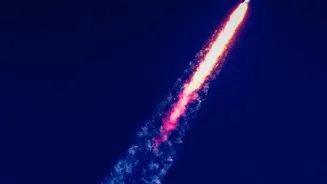
A system this critical cannot be left to chance. The Indian Space Research Organisation (ISRO) has conducted a series of rigorous tests to validate every aspect of the CES. In July 2018, the Pad Abort Test (PAT) successfully demonstrated the system's ability to pull the crew module away from the launchpad in case of an emergency before liftoff. More recently, the Test Vehicle Abort Mission-1 (TV-D1) in October 2023 tested an in-flight abort. A dedicated test rocket was launched to a specific altitude and speed, at which point the CES was deliberately triggered. The system performed flawlessly, pulling the capsule away, deploying its parachutes, and leading to a successful recovery from the Bay of Bengal, proving its readiness for various emergency scenarios.