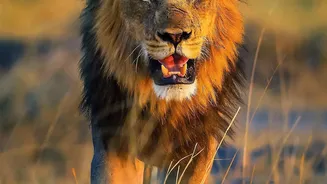








A Historic Return Beyond Gir
For decades, the world's only wild population of Asiatic lions has been concentrated in and around Gir National Park in Gujarat. While a conservation triumph, having a single population hub carries risks, such as vulnerability to disease outbreaks. The
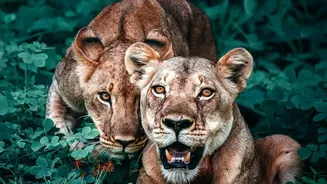
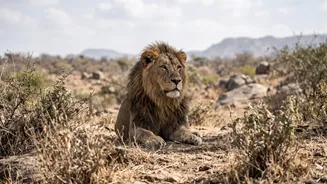
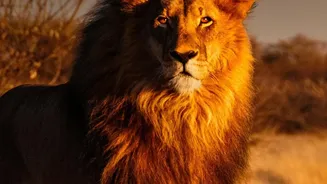
recent colonisation of the Barda Wildlife Sanctuary, about 100 kilometres from Gir, is therefore a hugely significant event for the species' long-term survival. The process began naturally in January 2023, when a lone male lion dispersed from the Gir landscape and made its way to Barda. Recognising the opportunity, the Gujarat Forest Department augmented this natural movement by introducing five female lions to establish a new, viable population. As of late 2026, the sanctuary is now home to a growing pride of 17 lions, including several cubs, marking a successful return after a 144-year absence.
The Science of Satellite Tracking
To understand if Barda can truly become a second stronghold for these lions, researchers embarked on a detailed scientific study. Six lions—the founding male and the five translocated females—were fitted with satellite radio-collars. This technology allows the forest department to monitor the animals non-invasively, collecting vast amounts of data on their daily lives. Between January 2023 and July 2025, the collars generated over 169,000 GPS locations. This information is crucial for mapping the lions' home ranges, understanding their habitat preferences, and observing how they form social bonds in this new environment. The findings show the lions are actively using Barda's varied landscape of forests and grasslands, with the average home range estimated at around 70 square kilometres.
On the Menu: A New Diet
A key question for researchers is what the Barda lions are eating. A stable prey base is essential for a predator population to thrive. Analysis of lion scats has provided the initial answers. The study revealed that the lions are primarily hunting wild prey, with wild pig being their most frequent meal, accounting for 55% of their diet. This is supplemented by domestic animals, particularly cattle, which made up 17% of their diet. While the reliance on wild prey is a positive sign, the prey density in Barda is currently lower than in Gir. To address this, the forest department is actively working to bolster the prey population. This includes reintroducing species like spotted deer (chital) and sambar into the sanctuary, with hundreds translocated from Gir and other areas to build a more robust food chain for the lions.
Paving the Way for Coexistence
The establishment of a new lion population is not without challenges, chief among them being the potential for human-wildlife conflict. The Barda landscape, like much of Saurashtra, is a mix of forest and agricultural land with human settlements. To manage this, the Gujarat Forest Department has strengthened its on-the-ground presence. Eight full-time lion trackers have been deployed for daily monitoring of the animals' health and movements. Rapid-response teams are in place to address any situations where lions might venture near human habitations, ensuring the safety of both people and the big cats. This proactive management, a key part of the national 'Project Lion' initiative, is essential for fostering a peaceful coexistence and ensuring Barda's success as a conservation stronghold.