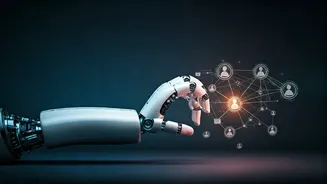









The Great Career Recalibration
Until recently, for many young Indians, the career path was a well-trodden road: engineering, medicine, management, or civil services. Stability was the goal, and the map was clear. The explosion of generative AI tools like ChatGPT in the last couple
of years has torn up that map. The conversation in college canteens, co-working spaces, and family living rooms has fundamentally changed. It’s no longer just about which field has the most jobs, but which jobs are most likely to survive—and thrive—in a world where AI can write code, draft legal documents, and create marketing campaigns.
From Anxiety to Proactive Action
The initial wave of panic about AI-driven job losses has not disappeared, but it is maturing into a more pragmatic and proactive stance. This isn't about passive acceptance; it's about active adaptation. Across the country, there is a massive surge in demand for skills that are either AI-focused or AI-proof. Online learning platforms like Coursera, upGrad, and Great Learning have seen a huge spike in enrolments for courses in data science, machine learning, and AI ethics. This isn't just limited to tech students. Arts and commerce graduates are learning about prompt engineering and how to use AI tools for content creation and financial analysis. The new mantra is clear: if you can't beat the algorithm, learn how to manage it, direct it, and leverage it.
Doubling Down on 'Human' Skills
Perhaps the most sophisticated part of this new AI-aware mindset is the realisation that technical skills alone are not enough. As AI automates routine cognitive tasks, the premium on uniquely human abilities is skyrocketing. Young professionals are increasingly focused on honing their soft skills: critical thinking, complex problem-solving, creativity, emotional intelligence, and leadership. The logic is simple and powerful: an AI can analyse a spreadsheet of data, but it cannot negotiate a difficult client relationship, inspire a team, or devise a truly novel business strategy from scratch. The future-proof career, many now believe, lies at the intersection of technical literacy and deep human-centric skills.
The Rise of the AI-Adjacent Career
This new mood is also creating entirely new career categories that didn't exist five years ago. We are witnessing the birth of the 'AI-adjacent' professional. These aren't necessarily the people building the AI models, but those who bridge the gap between AI technology and real-world business applications. Roles like AI Product Manager, AI Ethics Officer, AI Trainer, and Prompt Engineer are becoming sought-after specialisations. A law student might now aim to become an expert in AI and intellectual property. A marketing graduate might specialise in using generative AI for hyper-personalised campaigns. This shift reflects a move from fearing replacement to seeing an opportunity for reinvention and creating new value.