

The Sun's Unpredictable Fury
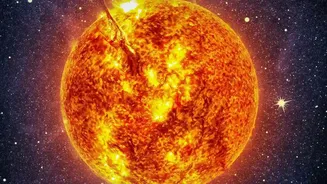
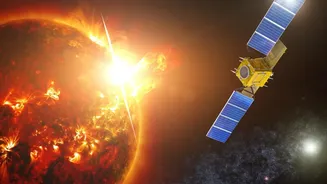
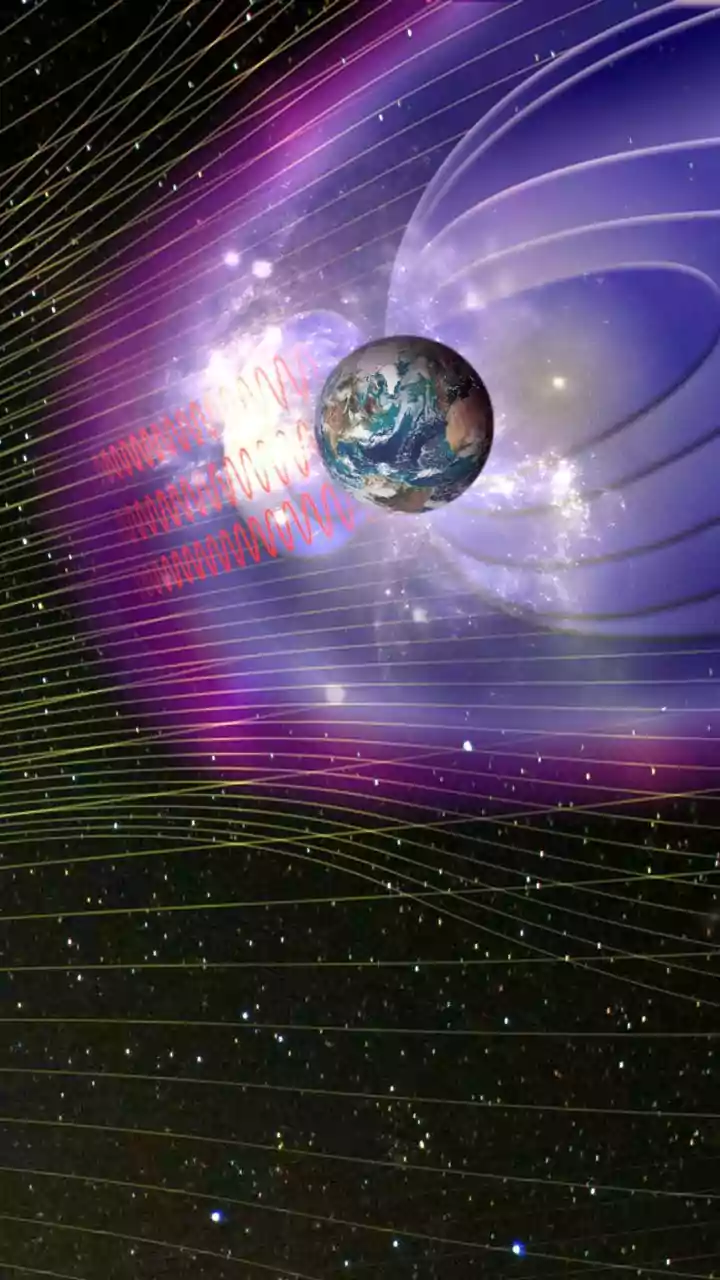
The Sun, our life-giving star, has a volatile side. It periodically ejects enormous clouds of magnetised plasma and radiation, known as Coronal Mass Ejections (CMEs). When a CME hurtles towards Earth, it can trigger a geomagnetic storm. While these storms
produce beautiful auroras, they also pose a significant threat to our modern infrastructure. A powerful storm could overload power grids causing widespread blackouts, damage critical satellites, disrupt GPS navigation and radio communications, and even pose a risk to astronauts. For a society dependent on uninterrupted power and connectivity, the economic and social consequences could be immense.
India's Unblinking Eye on the Sun
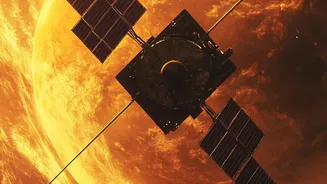
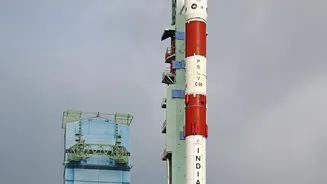
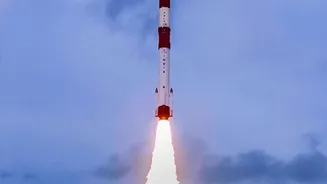
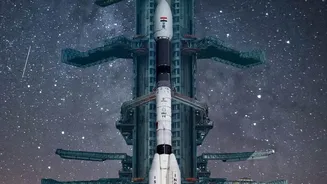
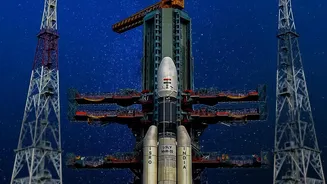
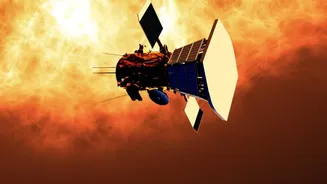
This is where ISRO's Aditya L1 mission comes in. Launched in 2023, it is India's first dedicated solar observatory. What makes it a game-changer is its unique vantage point. The spacecraft is positioned in a halo orbit around Lagrange Point 1 (L1), about 1.5 million kilometres from Earth. At this special spot, the gravitational pulls of the Sun and Earth balance out, allowing Aditya L1 to maintain an uninterrupted, 24/7 watch on the Sun without being blocked by our planet. This constant stream of data is something that was not previously available to Indian scientists and adds a crucial perspective to the global network of solar observation.
A Breakthrough in Prediction
The mission is equipped with seven sophisticated instruments designed to study the Sun's atmosphere in different ways. Recent studies, including a paper published in the Astrophysical Journal Letters, highlight how data from these payloads is revolutionising 'space weather' forecasting. By combining observations from instruments like the Visible Emission Line Coronagraph (VELC) and the Solar Ultraviolet Imaging Telescope (SUIT), scientists can now get a more complete picture of the Sun's activity. New AI-powered models, fed with this high-resolution data, are able to detect the subtle magnetic reconfigurations and tiny energy bursts that act as precursors to a major solar flare or CME. This allows for more reliable and timely warnings before a storm is unleashed.
Why Better Forecasts Matter
More accurate predictions translate directly into better protection for our vital assets. An improved lead time—even just hours—gives power grid operators a chance to stabilize their networks, satellite operators the opportunity to put their spacecraft into a protective safe mode, and airlines the ability to reroute flights away from polar regions where communication blackouts are most severe. Essentially, it turns a potential crisis into a manageable event. This capability is not just about preventing damage; it is about building resilience into the technological backbone of our society, from financial systems to national security infrastructure.
A New Dawn for Indian Space Science
The success of Aditya L1 is a landmark achievement for ISRO and a significant contribution to global science. The data has already helped scientists decode how solar storms interact with Earth's magnetic field and even provided fresh clues to the long-standing mystery of why the Sun's corona is millions of degrees hotter than its surface. By sharing its findings, India is cementing its role as a key player in space exploration and research. The mission demonstrates a growing capability to execute complex scientific projects that have tangible benefits, not just for India, but for the entire world.