




The Minerals Powering Modern India
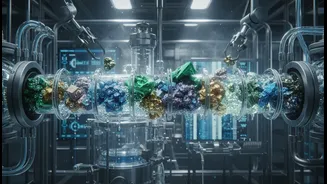
Critical minerals are not just another commodity; they are the bedrock of modern technology and green energy. This group of 30 minerals, including lithium, cobalt, nickel, and rare earth elements, are essential for manufacturing everything from EV batteries
and solar panels to semiconductors and high-tech defence equipment. For India, a nation with ambitious 'Make in India' and clean energy goals, a secure supply of these minerals is non-negotiable. The challenge? India is almost entirely dependent on imports for many of these key materials, particularly lithium and cobalt. This reliance creates significant economic and geopolitical risks, leaving the country vulnerable to supply chain disruptions and price volatility, much of which is controlled by a handful of nations.
Urban Mining: A Strategic Solution
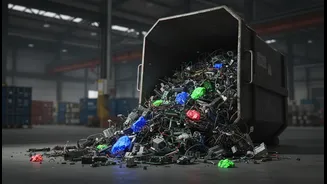
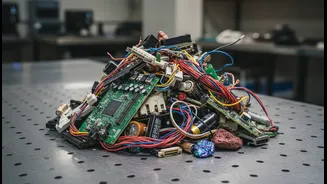
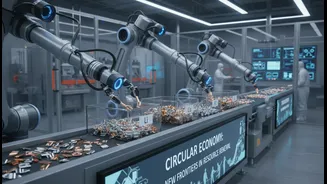
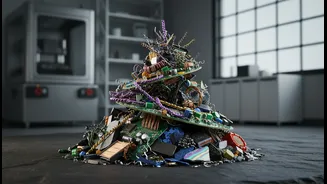
The most promising solution to this dependency lies not in traditional mines, but in our cities. 'Urban mining'—the process of recovering valuable materials from waste streams—is seen as a strategic imperative. India is the world's third-largest generator of e-waste, a veritable treasure trove of discarded electronics and batteries that contain these very minerals. Experts believe that recycling this waste can significantly reduce our import bills, create a circular economy, and insulate India from global supply shocks. A NITI Aayog representative recently noted that recycling offers the quickest route to reducing import dependence, as developing domestic mines will take years. This approach turns a waste problem into a resource opportunity, a key pillar of the Atmanirbhar Bharat vision.
The High Cost of Recovery
While the strategic case for recycling is clear, the economics are daunting. The primary hurdle is that over 90% of India's e-waste is managed by the informal sector. These small-scale operations often lack the technology to extract anything beyond common metals like copper and aluminium, meaning valuable critical minerals are lost. Formal recyclers who invest in advanced, environmentally safe technologies face high initial costs and stiff competition for feedstock from the informal sector, which operates with lower overheads. Furthermore, the concentration of minerals in e-waste is low, making the extraction process complex and expensive. The cost of recovering a mineral can sometimes be higher than importing it, creating a difficult business case without policy support.
Government Steps in to Tip the Scales
Recognizing this economic challenge, the Indian government has launched several initiatives. The National Critical Mineral Mission (NCMM), launched in 2025, is a comprehensive framework to enhance mineral security. A key component of this mission is a ₹1,500 crore incentive scheme specifically designed to promote the recycling of critical minerals. This scheme aims to bridge the viability gap for recyclers, encouraging investment in technologies that can recover high-purity minerals. The government has also eliminated customs duties on some critical mineral scrap to make feedstock more accessible. Recent industry response has been overwhelmingly positive, with companies pledging recycling capacity that far exceeds initial government targets, suggesting a growing momentum in the sector.
The Road to Self-Reliance
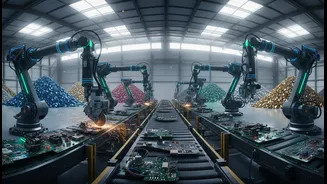
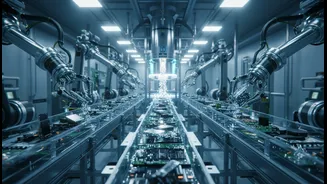
The path forward involves a multi-pronged strategy. While domestic exploration for mineral reserves is underway, the immediate focus is on building a robust recycling ecosystem. This requires scaling up advanced technologies like hydrometallurgy, which can recover battery-grade materials efficiently. Integrating the informal sector into the formal value chain through better collection systems and incentives is also crucial. Success will depend on making recycling not just strategically desirable but also commercially viable. If India can master the economics of recovery, it could transform from a dependent importer into a global hub for critical mineral recycling, securing its economic and strategic future in the process.