
A New Golden Age of Astronomy
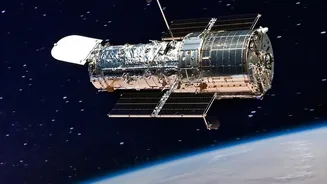
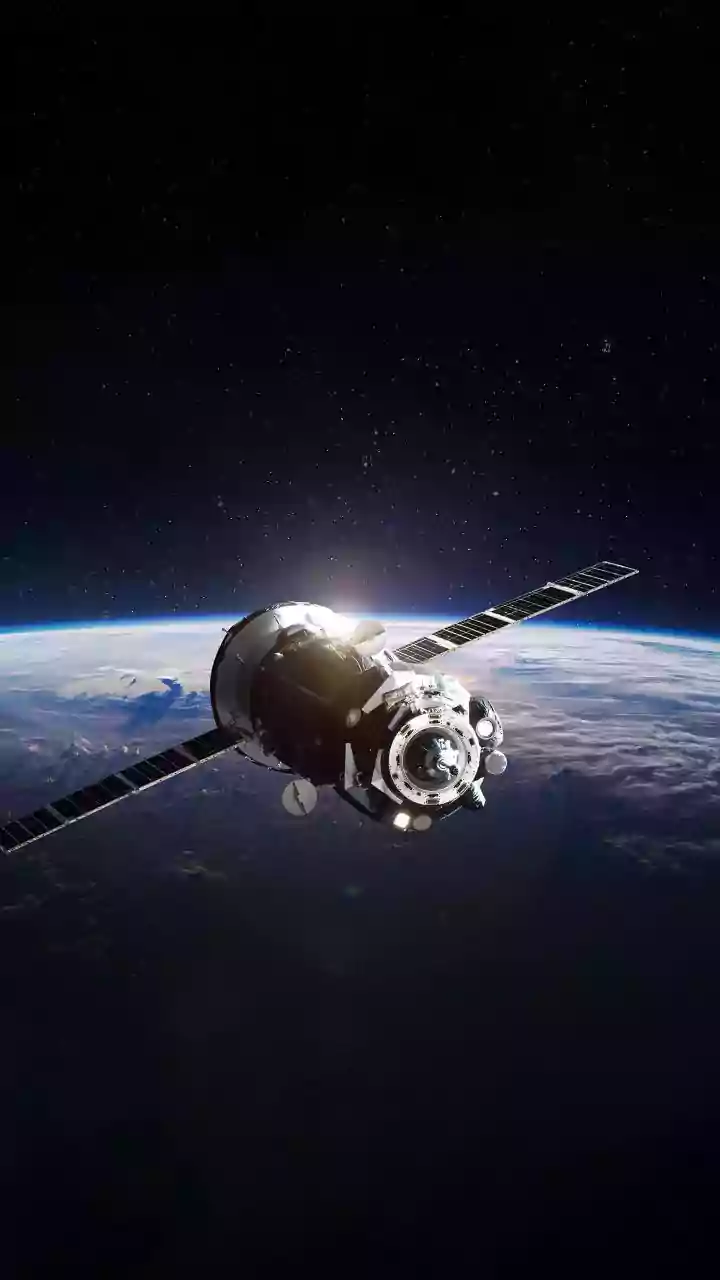
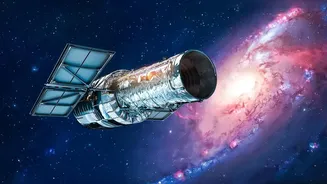
We are living in a remarkable era of cosmic discovery, thanks largely to a new generation of incredibly powerful space telescopes. Instruments like the James Webb Space Telescope (JWST) and the European Space Agency's Euclid telescope are engineered to capture
faint, ancient light that has traveled for billions of years to reach us. This allows astronomers to see the universe not as it is today, but as it was in its infancy. By studying light in the infrared spectrum, which is invisible to the human eye, these telescopes can pierce through cosmic dust and gas clouds that obscure other observatories' views. This capability is providing an unprecedented look at the formation of the first stars, galaxies, and black holes, essentially acting as a cosmic time machine.
Finding the Universe's First Beacons
One of the most significant recent breakthroughs comes from the Euclid telescope, which in early July 2026 identified 31 of the most ancient quasars ever documented. Quasars are the intensely bright cores of distant galaxies, powered by supermassive black holes consuming vast amounts of gas and dust. The process is so energetic that a single quasar can outshine all the stars in its host galaxy combined. Two of these newfound quasars are the oldest ever observed, dating back to when the universe was just 670 million years old, or about 5% of its current age. This discovery effectively doubles the number of known quasars from this early epoch and gives scientists a treasure trove of data for understanding how the first gigantic black holes formed so quickly after the Big Bang, a major puzzle in cosmology.
Solving the Mystery of Cosmic Dust
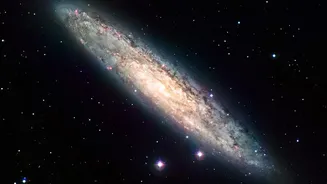
The James Webb Space Telescope has also been busy rewriting textbooks. In one recent study, astronomers used JWST to understand how the early universe became filled with cosmic dust—the raw material for future stars and planets. Directly studying the first, faint galaxies is incredibly difficult, so scientists cleverly observed a nearby dwarf galaxy called Sextans A, which has a chemical composition very similar to those early systems. The detailed observations revealed that a specific type of old, medium-mass star was responsible for producing enormous quantities of dust. By pinpointing these 'dust factories,' researchers can better model how the first generations of stars enriched the cosmos, paving the way for the complex galaxies we see today.
Rewriting the Rules of Galaxy Formation
The torrent of data from these telescopes is doing more than just filling in details; it's forcing a rethink of fundamental theories. JWST, for instance, has found that in the early universe, star formation and dust weren't always aligned in the way they are in modern galaxies. It has also discovered surprisingly massive black holes in galaxies that are too small for them, according to current models. Furthermore, data from both the Atacama Large Millimeter/submillimeter Array (ALMA) and JWST has shown how the first galactic disks began to form, with stars emerging in giant clumps. These findings suggest that the processes governing the birth and growth of galaxies might have been very different in the chaotic environment of the young universe, challenging scientists to refine their understanding of cosmic evolution.