


Our Blurry View From Within
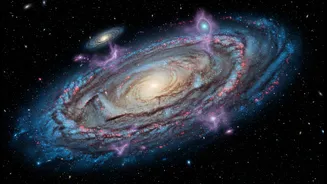
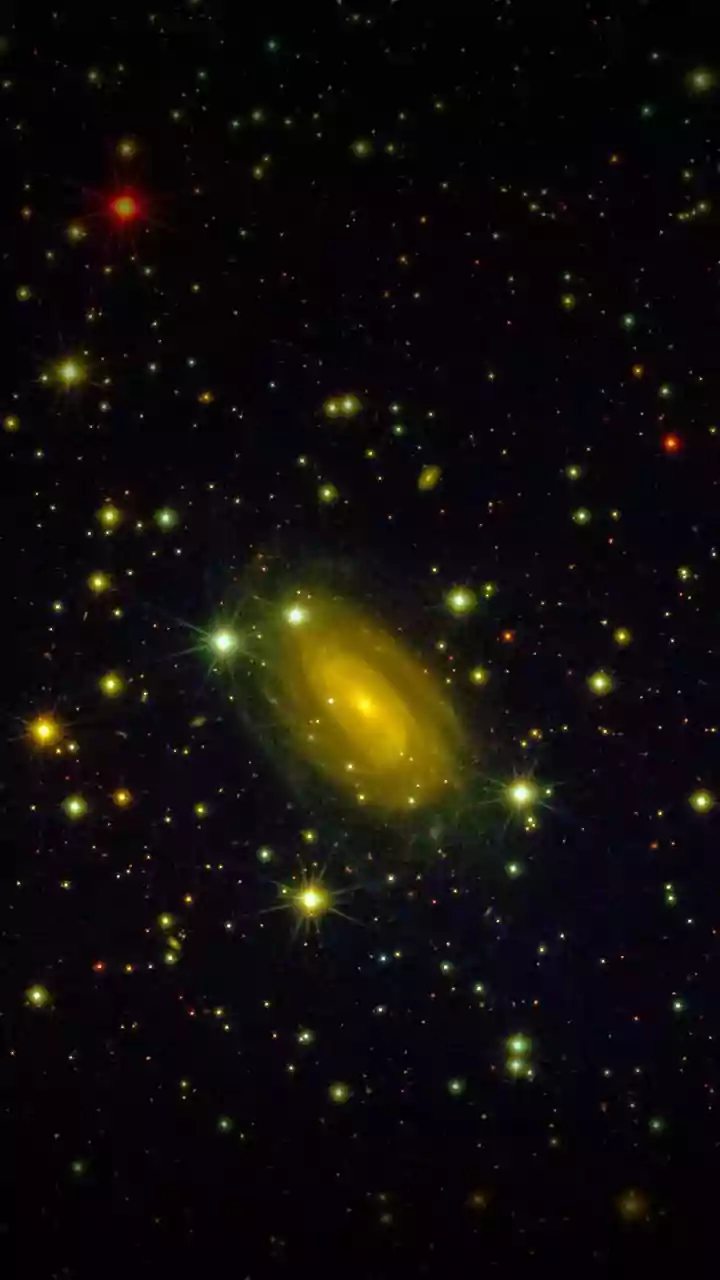
For centuries, humanity has looked up at the band of light stretching across the night sky and wondered about its true shape. We know we live inside a vast, flat, spiral galaxy, but figuring out its precise structure is incredibly difficult. It's a bit
like trying to understand the blueprint of a massive building while being stuck in one of its rooms. Giant clouds of interstellar dust and gas block our view, hiding distant spiral arms and the galaxy's bustling core. We can see small, nearby fields of stars in great detail, but understanding how they fit into the galaxy's grand design has been a persistent puzzle. This has left us with a fragmented picture, a collection of local snapshots without a clear understanding of the full, panoramic view.
A Digital Universe in a Computer
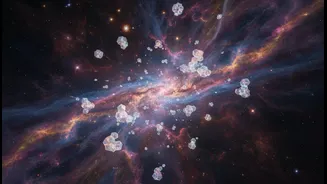
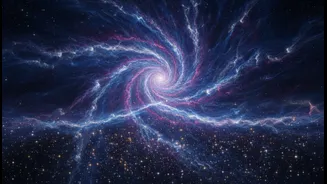
The “new view” that is revolutionizing our understanding isn’t from a single telescope, but from incredibly sophisticated computer simulations. Projects like FIRE (Feedback in Realistic Environments) are creating digital, evolving models of galaxies that are more realistic than ever before. These simulations begin with the conditions of the early universe and model the complex interplay of gravity, gas dynamics, star formation, and the explosive feedback from dying stars over billions of years. By directly simulating how giant molecular clouds form and how stellar energy pushes gas around, these models can generate virtual galaxies that look and behave remarkably like our own. This allows astronomers to study a galaxy's evolution from a 'god's-eye view' and then compare those large-scale structures to what we can actually observe from our position within the Milky Way.
Connecting Cosmic Dots
These advanced simulations are the key to connecting small, observable star fields with the galaxy-scale structure. By modelling how stars form in dense clumps and how those clumps are torn apart by stellar feedback, scientists can understand the origins of the stellar streams and associations we see in our own cosmic neighbourhood. The simulations show how material is cycled through the galaxy, with gas being blown out in massive galactic winds only to be re-accreted later, fuelling new rounds of star formation. This helps explain how a small group of stars observed in one part of the sky might share a common origin with a different group located thousands of light-years away, both having been born from the same turbulent event in the galaxy's past. The models allow theorists and observers to finally speak the same language, linking theories of cosmological growth directly to the structures seen by telescopes.
Unveiling the Galaxy's Dynamic Life
This new connection between simulation and observation is revealing a galaxy that is far more dynamic than we imagined. For instance, recent research using FIRE simulations has shown that the giant, star-forming clumps common in young galaxies are actually very short-lived. Instead of migrating to form a galaxy's central bulge, they are quickly torn apart by the energy from the very stars they create. Other observational breakthroughs, guided by these improved models, are revealing our local environment in stunning detail. Astronomers have recently identified what appears to be an interstellar 'tunnel' connecting our local region to distant stars, a remnant of ancient supernovae that carved channels through space. By combining simulation data with new, detailed maps of gas and stars, we are getting a more holistic view of how everything from the solar system's immediate neighbourhood to the galaxy's outermost arms are interconnected.