


The Danger Zone: A Breeding Ground for Bacteria
Improperly cooled food is a leading cause of foodborne illness. The reason lies in what food safety experts call the "temperature danger zone," which is the range between 40°F (about 5°C) and 140°F (about 60°C). Within this range, harmful bacteria can
multiply at an astonishing rate, sometimes doubling in number in as little as 20 minutes. When you have a large, deep pot of hot food, the centre of that pot remains in the danger zone for a very long time, even if the outside feels cool. This creates the perfect environment for bacteria to thrive, making your delicious leftovers potentially unsafe to eat. The goal is to cool food through this danger zone as quickly as possible, ideally within two hours of cooking.
The Fridge Myth: Why Hot Pots Don't Belong
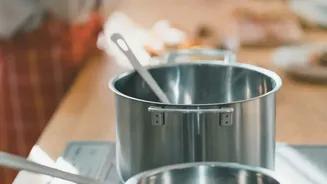
A common mistake is placing a large, steaming pot of food directly into the refrigerator, assuming the appliance will handle the rest. This is a bad idea for two main reasons. First, the large mass of hot food will not cool down fast enough. The food in the centre will stay warm for hours, well within the bacterial danger zone. Second, the heat radiating from the pot will raise the ambient temperature inside your refrigerator, putting all the other food at risk by warming it into the danger zone as well. A refrigerator is designed to keep cold food cold, not to rapidly cool large volumes of hot food. It simply can't cope with that much heat all at once.
The Shallow Portion Strategy: Your Best Defence
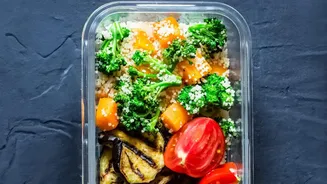
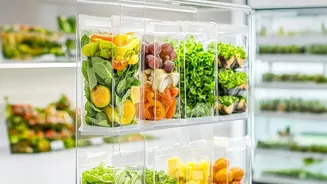
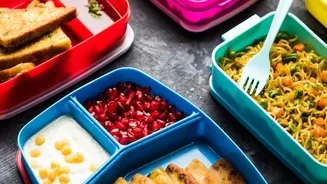
The single most effective way to cool food quickly is to increase its surface area. Instead of leaving your dal makhani or chicken korma in the deep pot it was cooked in, the best practice is to divide it into several smaller, shallow containers. Aim for a food depth of no more than two to three inches. This allows heat to escape much more efficiently from all directions. Spreading foods like rice or biryani out on a clean baking sheet or in a large, flat dish is also an excellent method. More surface area means faster, more even cooling, which gets your food safely out of the temperature danger zone in the shortest amount of time. Remember to leave the containers loosely covered at first to allow steam to escape.
Speeding Up the Chill: Ice Baths and Other Tricks
For liquid-based foods like soups, dals, and stews, you can accelerate the cooling process even further. One highly effective method is an ice bath. Place your smaller containers of hot food into a larger basin or sink filled with ice and water. Make sure the ice water comes up to the level of the food in the containers. Stirring the food periodically during the ice bath will help release heat even faster. Another trick used in professional kitchens is an ice paddle—a sealed plastic wand filled with water that you freeze and then use to stir the hot food. If your recipe allows, you can also add ice directly as an ingredient to help cool things down.
The Two-Hour, Two-Stage Rule
Food safety guidelines recommend a two-stage cooling process. Stage one is to cool the food from 140°F (60°C) down to 70°F (21°C) within two hours. This is the most critical part of the danger zone where bacteria grow fastest. Once you've reached 70°F, you enter stage two, where you have an additional four hours to get the food down to 41°F (5°C) or below in the refrigerator. By following the shallow portion strategy and using active cooling methods, you can easily meet these timelines and ensure your leftovers are just as safe and delicious the next day.