




Why Your Tyres Are Your First Line of Defence
On wet and winding hill roads, your tyres are the only connection between your car and the ground. When it rains, this connection becomes fragile. The most significant danger is hydroplaning, which occurs when a layer of water builds up between your tyres and the road surface,
leading to a complete loss of steering and braking control. Good tyres are designed to channel water away from the contact patch, but this ability diminishes as they wear down. Before any trip, check that your tread depth is well above the legal minimum; experts recommend at least 3 mm for optimal safety in wet conditions. Worn tyres are a primary cause of skids on slick surfaces. Equally important is correct tyre pressure. Both underinflated and overinflated tyres reduce the contact patch with the road, compromising grip, handling, and braking efficiency.
Mastering Visibility When It Matters Most
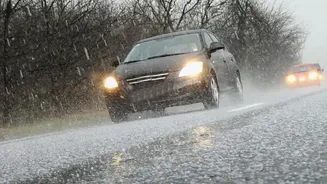
Visibility in the hills can plummet to near zero in seconds during a heavy downpour or when thick fog rolls in. Your car's wipers, lights, and defogger are not just conveniences; they are essential safety systems. Wiper blades often become hard and cracked during hot summers, rendering them useless in the first monsoon showers. If they leave streaks or skip across the glass, replace them immediately. Always keep your windshield washer fluid topped up to clear away mud and grime splashed by other vehicles. In rain or fog, use your low-beam headlights, even during the day. This isn't just for you to see, but for other drivers to see you. High beams are counterproductive as they reflect off the rain and fog, worsening your own visibility.
The Art of Braking and Descending Slopes
Driving downhill on ghat roads puts immense strain on your brakes. Relying solely on your brake pedal can cause the system to overheat, leading to a dangerous condition known as brake fade, where braking effectiveness is severely reduced. The safer technique is to use engine braking by shifting to a lower gear. This uses the engine's compression to slow the vehicle naturally, keeping your brakes cool and responsive for when you truly need them. When you do use your brakes, apply them gently and progressively. Sudden, hard braking on a wet, slippery surface is a recipe for losing traction and skidding. Always maintain a much longer following distance than you would on dry roads—at least five seconds is recommended—to give yourself ample time to react and stop safely.
Pacing Your Journey and Anticipating Hazards
Speed is the enemy on wet hill roads. Reduce your speed significantly to give your tyres a better chance to grip the road and to give yourself more time to react to unexpected hazards. Hill roads are prone to landslides, rockfalls, and fallen trees during the monsoon. Stay alert and scan the road far ahead. Be especially cautious around blind corners and hairpin bends. If possible, avoid travelling after dark when visibility is naturally lower and hazards are harder to spot. Another crucial tip is to never use cruise control on wet roads. If you start to hydroplane, your car may try to accelerate, and you need to be in complete control to handle the situation by gently easing off the accelerator.
Your Pre-Drive Monsoon Checklist
A safe journey begins before you even turn the key. Run through this quick checklist before heading for the hills: • Tyres: Check tread depth and ensure all five tyres (including the spare) are inflated to the manufacturer's recommended pressure. • Wipers and Washer Fluid: Inspect the wiper blades for wear and tear and top up the washer fluid. • Lights: Do a walk-around to ensure all lights—headlights, taillights, brake lights, and indicators—are clean and working correctly. • Brakes: Have your brake pads, discs, and fluid checked by a professional, especially if you haven't had a service recently. • Emergency Kit: Pack a tow rope, a powerful flashlight, a basic toolkit, and a first-aid kit. Non-perishable snacks and water are also wise additions in case you get stranded.