


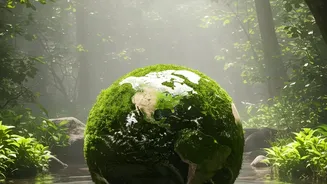

The Planet's Hidden Carbon Banks
Coastal ecosystems like mangrove forests, salt marshes, and seagrass meadows are global superstars when it comes to fighting climate change. Known as 'blue carbon' ecosystems, they are incredibly efficient at capturing carbon dioxide from the atmosphere
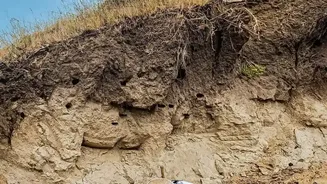
and locking it away in their plants and, most importantly, in their deep, waterlogged soils. In fact, on a per-acre basis, these coastal habitats can store three to five times more carbon than even lush tropical rainforests. This carbon can remain safely buried for hundreds or even thousands of years, making these ecosystems a critical ally in keeping greenhouse gases out of the atmosphere. They act as natural carbon banks, providing an essential service for the entire planet.
When the Banks Begin to Fail
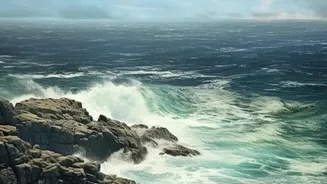
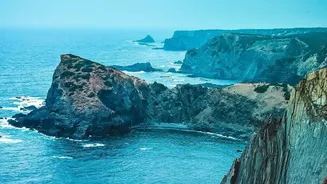
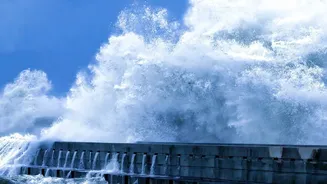
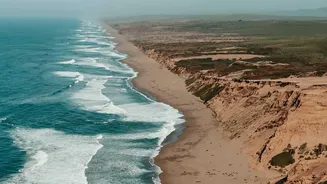
The problem arises when these stable ecosystems are disturbed. Climate change-driven sea-level rise, increased storm frequency, and direct human development are causing coastlines to erode at an accelerating pace. As the land breaks apart and washes away, these rich carbon deposits are exposed. What was once a secure, long-term storage vault is broken open. The process turns what should be a carbon 'sink'—an area that absorbs more carbon than it releases—into a carbon 'source,' potentially unlocking centuries of stored carbon and sending it back into the environment. Most of this displaced carbon doesn't go directly into the atmosphere, but rather into the ocean, a complex exchange that scientists are now racing to understand.
NASA's High-Tech Investigation
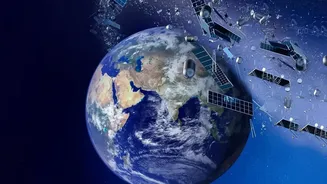
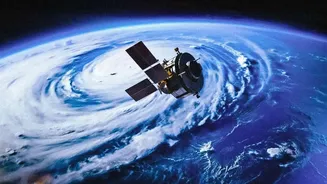
This is where NASA-backed scientists come in. A recent study focused on the U.S. coastline from Texas to Maine, employing a powerful combination of satellite imagery and high-resolution elevation data to track decades of marsh loss. Using data from the Landsat satellite program and lidar technology, researchers were able to quantify the immense scale of this process. Their findings were stark: U.S. coastal wetlands are releasing a staggering 660,000 metric tons of carbon into the ocean each year due to erosion. Even when accounting for new marsh growth that offsets some of the loss, the net annual release is still around 380,000 metric tons. This research, supported by NASA's Goddard Institute for Space Studies, provides the first large-scale measurement of a previously hidden part of the global carbon cycle.
Why This Matters for India's Coastline
While this specific study was focused on the United States, its implications are global and especially relevant for India. With a coastline stretching over 7,500 kilometres, India is home to vital blue carbon ecosystems, including the Sundarbans, the world's largest mangrove forest. These areas are not only critical for biodiversity and protecting coastal communities from storm surges, but they also represent an enormous store of carbon. The same forces of erosion, sea-level rise, and intense cyclonic activity that affect the U.S. coast are major threats in the Bay of Bengal and the Arabian Sea. Understanding the link between erosion and carbon release is crucial for accurately modelling future climate scenarios and for developing effective conservation strategies for places like the Sundarbans, which are already under immense pressure.