






The New Digital Gatekeeper
Not long ago, getting shortlisted for a campus placement interview depended on your grades, your project work, and a bit of luck. Your resume was read by a human. Today, it’s far more likely your application’s first hurdle is an algorithm. Companies,
overwhelmed by the sheer volume of applications, are increasingly relying on AI to do the initial heavy lifting. Applicant Tracking Systems (ATS) are now standard, using AI to scan, sort, and rank thousands of resumes in minutes. These systems filter out candidates before a human recruiter even sees a single name, fundamentally changing the definition of a 'strong' application. It’s no longer just about having the right qualifications; it's about presenting them in a way a machine can understand and value. This shift means that only a fraction of candidates, often as low as 21% in some studies, even make it to a human interviewer.
The Company's AI Toolkit
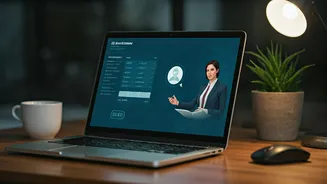
Employers are deploying a sophisticated arsenal of AI tools to find the 'perfect' candidate. It starts with AI-powered sourcing tools that scan millions of public profiles on platforms like LinkedIn to find potential matches, even those not actively looking. Once you apply, AI-driven screening software analyzes your resume for keywords, skills, and experience, scoring your compatibility against the job description. Some advanced systems, like Talview and HireVue, use AI to conduct and analyze video interviews, assessing everything from your word choice to your facial expressions. Other platforms use gamified assessments to test problem-solving and behavioural skills, creating a multi-layered, data-driven evaluation process that is far more rigorous than traditional methods. For companies, this means a more efficient and standardized process; for candidates, it means every stage of the application is a new test to pass.
The Candidate's Counter-Offensive
As companies have armed themselves with AI, a new industry of AI tools has emerged to help students fight back. Candidates are now using platforms like ChatGPT and others to craft perfectly tailored resumes and cover letters. These tools can analyze a job description and help students sprinkle the right keywords throughout their application to get past the initial ATS screening. They can also help turn bland descriptions of past projects into powerful, achievement-based bullet points. For interview preparation, AI is a game-changer. Students can simulate mock interviews, asking AI to act as an interviewer for a specific role and provide instant feedback on their answers. This creates an AI-versus-AI dynamic, where the most prepared candidates are those who successfully leverage technology to optimize every aspect of their application.
The New Rules of the Game
In this new AI-driven landscape, the skills that guarantee success are changing. While technical skills remain crucial, recruiters are increasingly looking for candidates with a demonstrable understanding of AI and data analytics. In fact, roles requiring AI skills often come with a significant salary premium. However, simply listing 'AI' on your resume isn't enough. The real advantage comes from cultivating uniquely human skills that AI cannot replicate: critical thinking, creativity, emotional intelligence, and complex problem-solving. Recruiters know that AI can help write a perfect cover letter, so they are placing more emphasis on in-person interviews and real-world projects to see how a candidate truly thinks. Authenticity has become a valuable currency. The goal is not to trick the system but to use AI as a coach to present the best, most authentic version of yourself. Your ability to collaborate with AI tools, coupled with your inherent human strengths, is what will ultimately set you apart.