






A New Era of Economic Uncertainty
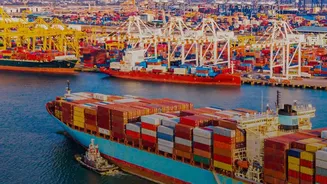
For decades, the global economy operated on a simple premise: source from the most efficient location to minimize costs. This led to highly optimized, yet concentrated, supply chains often centered around China. However, the landscape has fundamentally
shifted. We now operate in a world where geopolitics and economics are deeply intertwined. Trade disputes, national security concerns, and regional conflicts are no longer temporary shocks but continuous sources of uncertainty that directly impact business strategy. For Indian tech manufacturers, this means the stable ground they once built on is now constantly moving, forcing a re-evaluation of every link in their supply chain.
From Tariffs to Technology Controls
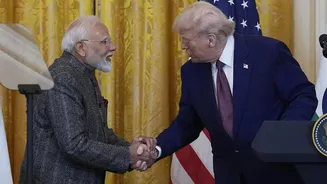
The nature of bilateral disagreements has become more complex. While tariff disputes, like those between the US and China or recurring tensions between India and the US, create cost pressures, the bigger threat comes from non-tariff barriers. These include export controls on critical technologies like advanced semiconductors, stringent quality standards designed to exclude foreign goods, and policies around data localization. These measures directly impact the ability of Indian firms to source high-tech components, access key markets, and stay competitive. The 'weaponization' of economic policy means a diplomatic spat in New Delhi, Washington, or Beijing can halt a production line in Noida overnight.
The 'China Plus One' Imperative
The most significant strategic response from Indian tech manufacturers has been the adoption of the 'China Plus One' strategy. This isn't about abandoning China entirely, but about aggressively diversifying to reduce dependency and mitigate risk. The memory of pandemic-era disruptions, coupled with ongoing geopolitical tensions, has made single-source dependency an unacceptable liability. Companies are now actively seeking alternative sourcing and manufacturing hubs in other parts of Asia, like Vietnam and Thailand, and increasingly, looking to build capabilities within India itself. This shift is driven by a boardroom-level understanding that supply chain resilience is now as important as cost efficiency.
Turning Crisis into Opportunity with PLI
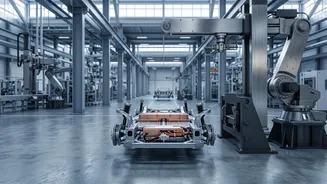
The Indian government has recognized this global shift as a strategic opportunity. The Production Linked Incentive (PLI) scheme is the cornerstone of this effort. First introduced in 2020 and expanded to 14 sectors, the PLI scheme provides financial incentives to companies for incremental sales of products manufactured in India. The scheme, particularly successful in electronics, aims to attract foreign investment and encourage domestic production of components that were previously imported. By offering substantial subsidies, India is positioning itself as a viable alternative for companies like Apple and others looking to de-risk their manufacturing footprint from China, turning a global supply chain crisis into a catalyst for domestic industrial growth.
Building Resilient and Indigenous Capabilities
Beyond diversification, long-term strategy is focusing on building a more robust and self-reliant domestic ecosystem. This involves significant investment in areas where India has historically lagged, such as semiconductor design and fabrication. The India Semiconductor Mission, backed by a ₹76,000 crore package, is a clear signal of this ambition. However, challenges remain, including the need for massive infrastructure like uninterrupted power and ultrapure water, a specialized talent pool, and a domestic supply chain for critical raw materials. Success will depend not just on attracting large firms, but on fostering a deep ecosystem of suppliers, R&D centers, and skilled workers that can weather future geopolitical storms.