






The Push for a Paperless Journey
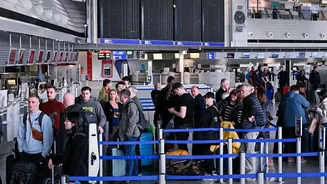
The global surge in travel has put immense strain on existing airport infrastructure. With passenger volumes expected to keep rising dramatically, the old way of doing things—manually checking physical documents at multiple points—is no longer sustainable.
This has created an urgent need for faster, more efficient, and secure processes. In response, governments and aviation bodies like the International Air Transport Association (IATA) are fast-tracking initiatives that use technology to create a smoother journey from check-in to boarding. The goal is to allow passengers to arrive at the airport 'ready to fly', having verified their identity and travel permissions in advance.
Your Face Is Becoming Your Boarding Pass
The most visible change happening at airports is the rollout of biometric technology. Using facial recognition, your identity can be verified in seconds, eliminating the need to repeatedly present your passport and boarding pass. India’s own Digi Yatra initiative is a prime example. Already operational for domestic travel at dozens of airports, it allows passengers to move through checkpoints using facial recognition linked to their travel credentials. The platform has already handled over 105 million passenger journeys, with adoption rates climbing. Following its domestic success, Digi Yatra is now being prepared for international travel, with trials planned to begin soon. This system, where your face becomes your token, aims to dramatically cut down queues and make the airport experience touchless and paperless.
Meet the Digital Travel Credential
The backbone of this new era is the Digital Travel Credential, or DTC. A DTC is essentially a secure, digital version of your passport stored on your mobile device. Standardised by the International Civil Aviation Organization (ICAO), a DTC contains the same information found on your physical passport's chip and is cryptographically secure to prevent forgery. The idea is that you can share this information with airlines and border authorities ahead of time, allowing for pre-clearance before you even leave for the airport. Globally, the adoption of DTCs is projected to grow exponentially, with some experts predicting over 1.2 billion users by 2035. India is also moving in this direction, with the rollout of e-passports containing an electronic chip, which is the first step toward creating a full-fledged DTC.
Security in a Digital Age
While convenience is a major driver, enhanced security is an equally important goal. Physical documents are susceptible to theft, loss, and forgery. Digital systems, backed by biometrics and public key infrastructure (PKI), can offer a more secure way to prove your identity. For example, India's Digi Yatra follows a decentralised model where a user's credentials reside on their own device, not in a central database, making it harder for mass data breaches to occur. Similarly, the technology behind e-passports makes them extremely difficult to tamper with or clone, helping border officials quickly verify the authenticity of a travel document. This digital-first approach helps combat identity fraud and strengthens border security globally.
The Future for Indian Travellers
For Indian travellers, these changes promise a future with significantly less friction. The expansion of Digi Yatra to international routes and the introduction of e-passports are key components of this shift. The government is also working on a Fast Track Immigration - Trusted Traveller Programme (FTI-TTP), which uses biometric e-gates to allow registered Indian citizens to clear immigration in seconds instead of waiting in long queues. While physical passports will likely remain a necessary fallback for some years, the direction is clear: a seamless, interconnected system where your digital identity allows you to move smoothly across borders. The focus is on creating an end-to-end digital experience, from booking a flight to clearing immigration at your destination.