
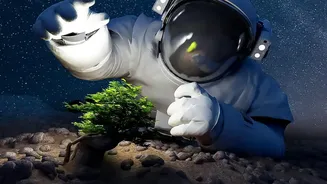
The Final Frontier of Food
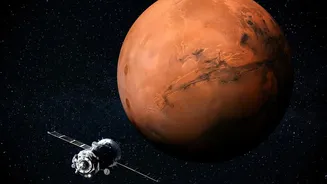
As humanity sets its sights on long-duration missions to the Moon and Mars, one of the most critical hurdles isn't rocket propulsion or navigation—it's lunch. Transporting enough pre-packaged food for a multi-year journey is impractical due to weight
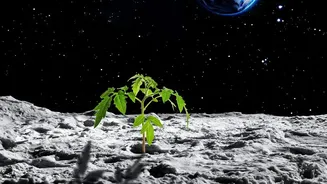
and storage constraints, and the nutritional value of preserved foods degrades over time. The solution is for astronauts to become farmers, cultivating fresh produce millions of miles from home. This requires solving a host of agricultural challenges, from the effects of microgravity and radiation to creating closed-loop systems for water and nutrients. It's a complex problem, and NASA has turned to an unexpected group of researchers for help: students.
Real Science, Real Data
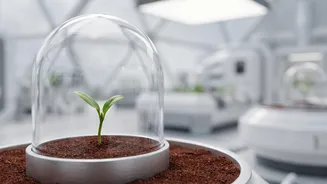
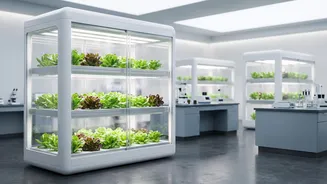
One of the most prominent initiatives is Growing Beyond Earth (GBE), a program created in partnership between NASA and the Fairchild Tropical Botanic Garden. Since 2015, this project has enlisted hundreds of middle and high schools across dozens of states and countries. Each participating classroom receives a specialized plant growth chamber designed to be analogous to the Vegetable Production System, known as "Veggie," used aboard the International Space Station (ISS). Students are tasked with growing specific plant varieties under controlled conditions. They don't just water plants; they conduct formal experiments, meticulously collecting data on growth rates, yields, and overall plant health, which is then submitted directly to NASA scientists.
From Classroom Trials to Orbiting Salads
This isn't just a feel-good science project; the data collected by students is shaping the future of space exploration. The information helps NASA's Space Crop Production team identify which plant cultivars are robust and resilient enough for the harsh environment of space. The different classroom settings provide a wide range of variables, helping scientists find plants that perform well under diverse conditions. The program has been remarkably successful. Since its inception, students have tested over 250 different types of plants. To date, at least five crops chosen based on student data, including 'Outredgeous' red romaine lettuce, Extra Dwarf Bok Choy, and Red Robin tomatoes, have been successfully grown and even eaten by astronauts on the ISS. Knowing their work directly contributes to NASA missions provides immense motivation for students.
Cultivating the Next Generation of Innovators
Beyond generating valuable data, these programs are a powerful tool for STEM education. They transform abstract concepts into tangible, hands-on experience, inspiring students to pursue careers in science, technology, engineering, and mathematics. Students learn experimental design, data analysis, and collaborative problem-solving—skills essential for any scientific field. The scope has also expanded beyond just growing plants. The Growing Beyond Earth Maker Challenge calls on students and community members to design and build new hardware for space agriculture, tackling challenges like automated planting and harvesting systems for uncrewed facilities. These initiatives show that contributing to space exploration doesn't require being an astronaut; engineers, biologists, and data scientists are just as crucial.