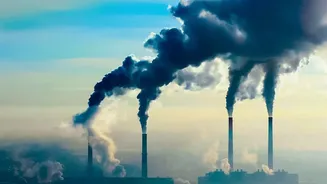






The Staggering Economic Toll
The scale of the economic damage is staggering. Recent reports estimate that air pollution costs Indian businesses tens of billions of dollars annually, representing a significant percentage of the country's GDP. One analysis by Dalberg Advisors, in partnership
with the Clean Air Fund and CII, placed the figure at around $95 billion per year, equivalent to about 3% of India's GDP. To put that in perspective, this loss is equal to 50% of all annual tax collections or 150% of the national healthcare budget. The economic drag comes from multiple interconnected channels that go far beyond hospital bills.
A Drain on Worker Productivity
One of the most significant costs is lost productivity. This isn't just about employees taking sick days, which accounts for an estimated 1.3 billion lost working days annually. A more pervasive issue is 'presenteeism'—when employees show up to work but are not fully functional due to the physical and mental toll of pollution. Studies show that on high-pollution days, worker efficiency can drop by 8-10%. This loss is particularly severe in sectors requiring high cognitive function, like IT and finance, where pollution can dull mental acuity and slow down complex tasks. The cumulative effect is a massive drain on output, with one report estimating that boosting employee performance through cleaner air could add $24 billion to business revenues annually.
The Hidden Impact on Brain Power
Emerging research highlights a deeply concerning link between air pollution and cognitive decline. Studies in India have found that exposure to fine particulate matter (PM2.5) has a detrimental impact on children's academic performance, affecting both math and reading scores. Harmful pollutants can cross the blood-brain barrier, potentially leading to inflammation and neuronal dysfunction. This affects not only the future workforce but also current professionals' decision-making and problem-solving abilities. Long-term exposure has even been linked to a higher risk of neurological disorders, representing a profound, slow-burn crisis for India's human capital.
Choking Consumer Activity and Tourism
When air quality plummets, people stay home. This behavioural shift has a direct impact on the consumer economy. Retailers report weaker footfall and sales during severe pollution spells, especially in northern India. Restaurants see a drop in dine-in customers, which higher delivery orders often fail to offset. This chilling effect extends to the tourism industry. International travel advisories increasingly warn about India's air quality, particularly during the peak tourist season in winter. Studies have shown a correlation between high pollution levels and lower foreign tourist arrivals, threatening a vital source of revenue and tarnishing the country's global image.
A Drag on Growth Itself
The combined weight of these factors acts as a direct brake on economic growth. A World Bank paper found that an increase in PM2.5 exposure lowers a district's year-on-year GDP growth by a notable 0.56 percentage points. This is not a one-time cost but a compounding loss that widens the gap between the economy India has and the one it could build with clean air. From reduced agricultural yields due to pollutants damaging crops to the degradation of infrastructure, the costs are pervasive. Ultimately, this makes clean air not just an environmental goal, but a fundamental economic imperative for sustainable national development.