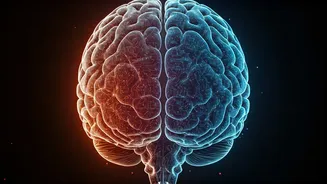









Beyond the Buzzword: What is Critical Thinking?
Critical thinking isn't about being negative or finding fault. It's the disciplined process of objectively analysing and evaluating information to form a sound judgment. Think of it as a mental toolkit that helps you move beyond surface-level reactions.
Instead of accepting information at face value, a critical thinker questions assumptions, identifies potential biases, and considers a situation from multiple perspectives before drawing a conclusion. This skill involves a combination of observation, analysis, inference, and communication. It's the difference between simply following instructions and truly understanding the 'why' behind them to find the best possible course of action.
Your Secret Weapon for Career Growth
Employers consistently rank critical thinking as one of the most in-demand skills. Professionals who possess this ability are better at solving complex problems, making well-reasoned decisions, and innovating. This directly translates into tangible career benefits. Strong critical thinkers are more adaptable, able to navigate uncertainty, and can communicate their ideas more persuasively. This enhances teamwork, improves productivity, and helps in resolving conflicts. As a result, individuals with these skills are often entrusted with more responsibility and are more likely to be considered for leadership roles, accelerating their career progression.
A New Essential: Critical Thinking in the Age of AI
The rise of Artificial Intelligence hasn't made human thinking obsolete—it has made critical thinking more crucial than ever. While AI is brilliant at gathering and summarising vast amounts of information, it can't replicate human discernment or contextual awareness. AI models produce outputs, not decisions, and these outputs can be flawed if the underlying data is biased or inaccurate. Professionals need critical thinking to ask the right questions (or 'prompts'), evaluate AI-generated content for accuracy and bias, and decide how to apply the insights wisely. In an AI-enabled workplace, your value lies not in finding answers, which a machine can do, but in questioning those answers and making a strategic judgment.
How to Cultivate Your Critical Thinking Skills
The good news is that critical thinking is not an innate talent but a skill that can be developed through deliberate practice. Start by cultivating curiosity and asking more questions. Instead of accepting information immediately, ask clarifying questions to uncover missing details or assumptions. Make a conscious effort to consider alternative perspectives, even those that contradict your own. You can also practice active listening to truly understand a colleague's point of view rather than just waiting for your turn to speak. Another powerful technique is to challenge your own biases by stepping back and questioning your initial reactions to new information. Finally, when faced with a problem, gather information from multiple credible sources before developing a solution.