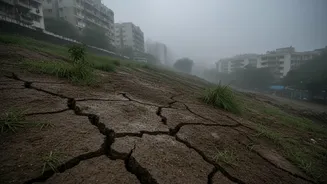








Look for Changes in the Ground
The ground itself often provides the earliest clues of instability. Be vigilant for new cracks appearing in soil, driveways, or sidewalks, especially on or at the base of slopes. These 'tension cracks' signal that the earth is pulling apart. Another critical
sign is bulging or heaving at the bottom of a slope, which indicates that soil is being pushed outwards from pressure above. Similarly, watch for the appearance of sunken areas or depressions on a hillside. Soil moving away from a building's foundation or retaining walls that have begun to tilt or crack are immediate red flags that the land is no longer stable. These changes can be subtle at first, but they often grow and are a direct precursor to a potential slide.
Monitor Water and Drainage Patterns
Water is the primary trigger for most monsoon landslides, and unusual water behaviour is a major warning sign. Pay close attention to new springs, seeps, or unusually wet patches of ground appearing on slopes that are normally dry. This suggests that the ground is oversaturated and water is being forced to the surface. If you live near a stream or channel, a sudden increase or decrease in water flow is a cause for concern. A particularly alarming sign is when the water changes from clear to muddy, which indicates that soil and debris are already moving upstream and could be part of a larger, developing debris flow. Blocked or broken underground water or drainage pipes can also lead to soil saturation and should be investigated immediately.
Observe Your Surroundings for Tilting
Objects that should be stable can offer clear visual warnings when the ground beneath them begins to shift. Look for trees, fences, or utility poles that are leaning at a new or more pronounced angle. Because their foundations are deep in the ground, their tilt is a strong indicator of subterranean movement. If you notice that fence lines are no longer straight or that retaining walls are starting to bulge, it points to significant pressure building up within the slope. Sometimes these changes happen slowly, but during periods of intense rainfall, they can accelerate rapidly. These are not signs to be ignored or put off for later inspection; they require immediate attention as they signal a loss of foundational stability in the entire area.
Check for Signs Inside Your Home
The effects of shifting ground can also manifest inside your house, often in ways that might seem like minor maintenance issues at first. One of the most common signs is doors and windows that suddenly begin to stick or jam for the first time. This happens because the frame is being warped by the movement of the building's foundation. You should also be on the lookout for new cracks appearing in plaster, tile, brickwork, or foundations. A crack that starts low and widens as it goes up a wall can be a sign of ground slippage, as opposed to a typical structural settlement crack. The separation of a porch, deck, or stairs from the main body of the house is another critical sign that the underlying soil is moving.
Listen for Unusual Sounds
In the moments before a landslide, the environment can produce distinct and unsettling noises. Be alert for a faint rumbling sound that slowly increases in volume, which may signal approaching debris. Other sounds to listen for include the cracking of trees as their roots are stressed and broken, or the sound of boulders knocking together. These are not normal forest or neighbourhood sounds and often indicate that a slide is already in motion. While some landslides happen without any auditory warning, these sounds, when heard, are a sign of immediate and extreme danger. Do not wait to investigate the source. Your priority should be to evacuate to a safer location immediately.
What to Do If You Spot a Sign
If you notice any of these warning signs, especially a combination of them or a sign that is rapidly worsening, your immediate priority is safety. Do not wait for official orders if you believe you are in danger. Evacuate the area immediately. Move to higher ground and stay away from the path of any potential slide. Once you are safe, inform the Brihanmumbai Municipal Corporation (BMC) disaster management cell or local police. Reporting these signs promptly can help authorities issue wider alerts and protect your neighbours. During periods of heavy, sustained rainfall, stay alert, keep your phone charged, and listen to local news for any emergency advisories. Having an emergency kit and a family evacuation plan ready is a crucial step for anyone living in a risk-prone zone.