





A Disappearing Frontline
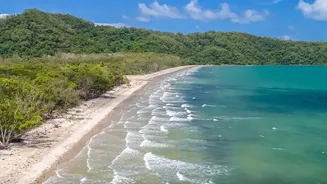
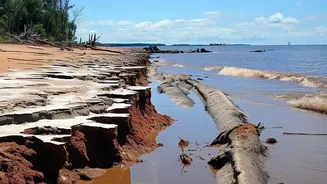
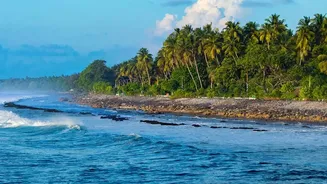
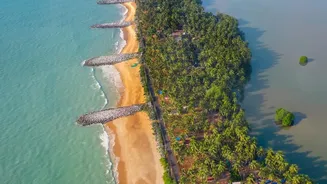
The eastern coast of India is a dynamic and densely populated region, but it is also a landscape in retreat. According to the National Centre for Coastal Research, a significant percentage of this coastline is experiencing erosion. This isn't a slow,
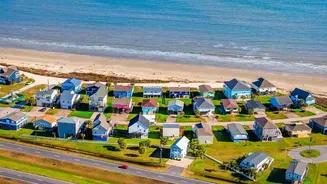
gentle process; it's a relentless assault driven by the volatile Bay of Bengal, which spawns frequent and intense cyclones. Each storm surge can strip away huge amounts of land overnight. Compounding the problem are rising sea levels and human activities like the damming of major rivers, which traps the sediment that would naturally replenish the coast. For the millions who live and work here, this means lost homes, contaminated farmland, and threatened livelihoods.
Nature's Perfect Defender: The Mangrove
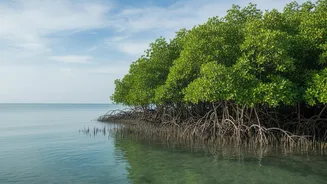
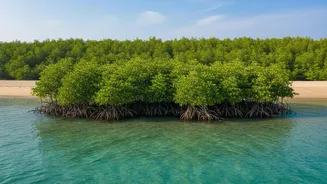
In the face of this crisis, communities are turning to a powerful, natural ally: the mangrove. These remarkable trees and shrubs are uniquely adapted to thrive in the salty, low-oxygen soil of coastal wetlands. They are often called 'bio-shields' for good reason. Their dense, tangled root systems act like a natural net, trapping sediment and stabilising the shoreline. When powerful waves from storms and cyclones roll in, these forests act as a formidable barrier, absorbing and dissipating the water's destructive energy, often reducing flooding and property damage. Studies have shown that areas protected by healthy mangrove belts suffer significantly less damage during major weather events like cyclones.
From Concern to Community Action
Across the eastern coast, local communities, often with guidance from organisations like the M.S. Swaminathan Research Foundation (MSSRF), are taking matters into their own hands. In villages in Andhra Pradesh, Tamil Nadu, and Odisha, fishermen and local women have become the primary drivers of mangrove restoration. These are not large-scale, top-down government projects but grassroots movements born from a direct understanding of what is at stake. Volunteers, some of whom once saw mangroves merely as a source of firewood, are now their most ardent protectors after learning about their crucial role in safeguarding their homes and sustaining the fish populations they depend on.
The Science of Planting a Green Wall
Restoring a mangrove forest is more complex than simply planting saplings in the mud. Success depends on a careful, scientific approach. Community volunteers are trained to understand the local hydrology, as a key reason for degradation is the lack of proper tidal water flow, which can make the soil too salty. Restoration often begins by digging shallow canals to facilitate this flow. Volunteers learn to identify the right species for the right location, whether it's Avicennia, which can tolerate higher salinity, or Rhizophora, which thrives along creek banks. From establishing nurseries to the meticulous planting of propagules along the newly dug canals, the community is involved at every stage, fostering a deep sense of ownership.
A Shield with Many Benefits
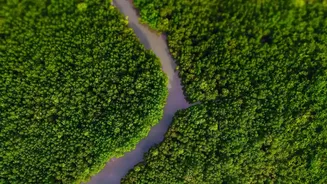
The impact of these community-led projects extends far beyond just preventing erosion. Mangrove forests are vital nurseries for countless species of fish, crabs, and shrimp, directly boosting the local fishing economy and ensuring food security. They are also incredibly efficient at carbon sequestration, capturing and storing vast amounts of carbon dioxide from the atmosphere, making them a crucial tool in the fight against climate change. Furthermore, these projects create direct employment, providing income to the very people who plant and protect the forests. By restoring the ecosystem, these volunteers are not just building a shield; they are rebuilding a healthier, more prosperous, and resilient future for their communities.