






The Science of Sight and Surface
The reason minor wall flaws are so noticeable comes down to how light interacts with a surface. Glossy and even semi-gloss finishes reflect light directly. When light hits a bump or a dip, it creates a bright highlight on one side and a distinct shadow
on the other, effectively drawing a spotlight on the imperfection. Paint, being a thin coating, follows every contour of the wall, meaning it does little to hide these issues and can often accentuate them. This is why a freshly painted wall can sometimes make you notice flaws you never saw before. The smoother and shinier the surface, the more it will highlight any deviation from a perfectly flat plane.
Why Matte Finishes Are Your Best Friend
Matte wallpaper offers a powerful solution because it works on a simple principle: light diffusion. Instead of reflecting light like a mirror, a matte surface scatters it in many different directions. This soft, non-reflective quality means that fewer harsh highlights and shadows are created, making it much harder for the eye to detect small bumps and shallow dents. The finish essentially absorbs light rather than bouncing it back, causing imperfections to visually recede. This makes matte options the most forgiving choice for walls that aren't perfectly smooth, especially in rooms with a lot of natural light that can be unforgiving.
The Distraction Power of Colour-Blocking
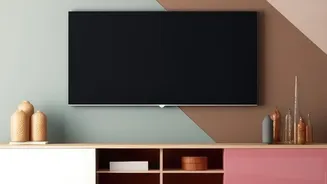
While a matte finish handles the light, a colour-blocking pattern handles the eye. Our brains are wired to find and follow patterns. When you introduce a design with bold, distinct blocks of colour, geometric shapes, or any busy, abstract pattern, you give the eye something compelling to focus on. This visual distraction makes the viewer's brain prioritize the overall design—the clean lines of the colour blocks, the rhythm of the shapes—over the subtle texture of the wall underneath. The pattern effectively camouflages the imperfections. Darker colours and intricate designs are particularly effective at this, as they naturally mask small shadows and textures.
Choosing the Right Material
Not all wallpapers are created equal when it comes to hiding flaws. For best results, look for thicker, higher-quality materials. Non-woven wallpapers are an excellent choice. Made from a blend of natural and synthetic fibres, they are more durable, tear-resistant, and thicker than standard paper. This added thickness provides a physical layer that can smooth over minor irregularities. Thick vinyl wallpapers are also a great option. Avoid very thin or light-coloured, solid wallpapers, as they are the least forgiving and may even show the wall's texture through the paper. Many modern wallpapers available in India are designed to be durable and suitable for local climate conditions.
Preparation and Realistic Expectations
It’s important to have realistic expectations. Wallpaper is a fantastic tool for disguising minor issues like small hairline cracks, shallow dents, or the slight texture left by a paint roller. However, it is not a cure for major structural problems. Before you begin, ensure the wall is clean, dry, and sound. Any large holes or loose plaster should be repaired, filled, and sanded smooth. While wallpaper can save you from a full skim coat, proper preparation is key to a professional-looking finish. For walls with more noticeable issues, using a layer of lining paper before applying your decorative wallpaper can create an even smoother base.