



Beyond the Perfect Picture
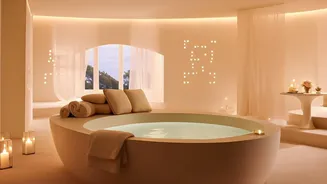
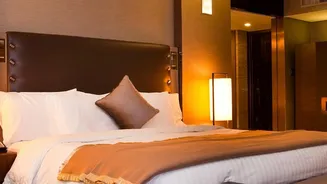
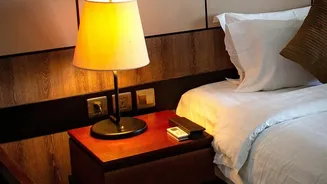
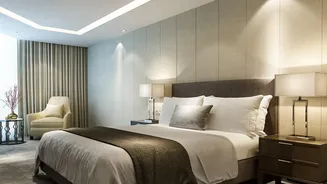
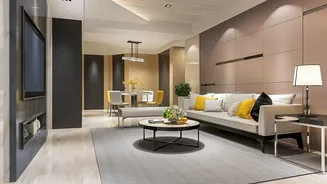
The first step to smarter booking is understanding that hotel photos are advertisements, not documentaries. Hoteliers hire professionals who use specific techniques to make rooms look as appealing as possible. Wide-angle lenses are frequently used to make spaces
appear larger and more expansive than they are in reality. Lighting is another key element; photographers often shoot during the 'golden hour' or use professional lighting to create a warm, inviting glow that might not exist otherwise. They will stage the room perfectly, adding fresh flowers, artful props, and clearing all clutter to tell a story of ideal comfort. While these practices aren't necessarily dishonest, they present the room in its absolute best light, a standard that can be hard to live up to once you check in.
Decode the Room Categories
The name of a room category—like 'Deluxe', 'Superior', or 'Executive'—can be arbitrary and mean different things from one hotel to another. A 'Deluxe Room' in one property might be smaller and less equipped than a 'Standard Room' in another. Don't be swayed by fancy names. Instead, scroll past the hero image and find the detailed room description. Look for specific, objective information. What is the exact square footage or meterage of the room? What size is the bed (King, Queen, Double)? Does the description list a balcony, a work desk, or a specific type of coffee machine? These concrete details are far more reliable than a vague, aspirational category title. Paying close attention to these specifics helps you compare apples to apples when deciding between different hotels or room types.
The Critical Window Check
A room's windows have a massive impact on your stay, influencing everything from your mood to your sleep quality. Professional photos often maximize natural light to make a room feel bright and airy. However, they can also hide a disappointing reality. If a photo shows windows that are glowing white with no visible detail outside, it could be a technique to obscure an ugly view, like a brick wall, an air conditioning unit, or a noisy street. Look for photos that show the actual view. Also, consider the window's placement. A room with large, floor-to-ceiling windows will feel more spacious and connected to the outdoors. Conversely, a room with a small, high window might feel more like a basement. When booking, if a view is important to you, don't just settle for 'City View'. Look for guest photos to see the reality.
A Close-Up on the Bathroom
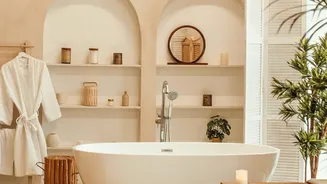
The bathroom is often a make-or-break part of a hotel stay, yet it’s frequently overlooked during the booking process. Professional photos will highlight a sparkling clean and often spacious bathroom. Your job is to look closer. First, assess the size. Is it a sprawling, spa-like oasis or a compact, functional space? Look for clues like the distance between the toilet and the sink. Second, check the amenities. Does it have a walk-in shower, a bathtub, or a shower-tub combination? Are there two sinks or one? Look at the hardware—do the taps and showerhead look modern and well-maintained or dated and worn? A clean, well-appointed bathroom is often a sign of a well-run hotel, so scrutinizing these photos can tell you a lot about the property's overall standards.
Seek Truth in Traveller Photos
The single most powerful tool at your disposal is the gallery of photos taken by fellow travellers. While professional shots are designed to sell, guest photos on review sites show the unvarnished truth. These candid shots reveal what the room looks like with normal lighting, from a normal angle, and with actual luggage in it. They expose the cramped corners the wide-angle lens hid, the real view from the window, and any signs of wear and tear the marketing photos carefully avoided. When browsing reviews, filter for the most recent photos to ensure they reflect the hotel's current condition. Comparing the hotel's polished gallery with real-world guest photos is the closest you can get to a virtual inspection before you commit to booking.