


Early September: Planets on Parade
The month begins with a beautiful morning display for early risers. Before dawn on September 6 and 7, you can spot a slender crescent Moon cozying up to the reddish glow of Mars in the eastern sky. Look for the pair around 3 a.m. local time. Just a day
later, on September 8, the Moon continues its journey, appearing near the giant planet Jupiter. These planetary conjunctions are easy to spot without any special equipment and offer a serene way to start your day. Even Saturn is visible in the southwest sky during these early morning hours, completing the planetary lineup.
September 11-12: The Best Nights for Stargazing
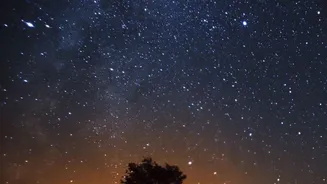
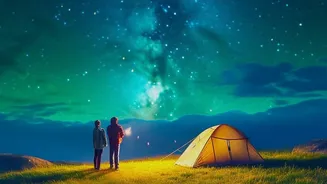
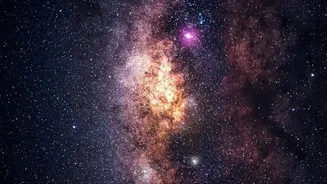
Circle these dates on your calendar. The New Moon on September 11 means the sky will be at its darkest, free from lunar glare. This provides an ideal window to observe faint objects. If you can get away from city lights to a darker location like a park, you'll have a breathtaking view of the Milky Way's vibrant core. September is one of the last chances in 2026 to see the Milky Way's core in the Northern Hemisphere before it disappears until the spring, making these moonless nights particularly special for stargazers.
September 18: Venus Shines Its Brightest
The evening of September 18 features a can't-miss spectacle: the planet Venus will reach its peak brightness for its 2026 evening appearance. Known as the "Evening Star," Venus will be exceptionally vivid just after sunset near the western horizon. Its brilliance makes it one of the easiest celestial objects to find, even from brightly lit urban areas. This is a fantastic opportunity to witness the dazzling luminosity of our planetary neighbor. As a bonus, you might also spot Mercury nearby.
September 23: The Autumnal Equinox
While not a visual event you can watch, the autumnal equinox on September 23 marks a significant seasonal milestone. At 00:05 UTC, the Sun will shine directly on the equator, resulting in nearly equal hours of day and night across the globe. For the Northern Hemisphere, this is the official start of autumn. The shift in seasons is often associated with an increased chance of seeing auroras or the Northern Lights, due to the way Earth's magnetic field interacts with the solar wind around the equinoxes. So, it's a good time to keep an eye on aurora forecasts.
September 26: The Full Harvest Moon
September's grand finale is the Full Harvest Moon on September 26. This full moon is named because its proximity to the autumnal equinox provides bright moonlight for several evenings in a row, historically helping farmers harvest their crops late into the night. The Moon will officially reach its peak illumination during the day in North America, but it will appear full and spectacular as it rises around sunset. Look to the east as the Sun goes down to catch the Moon at its most impressive, when an optical illusion makes it look enormous and often a shade of orange near the horizon.
September 26: A Challenge for Binoculars – Neptune at Opposition
On the same night as the full moon, the distant ice giant Neptune reaches opposition. This means Earth is positioned directly between Neptune and the Sun, making the planet appear at its brightest and closest for the year. However, Neptune is so far away that it's never visible to the naked eye. If you have a good pair of binoculars or a telescope, you can try to spot it as a tiny, faint blue dot in the constellation Pisces. The bright Harvest Moon will make it a challenge, but for amateur astronomers, it's a rewarding one. Saturn will also be a travel companion to the Moon that night, appearing nearby throughout its journey across the sky.