



The Planet's Powerful Climate Cycle
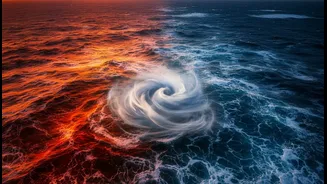
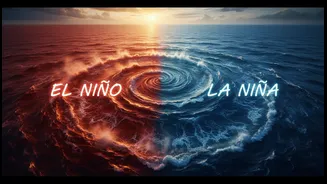
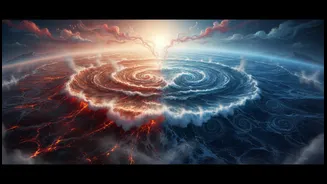
At its core, both El Niño and La Niña are part of a larger phenomenon called the El Niño-Southern Oscillation (ENSO). Think of ENSO as a giant, irregular climate rhythm in the tropical Pacific Ocean that swings between three phases: a warm phase (El Niño),
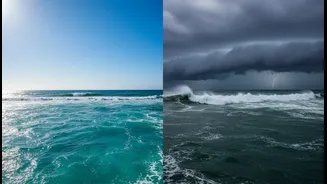
a cool phase (La Niña), and a neutral phase. This cycle involves changes in both ocean surface temperatures and the atmospheric pressure above, creating a coupled system that influences weather globally. These phases don't follow a strict schedule, typically occurring every two to seven years and lasting for nine to twelve months, though some can persist longer.
El Niño: The Warm Phase
El Niño, which means "the little boy" or "Christ child" in Spanish, was named by fishermen off the coast of South America who noticed the waters warming around Christmas. It is defined by a significant warming of the sea surface in the central and eastern tropical Pacific Ocean. During an El Niño event, the normal east-to-west trade winds weaken, or even reverse. This allows the massive pool of warm water normally piled up in the western Pacific to slosh back eastward, toward South America. This shift in ocean heat changes atmospheric circulation patterns, altering rainfall and temperature around the world. For India, this disruption is critical, as it often weakens the vital monsoon circulation.
La Niña: The Cool Phase
La Niña, meaning "the little girl," is essentially the opposite of El Niño. It's characterized by cooler-than-average sea surface temperatures in the same eastern and central Pacific regions. During La Niña, the trade winds become even stronger than usual, pushing more warm surface water toward Asia and allowing deep, cold water to rise to the surface along the South American coast. This creates a strong high-pressure system over the eastern Pacific and a low-pressure zone in the west. This intensified state of the 'normal' pattern generally has a positive effect on India's weather.
The Critical India Connection
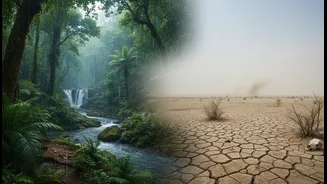
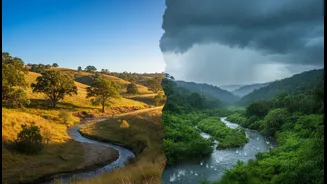
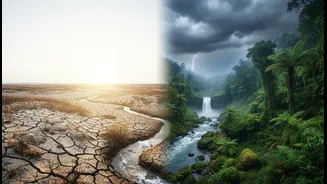
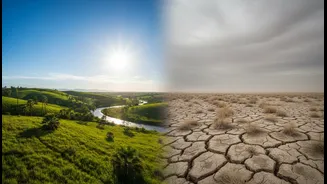
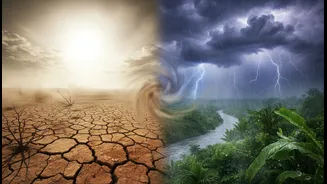
The Southwest Monsoon is the lifeblood of India's agriculture-dependent economy. ENSO's phases directly interfere with it. A strong El Niño is often bad news, as it can suppress monsoon rainfall, leading to droughts. Historically, many of India's drought years have coincided with El Niño events. The phenomenon weakens the low-pressure system over India that pulls in moisture-laden winds. Conversely, La Niña is typically beneficial for India. The strengthening of the normal circulation pattern often results in normal or above-normal monsoon rainfall, which is great for agriculture but can also increase the risk of floods.
Beyond the Monsoon
The impacts extend beyond just monsoon rainfall. El Niño years are associated with more intense and prolonged heatwaves and warmer winters. This not only affects public health but also drives up energy demand for cooling, straining the power grid. Water reservoirs can be depleted, affecting drinking water supply and hydropower generation. La Niña, while bringing good rains, can cause extreme cold during winter months and also alter cyclone patterns. The economic consequences are significant, with impacts on crop yields directly influencing food prices and inflation.
The 2026 Forecast: A Strong El Niño
As of July 2026, the world has entered an El Niño phase, and it is forecast to strengthen rapidly and potentially become a historically strong event. Forecasts from the World Meteorological Organization and other global agencies indicate a high probability of a strong El Niño developing through September and peaking between November 2026 and February 2027. For India, this has raised concerns over the ongoing monsoon season, with predictions of below-normal rainfall. The arrival of a strong El Niño increases the likelihood of higher global temperatures, more extreme heatwaves, and potential disruptions to agriculture and energy systems across the country.