






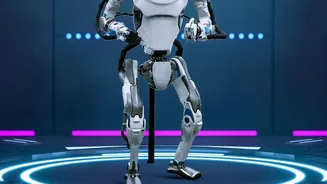

The New Recruits on the Assembly Line
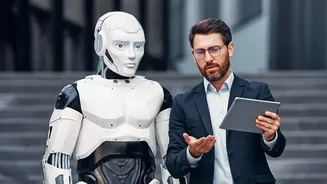
For decades, industrial automation has meant cages, fixed robotic arms, and production lines designed around machines. That paradigm is being challenged by a new wave of 'general-purpose' robots shaped like people. Companies like Agility Robotics, Figure
AI, Tesla, and Sanctuary AI are at the forefront of this shift, developing humanoids intended to work in environments built for humans. The most high-profile example is Figure AI's partnership with BMW, where its robots are already handling tasks like sheet metal work in a live production environment at the automaker's Spartanburg, South Carolina plant. Similarly, Agility Robotics' bipedal robot, Digit, is being deployed by logistics giant GXO and has been tested by Amazon and Toyota. These aren't one-off experiments; they represent the first concrete steps toward integrating human-like machines into the industrial workforce.
Why a Human Shape?
The strategic bet behind the humanoid form is flexibility. Most factories, warehouses, and logistics hubs are 'brownfield' sites—existing facilities designed for human workers. Retrofitting them for traditional automation is prohibitively expensive. A robot with two legs, two arms, and grasping hands can, in theory, walk up to any workstation, use the same tools a person would, and perform a task without requiring a complete overhaul of the workspace. This 'drop-in' capability is the holy grail. It allows robots to move between different tasks, from loading parts onto a conveyor, to picking items from a shelf, to eventually even climbing stairs or opening doors—all actions that are impossible for today's specialised, fixed automation. The goal is to create a machine that can adapt to human workflows, not the other way around.
From Factory Floors to Fulfillment Centres
The primary targets for commercial deployment are jobs that are dull, dirty, and dangerous. In manufacturing, this includes machine tending and moving components between 'islands of automation'. At BMW, Figure's robots handle repetitive and ergonomically demanding sheet metal loading tasks. In logistics, Agility's Digit robot moves totes and parcels in warehouses, accumulating tens of thousands of operational hours in live customer environments. Beyond these initial beachheads, companies envision a wider range of applications. Automakers like Hyundai and Kia have announced roadmaps to deploy humanoids in all new factories after 2032. The ambition is to create a versatile workforce that can tackle labour shortages in physically demanding roles across manufacturing, supply chain management, and potentially even retail and elder care in the long term.
The Multi-Million Rupee Question
For all their advanced capabilities, the widespread adoption of humanoid robots hinges on a single, critical factor: cost. The hardware itself is expensive. Premium commercial systems from companies like Agility Robotics can have a purchase price estimated around $200,000-$250,000. Tesla's Elon Musk has stated an ambitious long-term target price of $20,000 to $30,000 for its Optimus robot, but this relies on achieving massive economies of scale that are still years away. Beyond the sticker price are significant hidden costs, including deployment fees, software integration, maintenance, and operator training, which can add tens of thousands of dollars to the total cost of ownership. Many providers are therefore pivoting to a 'Robots-as-a-Service' (RaaS) model, charging a monthly fee rather than a large upfront capital expense, making adoption more palatable for businesses who need to see a clear and fast return on investment.
The Road to a Viable Business Case
Proving that these machines are not just technologically impressive but also economically viable is now the central challenge. Companies are racing to gather operational data that demonstrates a clear return on investment by improving throughput, reducing costs, and enhancing worker safety. Agility Robotics recently became the first US-based pureplay humanoid robotics company to be publicly listed, a move that brings its financial performance under intense scrutiny but also provides capital to scale production. The company has already reported hundreds of millions in committed orders for its nextgeneration model. As competition intensifies, particularly from lowercost manufacturers, and the underlying AI software becomes more powerful, the industry is betting that prices will fall. The next few years will be critical in determining whether these humanshaped machines become a common sight in industry or remain a fascinating but niche technology.