





The Challenge of Cosmic Accuracy
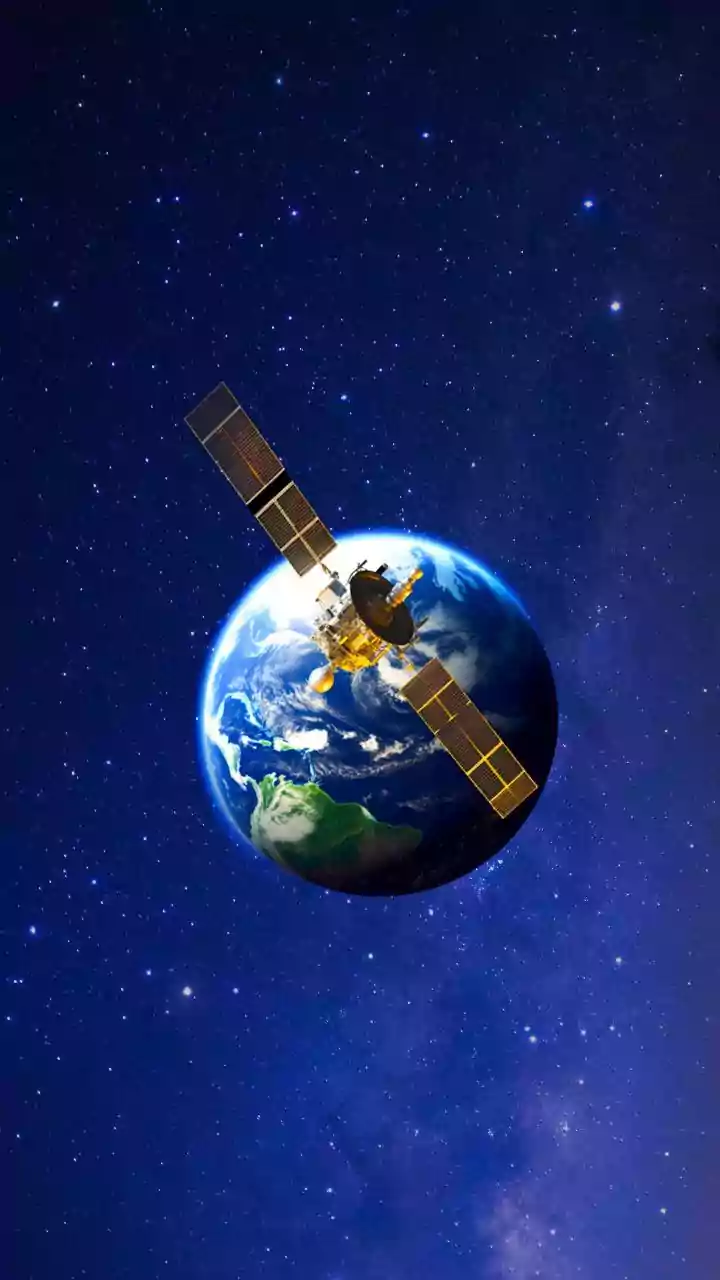
A spacecraft's journey is a violent one. The rigours of launch and the harsh environment of space, with its radiation and extreme temperatures, can subtly alter the sensitive instruments on board. These instruments, which measure everything from the chemical
composition of Martian rocks to the health of crops on Earth, are the lifeblood of any mission. If their measurements drift, even slightly, the data they send back becomes unreliable. It’s like trying to bake a cake with a thermometer that's off by 20 degrees; the result will be a disaster. To prevent this, scientists need a way to constantly check and re-calibrate these instruments after they've left the planet. This process, known as radiometric calibration, ensures that the numbers and images sent back from space accurately represent physical reality.
Earth's Own Calibration Deck
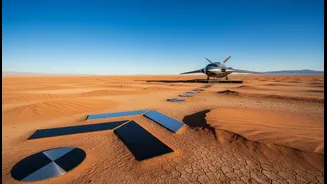
While many spacecraft have onboard calibration tools, like internal lamps or shutters, the gold standard for ensuring long-term accuracy is a technique called vicarious calibration. This method uses large, natural features on Earth's surface as a constant, predictable reference point. Think of them as giant test cards for satellites. Scientists select sites that are large, uniform in colour and texture, flat, and located in areas with stable, clear atmospheric conditions. A satellite flies over one of these sites, and at the exact same time, a ground team takes highly precise measurements of the light reflecting off the surface and the conditions of the atmosphere. By comparing the satellite's reading with the 'ground truth' data, engineers can fine-tune the instrument's calibration, correcting for any drift.
The World's Most Reliable Landscapes
The most famous of these sites are often desolate and remote. The Railroad Valley Playa in Nevada, USA, is a dry lakebed so uniquely suited for this purpose that NASA and the Bureau of Land Management have protected over 22,000 acres for calibration activities. Its consistent surface and clear skies have been used to calibrate instruments on vital missions like Landsat and Terra since 1993. Other key locations include vast sand seas in the Saharan Desert, the stark white expanse of the Salar de Uyuni salt flats in Bolivia, and even the ultra-stable ice sheets of Antarctica. These sites are chosen because their reflectance properties are incredibly stable over time, making them the perfect, unchanging benchmark against which to measure the performance of multi-million dollar space assets.
A Global Effort for Better Data
This calibration effort is a global, collaborative endeavour. The Committee on Earth Observation Satellites (CEOS) coordinates a network called RadCalNet, which includes instrumented sites in the USA, France, China, and Namibia. This network aims to standardise calibration methodologies so that data from different satellites, run by different agencies, can be reliably compared. In India, the National Remote Sensing Centre (NRSC) campus in Shadnagar features its own calibration patterns, including unique coloured squares, to validate data from ISRO's constellation of remote sensing satellites. Furthermore, ISRO employs sophisticated techniques, using onboard star sensors to calibrate the gyroscopes that control satellite orientation, ensuring payloads are pointed with absolute precision. This ground-and-space-based calibration is crucial for everything from agricultural monitoring to disaster management.
Why It Matters for Everyone
Ultimately, the careful calibration of satellite instruments has a profound impact back on Earth. The reliable data they provide is fundamental to our modern world. It informs weather forecasts, helps farmers improve crop yields, allows for effective management of water resources, and enables rapid response to natural disasters like floods and wildfires. When scientists study climate change, they rely on decades of consistent satellite data to identify long-term trends; this is only possible because of meticulous, ongoing calibration. So, the next time you see a stunning image of a distant galaxy or check a weather app, remember the unsung heroes of space exploration: those quiet, unchanging patches of Earth that serve as our steadfast link to the cosmos.