






The Policy Shift That Opened the Skies
The transformation began in earnest with strategic government reforms, culminating in the landmark Indian Space Policy 2023. This policy was designed to move India from being simply a space-faring nation to a full-fledged space economy. It formally invited
Non-Government Entities (NGEs) to participate in end-to-end space activities, from building rockets and satellites to providing space-based services. To facilitate this, the government established the Indian National Space Promotion and Authorisation Centre (IN-SPACe) as a single-window agency. Its mandate is to promote, authorise, and supervise private space activities, effectively acting as an interface between ISRO and the burgeoning private sector. This new framework allows ISRO to transition its focus towards advanced research and development and deep space exploration, while private firms take over more routine operations.
Meet the New Rocket-Builders and Satellite-Makers
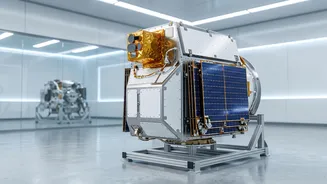
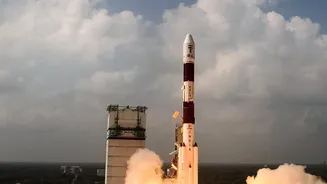
This new environment has energized a wave of startups, now numbering over 400. Companies like Skyroot Aerospace and Agnikul Cosmos are at the forefront of developing private launch vehicles. Skyroot made history by launching India's first privately developed rocket, the Vikram-S, and recently became the country's first space-tech unicorn. Agnikul Cosmos is pioneering innovation with the world's first single-piece 3D-printed rocket engine, which drastically reduces manufacturing time and cost. Other key players include Dhruva Space, which develops small satellite platforms, and Pixxel, which is building a constellation of hyperspectral imaging satellites to provide detailed data from space. These companies are not just building hardware; they are creating a competitive commercial market for launch services and satellite data.
Investment and Economic Ambition
The policy reforms have unlocked a significant flow of capital. Cumulative private investment in the sector surged from just over $100 million in 2021-22 to more than $618 million by March 2026. The government's goal is ambitious: to expand India's share of the global space economy and grow the domestic industry from around $9 billion today to over $40 billion by the next decade. This growth is being driven by both upstream activities like manufacturing and downstream applications. The demand for satellite communications, Earth observation data for agriculture and disaster management, and navigation services is creating vast commercial opportunities.
Navigating the Challenges Ahead
Despite the momentum, the path is not without obstacles. Indian space startups face intense global competition from established giants like SpaceX and Rocket Lab. While investment is growing, funding levels are still modest compared to the multi-billion dollar investments seen in the US commercial space sector. There is also a need for more comprehensive legislation to cover complex issues like liability and insurance for space activities. Furthermore, infrastructure constraints, such as a limited number of launch pads, and a continued dependence on imports for certain high-grade electronics and components, remain significant hurdles to overcome. Building a robust domestic supply chain and skilled talent pool is crucial for long-term self-reliance and competitiveness.