





The Challenge of Full Reusability
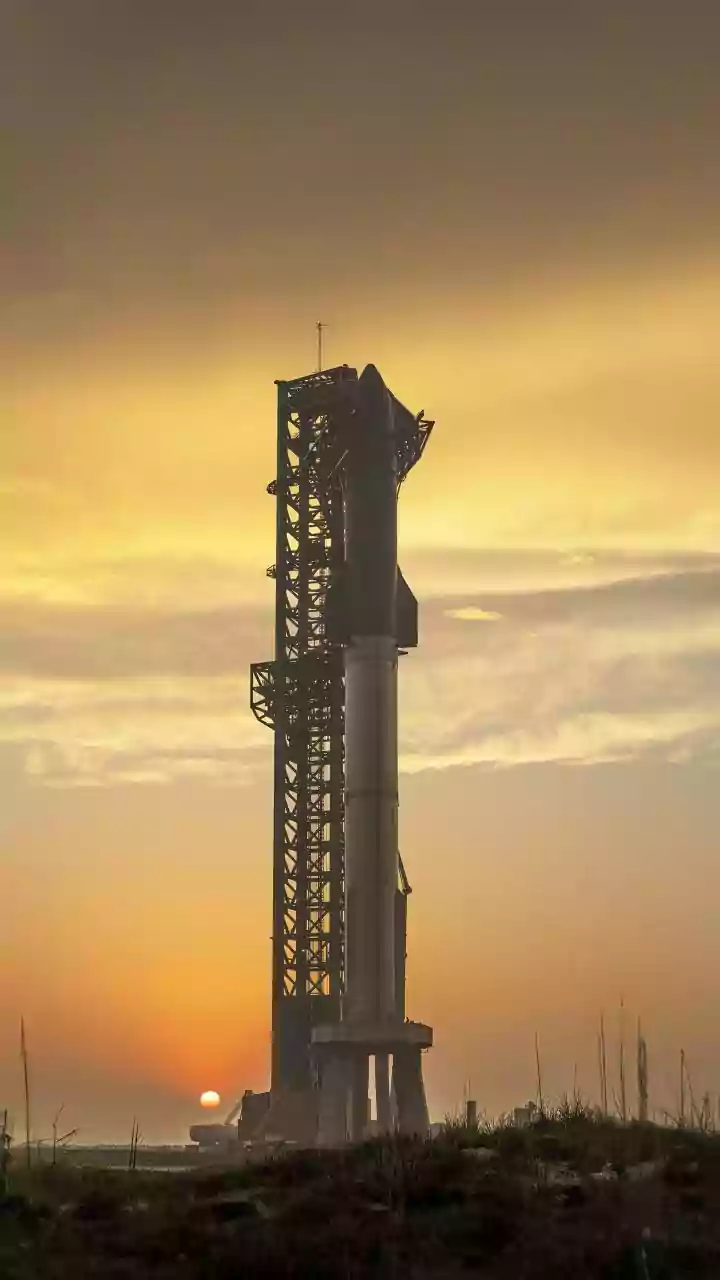
For years, the holy grail of spaceflight has been full and rapid reusability—not just landing the first-stage booster, a feat SpaceX mastered with its Falcon 9 rocket, but recovering the second stage as well. For a vehicle as massive as Starship, which
stands taller than any rocket ever built, this presents an immense engineering challenge. The goal is to create a launch system that operates more like an airplane than a traditional rocket, where the only major cost per flight is the fuel. Each test flight pushes closer to this reality, but the thirteenth mission marked a significant turning point by proving the end-to-end concept in a single flight.
A Soft Landing for a Super Heavy Booster
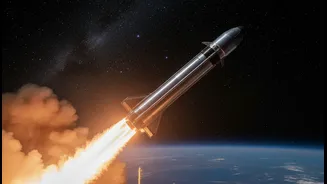
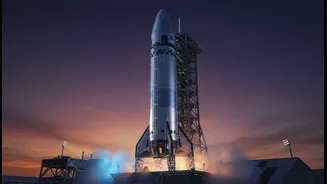
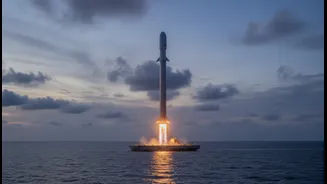
The first major hurdle was the successful return of the Super Heavy booster. After propelling the Starship upper stage on its journey, the 71-meter-tall booster detached and performed a series of complex maneuvers. It executed a 'boostback burn' to reverse its course and head back toward its landing zone in the Gulf of Mexico. The most critical phase was the final landing burn, where multiple Raptor engines reignited to slow the massive stage from supersonic speeds for a gentle, controlled splashdown. While previous tests had come close, this flight saw the booster execute a precise vertical water landing, proving the hardware and software are capable of bringing it back safely. The next step will be to 'catch' the booster with giant robotic arms on the launch tower, but this soft splashdown was the essential proof of concept.
Starship's Fiery and Controlled Return
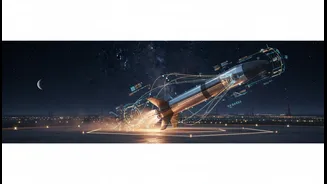
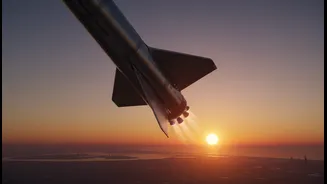
Arguably the bigger achievement was the survival and controlled splashdown of the Starship spacecraft itself. After coasting on a suborbital trajectory, the ship re-entered Earth's atmosphere at nearly 27,000 kilometers per hour. It used its four large flaps for active aerodynamic control, maneuvering like a skydiver to scrub off speed while enduring the intense heat of reentry. Onboard cameras showed the vehicle glowing red-hot, surrounded by plasma, yet maintaining its orientation. In the final moments, Starship performed a dramatic 'belly-flop' landing maneuver, flipping from horizontal to vertical and firing its engines for a soft landing in the Indian Ocean. This was the first time the entire sequence, from atmospheric entry to a powered landing, was completed successfully, demonstrating that the vehicle's heat shield and control systems work as designed.
The Unlocking of a New Space Economy
Successfully recovering both stages is not just a technical victory; it is the key to unlocking SpaceX's entire business model for Starship. An expendable rocket's cost includes the hardware, which is thrown away after one use. By reusing every part of the system, the cost per launch plummets to little more than the price of propellant and refurbishment. This dramatic cost reduction, potentially by a factor of 100 or more, fundamentally changes the economics of accessing space. It makes launching large constellations of satellites, like SpaceX's own Starlink network, far more affordable. It also enables entirely new commercial opportunities, from large-scale space tourism to point-to-point cargo delivery on Earth.
Paving the Way for the Moon and Mars
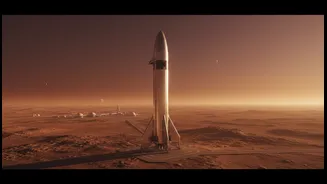
Beyond the commercial implications, this test is a critical milestone for humanity's return to deep space. NASA has selected Starship as the Human Landing System (HLS) for its Artemis program, which will land astronauts on the Moon for the first time in over 50 years. The success of this flight gives NASA confidence that the vehicle can safely deliver crew and cargo to the lunar surface. For SpaceX, the Moon is just a stepping stone. The company's ultimate goal is the colonization of Mars, a feat that would be economically impossible without a fully and rapidly reusable transportation system. This thirteenth flight, by demonstrating the core principles of reusability, has turned that science-fiction dream into a tangible engineering objective.