
More Than Just a Lucky Guess
For thousands of years, dogs have been our closest animal companions, evolving an incredible sensitivity to our behaviour. Recent studies are now uncovering just how deep that sensitivity goes. Research indicates that dogs do more than just react to outcomes;
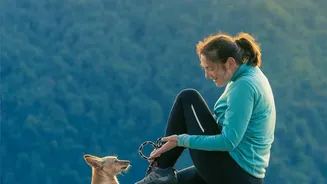
they seem to assess the intention behind our actions. One fascinating study set up a scenario where a researcher would offer a dog a treat, but then fail to deliver it. The key was in the 'why': sometimes the person would intentionally pull the treat away (an 'unwilling' condition), while other times they would 'accidentally' drop it or be blocked from passing it through a partition ('unable' conditions). The results were revealing. Dogs responded with more patience and less frustration when the human seemed unable to give the treat, waiting to see if the problem would be fixed. However, when the human was clearly unwilling, the dogs were more likely to stop trying, sit or lie down, and even wag their tails less. This difference in reaction suggests they aren't just responding to the lack of a treat, but to their interpretation of the human's intent.
The Impact of a Stable Home
The headline's mention of 'housing conditions' points to another crucial factor: a dog's life experience and environment. While one might assume a shelter dog is less 'smart', the reality is far more nuanced. Research comparing shelter dogs to pet dogs shows that the stressful and inconsistent environment of a kennel can significantly impact behaviour. For instance, some studies found shelter dogs maintained eye contact for shorter durations, a key element in human-dog communication. This isn't a sign of lower intelligence, but rather an adaptation to an environment where consistent, positive human interaction might be scarce. The constant noise, changing population, and lack of a stable bond can lead to higher long-term stress levels, which naturally affects how a dog engages with a new person or a cognitive puzzle. In fact, some research has shown few significant differences in cognitive abilities between rehomed rescue dogs and those living with a family from puppyhood, suggesting that with a stable, loving home, these dogs can quickly adapt and form strong bonds.
Reading the Room, Not Just the Command
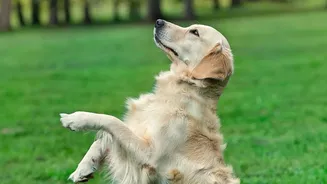
This ability to read intent is part of a broader skill set known as social cognition. It’s the same ability that helps humans navigate complex social interactions. For dogs, it’s about more than just following a 'sit' command; it's about understanding the context. They watch our posture, listen to our tone of voice, and observe our facial expressions to predict what we're going to do next. This is why your dog might know you're preparing for a walk long before you pick up the leash. This cognitive flexibility has been honed by domestication. Studies have shown that even young puppies, with minimal training, are better at using human pointing gestures than chimpanzees, our closest primate relatives. They seem to be born with an innate predisposition to look to humans for cues, an advantage wolves that are socialised with humans do not always share to the same extent.
What This Means for Dog Lovers
Understanding this research can change how we interact with all dogs, whether they are a new puppy or a recently adopted adult from a shelter. It underscores the importance of patience, clear communication, and building a foundation of trust. When a dog doesn't perform a command, it may not be stubbornness; they could be misinterpreting your intention or feeling stressed by the environment. For shelter dogs, it’s a powerful reminder that the timid or unresponsive animal you see in a kennel may be a completely different, more engaged and intelligent companion once they are in a secure and predictable home. Creating a stable routine and a strong bond provides the context your dog needs to understand your world and show you just how smart they really are. A 2024 study even found that highly sociable shelter dogs behaved more like pet dogs in cognitive tests, suggesting their positive attitude towards humans helps bridge the gap created by their environment.