




1. The Gentle Neck Tilt
Let's start with the neck, which often carries the first signs of desk-related strain. Sit up tall in your chair, relax your shoulders, and gently tilt your head, bringing your right ear toward your right shoulder. You should feel a light stretch along
the left side of your neck. Hold this for 15 to 30 seconds without forcing it. Return to the center and repeat on the left side. This simple move helps release tension in the upper trapezius muscles, which get tight from stress and hunching. For a slightly different angle, you can also gently turn your head to look down towards your armpit to stretch the levator scapulae muscle.
2. The Shoulder Unwinder
Our shoulders tend to round forward when we focus on a screen, leading to poor posture and strain. To counteract this, perform simple shoulder rolls. Inhale as you lift both shoulders up toward your ears. Hold for a moment, then exhale as you roll them back and down, feeling your shoulder blades glide together. Repeat this motion five to ten times, focusing on the backward and downward movement. This helps open up the chest and resets your posture.
3. The Seated Spinal Twist
A stiff back is a classic symptom of sitting too long. A gentle twist can help decompress the spine and relieve lower back ache. Sit upright with both feet flat on the floor. As you exhale, gently twist your torso to the right, using the armrest or back of the chair for a light hold. Keep your hips facing forward. Breathe into the stretch, lengthening your spine on the inhale and deepening the twist slightly on the exhale. Hold for 20-30 seconds, then slowly unwind and repeat on the other side.
4. The Upper Back Releaser
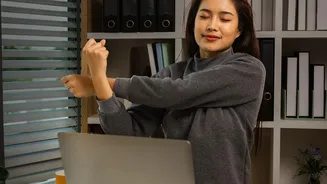
To counter the slouch that often develops during the day, this stretch targets your upper back. While seated, interlace your fingers and extend your arms straight out in front of you at shoulder height. As you reach forward, gently round your upper back and tuck your chin toward your chest, feeling a stretch between your shoulder blades. Imagine you are hugging a large beach ball. Hold this pose for 20 to 30 seconds, breathing into the space between your shoulders before releasing.
5. The Wrist and Forearm Stretch
Typing and using a mouse can put a lot of strain on your wrists and forearms. To give them a break, extend one arm in front of you with the palm facing up. With your other hand, gently pull the fingers of the extended hand down toward the floor until you feel a stretch in your forearm. Hold for 20 seconds. Then, flip your hand so the palm faces down and gently press the back of your hand toward your body. Hold again, then switch arms.
6. The Seated Figure-Four Stretch
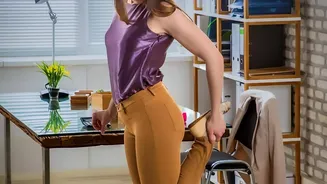
Your hips and glutes can become incredibly tight from sitting, which can contribute to lower back pain. The figure-four stretch is an excellent way to open them up. While seated, cross your right ankle over your left knee. Keep your back straight and gently press down on your right knee to feel a stretch in your right glute and hip. To deepen the stretch, you can slowly lean your torso forward. Hold for 20 to 30 seconds, then switch legs.
7. The Hamstring Lengthener
Tight hamstrings are another consequence of all-day sitting. To stretch them, move to the edge of your chair. Extend one leg straight out in front of you, with your heel on the floor and your toes pointing up. Keep your other foot flat on the floor with the knee bent. With a straight spine, slowly lean forward from your hips until you feel a stretch along the back of your extended leg. Rest your hands on your bent leg for support. Hold for 20 to 30 seconds and then switch sides.