




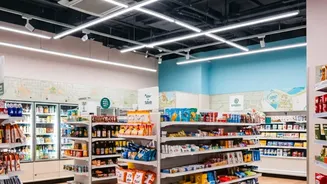

First, What Is a 'Dark Store'?
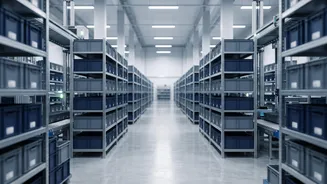
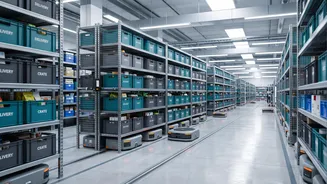
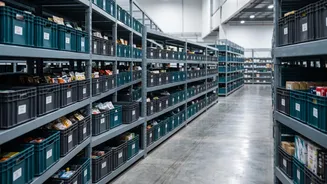
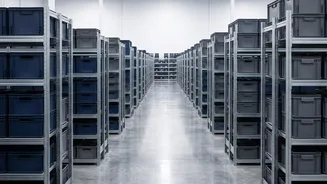
Think of a dark store not as a shop, but as a mini-warehouse. These locations are closed to the public and exist for one reason only: to fulfil online orders at lightning speed. Stocked with a curated range of high-demand products—from groceries and snacks
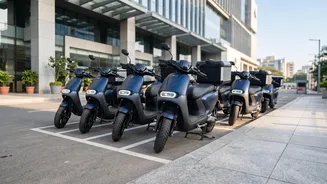
to basic electronics and personal care items—they are the engine of quick commerce. Instead of shoppers in the aisles, you have 'pickers' who race to assemble orders, handing them off to delivery riders waiting outside. Their layouts are optimised for speed, not for browsing, enabling platforms like Zepto, Blinkit, and Swiggy Instamart to meet their ambitious 10-to-20-minute delivery timelines.
Bengaluru: The Epicentre of Quick Commerce
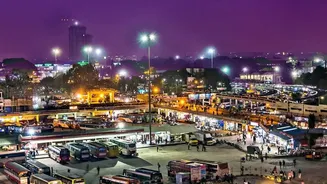
Bengaluru has become the undisputed capital of India's dark store boom, with some reports showing it hosts over 600 such facilities—more than any other Indian city. This concentration isn't accidental. The city's unique demographics are a perfect catalyst: a large population of young, tech-savvy professionals in dual-income households who are often time-poor but have disposable income. This is the exact audience that values the convenience of on-demand delivery over price. Add to this the city's notorious traffic, and the appeal of avoiding a trip to the store becomes even stronger. As a result, Bengaluru serves as the primary battleground where major players like Blinkit, Zepto, and Swiggy Instamart compete fiercely for market share, making the city a living laboratory for the future of urban retail.
The Puzzle: Why Do the Numbers Conflict?
One research firm might report 360 dark stores in Bengaluru, while another claims the number is over 600. This discrepancy isn't necessarily a sign that someone is wrong; rather, it reflects the immense difficulty of tracking a market that is both secretive and incredibly dynamic. Companies rarely publish a public list of their store locations for competitive reasons. This forces researchers to rely on different methods, each with its own limitations. Some use on-ground surveys, which are time-consuming and can quickly become outdated. Others reverse-engineer company apps, using serviceability checks to infer store locations. Still others may rely on company disclosures, which may not be frequent or granular. The very definition of a 'dark store' can also vary, from a tiny 1,500 sq ft 'pod' to a larger 4,000 sq ft facility. With stores opening and closing weekly, any count is merely a snapshot in time.
Counting Methods: A Look Under the Hood
The variation in store counts often boils down to methodology. Real estate consultancies like Savills India may provide estimates based on property transactions and area, giving a different number than a tech platform that has systematically mapped serviceability across the city. For instance, one analysis in July 2026 identified 629 stores in Bangalore by compiling public data from all major platforms. Meanwhile, a report from late 2025 by Savills put the number at 360. The different timeframes and data sources—public app data versus real estate trends—naturally lead to different totals. Some researchers even differentiate between retailer-owned stores, third-party logistics-operated stores, and marketplace-owned facilities, further segmenting the data.
The Real Trend Is Undeniable Growth
While the exact store count remains a moving target, the overall trend is crystal clear: explosive growth. The number of dark stores in India has expanded dramatically, with some reports noting a near-doubling of locations in under two years. This expansion is no longer limited to metros; it's rapidly penetrating Tier 2 and Tier 3 cities. For consumers, this means greater convenience and more choice. For the urban landscape, it means a fundamental re-engineering of retail real estate and logistics. The debate over the precise numbers is secondary to the larger story of how quick commerce is reshaping India's cities, one 10-minute delivery at a time. The real headline is not the count itself, but the velocity of change it represents.