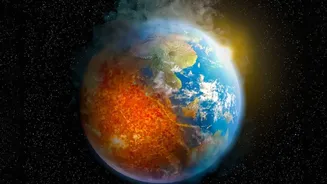

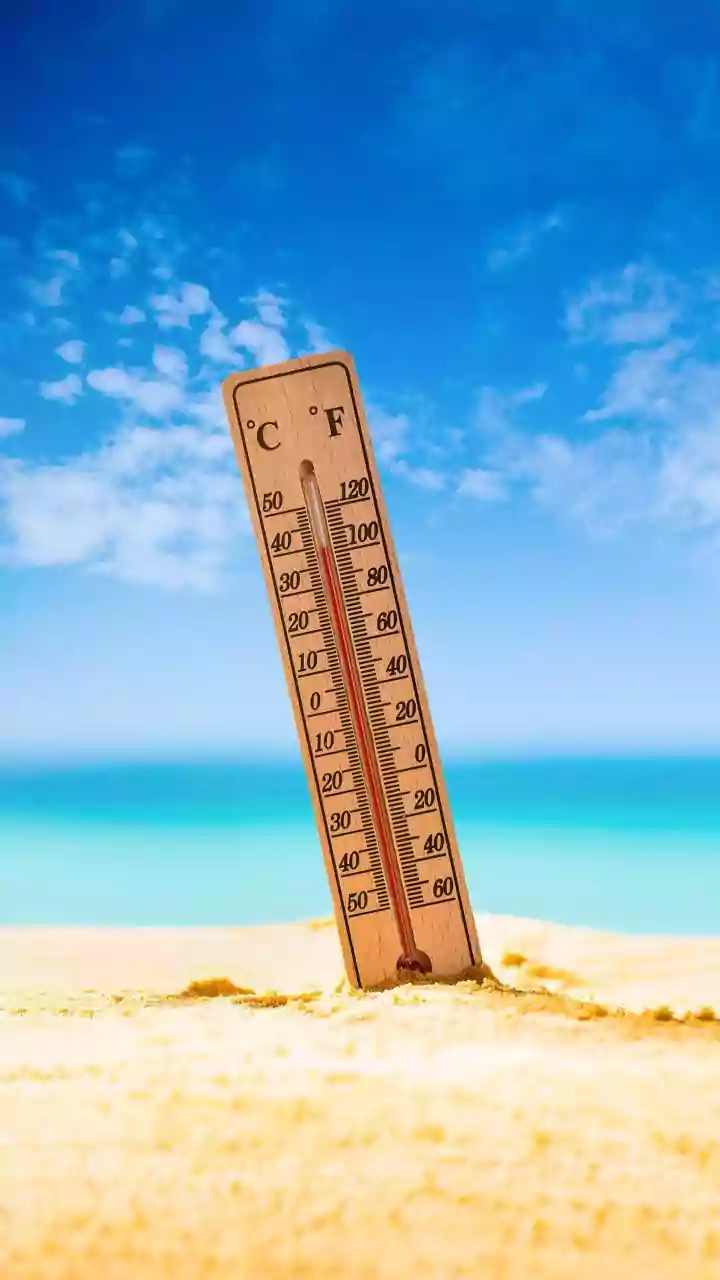



The world’s most critical climate goal is slipping away. A stark new United Nations report, highlighted ahead of the COP31 climate summit in Antalya, Türkiye, confirms that the window to limit global warming to 1.5°C has effectively closed.
The Critical 1.5°C Threshold
The 1.5 degrees
Celsius target is not an arbitrary number. It represents the threshold beyond which the impacts of climate change—such as extreme heatwaves, sea-level rise, and ecosystem collapse—become significantly more severe and, in some cases, irreversible. This goal was enshrined in the 2015 Paris Agreement, where nations across the globe committed to pursuing efforts to limit the global average temperature increase to 1.5°C above pre-industrial levels. For years, this target has served as the guiding principle for international climate policy, shaping everything from energy investments to national regulations. Scientists have warned that every fraction of a degree of warming matters, making the defence of this limit a global priority for human well-being and planetary health.
A Stark Warning from the UN
Recent UN reports, including the 2026 Emissions Gap Report and the UNFCCC's NDC Synthesis Report, paint a sobering picture. They conclude that due to insufficient action, the opportunity to meet the 1.5°C target without 'overshoot'—temporarily exceeding the limit—is now gone. Current national climate plans, known as Nationally Determined Contributions (NDCs), are falling drastically short. Even if fully implemented, these plans would lead to warming of around 2.6°C by 2100. The reports highlight a dangerous 'emissions gap': the chasm between where we are headed and where we need to be. To get on track for even a minimal overshoot scenario (peaking at 1.7-1.8°C before hopefully returning to 1.5°C), global emissions need to drop by 45% by 2035 compared to 2025 levels. Current pledges only promise a reduction of 11-15%.
Why Has Progress Stalled?
The stall in climate action is not due to a lack of solutions. The UN Secretary-General has described the problem not as an emissions gap, but a 'leadership gap'. Despite progress in renewable energy, where growth has outpaced expectations, global efforts are being undermined by a continued reliance on and investment in fossil fuels. The UNFCCC report notes that while climate action is being more broadly integrated into economies, the collective progress remains 'substantially off track'. Geopolitical instability and economic pressures have shifted focus for many governments. Furthermore, some of the world's largest emitters have policies that are inconsistent with the 1.5°C pathway. This lack of decisive, unified action means that while some sectors advance, overall emissions have not begun the steep decline required.
Consequences of Inaction for India
Missing the 1.5°C target has profound implications globally, and particularly for a climate-vulnerable nation like India. Exceeding this limit will intensify extreme weather events, including more powerful cyclones, erratic monsoons leading to both floods and droughts, and deadly heatwaves. As a country with a vast coastline, rising sea levels pose an existential threat to cities like Mumbai and Kolkata, as well as to millions living in low-lying areas. Water stress, already a significant issue, would worsen, impacting agriculture, which forms the backbone of the rural economy. While India has made significant strides in renewable energy, it also faces the challenge of balancing development with decarbonisation. The global failure to curb emissions puts additional pressure on developing nations, who are often the least responsible for historical emissions but face the most severe consequences.
The Path Forward: A Narrow Window
The UN reports are not a message of surrender but an urgent call for radical acceleration of climate action. The new goal is to limit the 'overshoot' in both duration and magnitude, and to fight to bring temperatures back down below 1.5°C by the end of the century. Achieving this requires drastic, immediate cuts in emissions. Key recommendations include tripling renewable energy capacity by 2035, rapidly phasing out coal power, slashing methane emissions, and halting deforestation. The upcoming COP31 climate conference in Antalya, Türkiye—a nation highly vulnerable to climate impacts like water stress and desertification itself—is a critical moment. Nations are expected to come with stronger climate plans that align with this new, more desperate reality. The reports make it clear that the time for incremental change is over; a systemic transformation is now the only way forward.