

A Cosmic Shadow Play
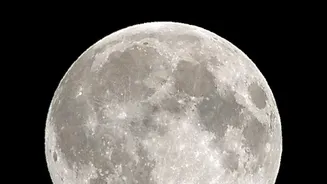
A lunar eclipse happens when the Earth positions itself directly between the Sun and the Moon. This alignment can only occur during a full moon. When this happens, our planet casts a large shadow that falls upon the lunar surface. However, we don't get
an eclipse every month because the Moon's orbit is tilted by about five degrees compared to Earth's orbit around the Sun. This slight tilt means the Moon usually passes just above or below Earth's shadow. Only when the alignment is perfect does the Moon travel through this shadow, creating the spectacle we can see from the entire night side of Earth.
The Different Types of Eclipses
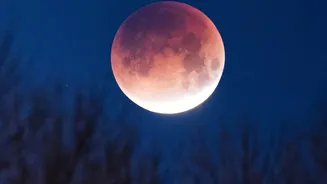
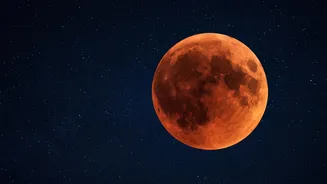
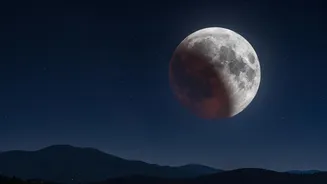
Not all lunar eclipses are the same. They come in three main varieties, depending on which part of Earth's shadow the Moon passes through. The shadow has two parts: the penumbra, which is the faint, outer shadow, and the umbra, the dark, inner shadow. A penumbral eclipse is very subtle, with just a slight dimming of the Moon that can be hard to notice. A partial lunar eclipse occurs when only part of the Moon enters the dark umbra, looking like a bite has been taken out of it. The most dramatic is a total lunar eclipse, when the entire Moon passes through the Earth's umbra. This is when the magic really happens, and the Moon takes on its famous reddish glow.
Why the Moon Turns Red
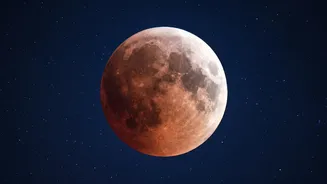
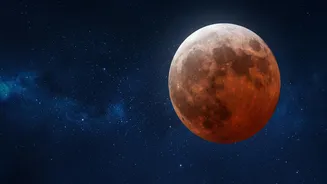
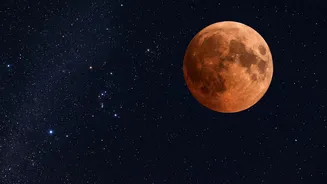
The coppery red colour of a total lunar eclipse, often called a "Blood Moon," is caused by Earth's atmosphere. As sunlight passes through our atmosphere on its way to the Moon, most of the blue and violet light is scattered away by air molecules. This is the same reason our sky is blue and sunsets are red. The remaining reddish-orange light gets bent, or refracted, around the Earth and falls onto the Moon's surface, bathing it in a warm, ethereal glow. Essentially, you're seeing the light of all the sunrises and sunsets on Earth projected onto the Moon. The exact shade of red can vary depending on how much dust or clouds are in Earth's atmosphere at the time.
Is It Safe to Watch?
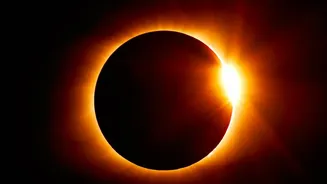
This is the most important question, and the answer is simple: yes, it is completely safe to watch a lunar eclipse with your naked eyes. Unlike a solar eclipse, where you are looking at the intensely bright Sun, a lunar eclipse involves looking at the Moon, which is only reflecting sunlight. The Moon is never bright enough to harm your eyes. In fact, during an eclipse, the Moon is dimmer than a typical full moon, making it even more comfortable to view. You do not need any special glasses or filters. Binoculars and small telescopes are also perfectly safe to use and will offer a more detailed view.
Your Guide to the Best View
To make the most of a lunar eclipse, the best thing you can do is find a location away from bright city lights. A clear sky with minimal light pollution will offer the best contrast and viewing conditions. Binoculars are highly recommended as they can reveal details on the Moon's surface and enhance the visibility of the red colour, especially as Earth's shadow moves across it. A telescope will provide an even more stunning, close-up look. If you plan to take photos, a tripod is essential to keep your camera steady for the longer exposures needed in the dark. But even without any special equipment, simply finding a comfortable spot and looking up is all you need to do to enjoy the show.
When to Look Up in India
While a significant partial lunar eclipse is happening on August 28, 2026, it will unfortunately not be visible from India as it will occur during daytime here. However, skywatchers in India can look forward to future events. A total lunar eclipse will be visible from most of India on the evening of March 3, 2026, with the ending phases visible at moonrise for much of the country. After that, the next visible lunar eclipses in India include a penumbral eclipse on February 20, 2027, and a partial lunar eclipse on July 6, 2028. The next total lunar eclipse fully visible across the country will be on December 31, 2028.