

Celebrate Janmashtami 2026 with six simple and traditional bhog recipes you can easily prepare at home to offer Lord Krishna.
The Essence of Krishna Bhog
The tradition of offering food, or bhog, to a deity is a profound expression of love and gratitude. For Janmashtami, which will
be celebrated on Friday, September 4, 2026, the bhog holds special significance. While grand feasts like the 'Chappan Bhog' (an offering of 56 dishes) are famous, the true essence of the offering lies in its purity and the devotion behind it. Krishna bhog is traditionally 'sattvic,' meaning it is prepared without onions, garlic, and often, without grains, especially for those who are fasting. The focus is on fresh, clean ingredients prepared with a joyful and prayerful mind. The simplest offering made with love is considered the most valuable.
1. Makhan Mishri
This is arguably the most iconic and simplest offering for Lord Krishna. Famously known as 'Makhan Chor' or the butter thief, Krishna's love for fresh white butter is legendary. Makhan Mishri requires no cooking at all. It is simply a mixture of fresh, unsalted white butter (makhan) and rock sugar (mishri). The soft, creamy butter paired with the sweet crunch of rock sugar is symbolic of his innocent and playful childhood. To prepare, just take a bowl of fresh white butter and gently mix in some sugar crystals. It’s a perfect representation of how a simple, pure offering can be the most special.
2. Dhaniya Panjiri
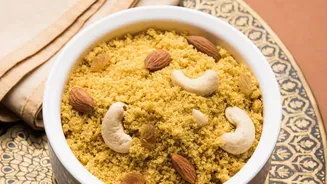
While wheat flour panjiri is common, a special version made with coriander (dhaniya) powder is prepared specifically for Janmashtami. This unique prasad is made by roasting coriander powder in ghee until it becomes aromatic. After it cools, powdered sugar and a mix of chopped nuts and seeds like almonds, cashews, and melon seeds are added. Dhaniya Panjiri is particularly significant as it's a 'falahari' (suitable for fasting) sweet that provides energy after a day of fasting. Its distinct, fragrant taste makes it a memorable part of the Janmashtami bhog.
3. Kheer
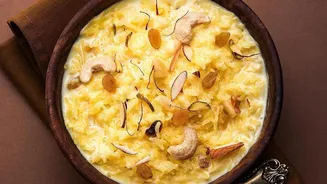
A creamy, sweet pudding is a staple in almost every Indian festival, and Janmashtami is no exception. Kheer, or rice pudding, is a comforting and beloved sweet that is easy to prepare. It is made by simmering rice in milk until it becomes thick and creamy, then sweetening it with sugar and flavouring it with cardamom. A garnish of chopped nuts like pistachios and almonds adds a delightful texture. While those fasting may not consume the rice-based kheer, it remains a classic bhog offering for Krishna, later distributed as prasad to family and friends. For a fasting-friendly version, makhana (fox nut) kheer can also be prepared.
4. Gopalkala
Gopalkala is a savoury Maharashtrian dish that carries a beautiful story. It is said that Krishna, while grazing cattle with his friends (the gopalas), would mix everyone's lunch tiffins together with curd to create a shared meal. This dish symbolizes community and equality. Gopalkala is a simple mix of flattened rice (poha), yogurt, cucumber, grated coconut, and mild spices like green chillies and ginger. It is a no-cook, refreshing preparation that represents the playful and communal spirit of Lord Krishna. It is especially popular during Dahi Handi celebrations that follow Janmashtami.
5. Sabudana Khichdi
A popular fasting food across India, Sabudana Khichdi is a perfect sattvic dish for the Janmashtami bhog. Made from sago pearls (sabudana), it is light on the stomach but provides ample energy. The preparation involves soaked sabudana sautéed in ghee with cumin seeds, green chillies, boiled potatoes, and roasted peanuts. It’s crucial to soak the sabudana for enough time to ensure the khichdi turns out fluffy and non-sticky. This savoury dish is a wonderful break from the many sweets prepared during the festival and is a wholesome meal in itself.
6. Panchamrit
Panchamrit, meaning 'five nectars,' is a sacred concoction used in Hindu pujas for the ritual bathing of deities and is then distributed as prasad. It is made from five key ingredients: raw milk, curd (yogurt), honey, ghee (clarified butter), and sugar. Often, other ingredients like makhana (fox nuts) and tulsi (holy basil) leaves are added. Preparing Panchamrit takes only a few minutes; you simply mix the five main ingredients in a clean bowl. This divine, no-cook offering is essential to the Janmashtami puja and symbolises purity and spiritual nourishment.