

A Mission with a Dual Purpose
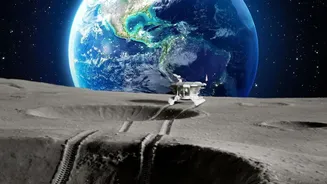
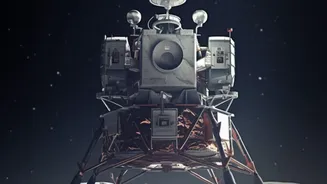
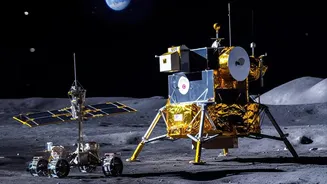
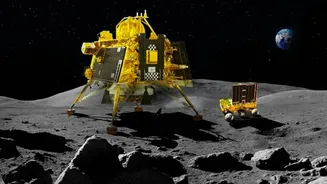
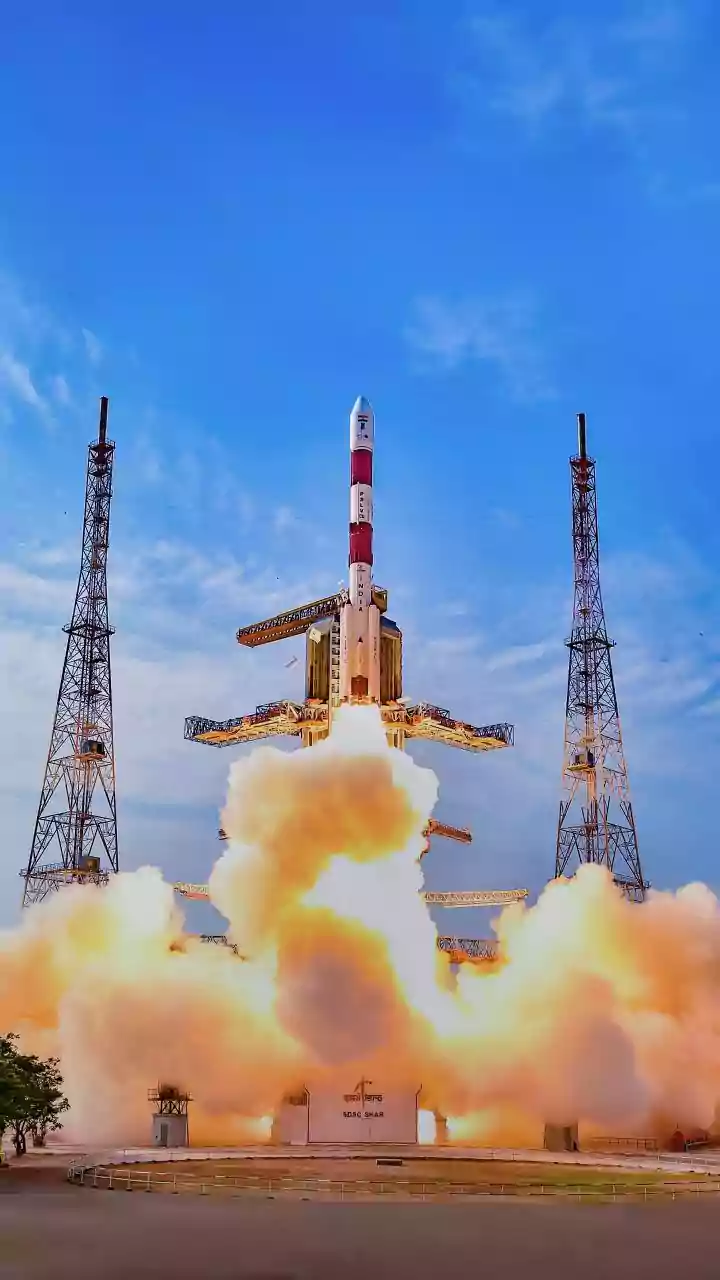
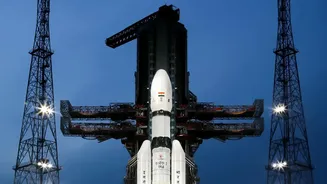
The primary goal of Chandrayaan-3 was clear: to demonstrate a soft landing on the Moon's south pole and conduct in-situ experiments, a feat India achieved with spectacular success. This accomplishment placed India in an elite group of nations to land on the Moon.
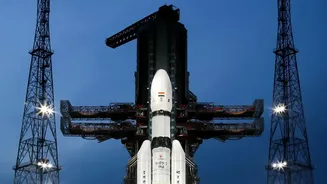
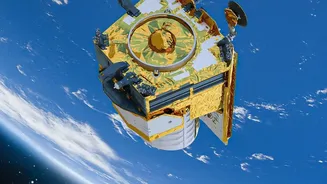
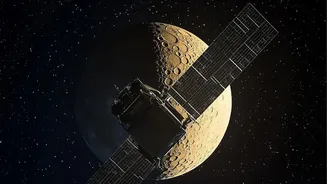
But nestled within the mission's architecture was another ingenious objective. The Propulsion Module, which carried the lander and rover to lunar orbit, had its own scientific payload with a unique assignment: to study Earth. This clever use of the journey provided a valuable opportunity to gather data that could fundamentally change how we search for life elsewhere in the cosmos.
Introducing the SHAPE Payload
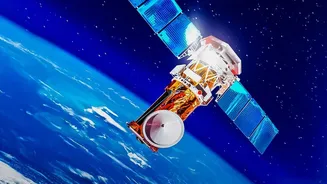
The instrument at the heart of this Earth-observation campaign is called SHAPE, which stands for Spectro-polarimetry of HAbitable Planet Earth. It was the only scientific payload on the Propulsion Module. Its purpose was to look at the light reflected from Earth and analyse it in great detail. Specifically, SHAPE studies both the spectrum (the different colours or wavelengths of light) and the polarisation (the orientation of the light waves) in the near-infrared range. The spectrum can reveal information about gases in the atmosphere, while polarisation can tell scientists about clouds and surface features. The instrument was developed by the U. R. Rao Satellite Centre in Bengaluru, showcasing India's growing capabilities in creating sophisticated scientific instruments for space exploration.
Treating Earth Like an Exoplanet
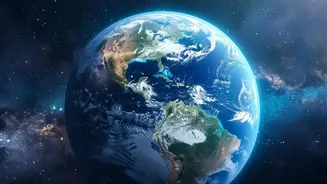
The core idea behind the SHAPE experiment was to observe Earth as if it were a distant exoplanet. From its vantage point in lunar orbit, SHAPE could capture the disc-integrated light of Earth—meaning, the light from the entire planet blurred into a single point, just as we see planets that are light-years away. By studying the spectro-polarimetric signatures of a known habitable world, our own, scientists can create a vital benchmark. This data essentially provides a 'fingerprint' or 'cheat sheet' for habitability. When future, more powerful telescopes look at rocky exoplanets orbiting distant stars, they can compare the light signatures they detect with the detailed template provided by SHAPE's observations of Earth.
A New Toolkit for Finding Life
The data gathered by SHAPE is not about discovering something new about Earth's climate or geography. Instead, its value lies in future applications. It will help scientists differentiate a pale blue dot that might harbour life from one that is barren and rocky. For instance, the specific way light polarises when it bounces off clouds, oceans, and continents can be a key biosignature. By meticulously cataloguing Earth's signatures at various phase angles (like the phases of the Moon), the SHAPE experiment provides a robust reference library. This will allow researchers to better design and interpret observations from next-generation telescopes aimed at characterising exoplanets and searching for signs of life, a quest that is one of the biggest drivers in astronomy today.
India's Contribution to a Global Quest
While the world's attention was fixed on the Vikram lander and Pragyan rover making history on the lunar surface, the Propulsion Module continued its work quietly in the background. After separating from the lander, it kept observing Earth, first from lunar orbit and later from a high Earth orbit. This value-added science demonstrates an efficient and forward-thinking approach to mission planning. The Chandrayaan-3 mission, therefore, didn't just give India a foothold on the Moon; it also provided the global scientific community with a powerful new dataset. It was a mission that looked outward to a new world while also looking homeward to help us find others.