



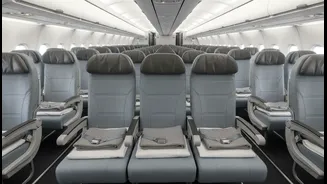


Why All 'Business Class' Is Not Created Equal
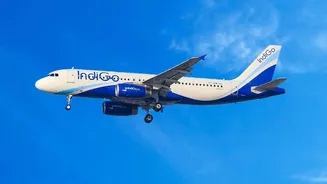
The single biggest reason for a varied premium experience is the aircraft itself. An airline’s fleet is often a mix of old and new planes, wide-body jets for long-haul routes and narrow-body aircraft for shorter hops. A 14-hour flight from Delhi to New
York on a modern Boeing 787 or Airbus A350 will almost always feature a more sophisticated seat than a three-hour flight from Mumbai to Chennai on an Airbus A320. Airlines invest billions in their flagship long-haul products but take years to roll out new cabins or retrofit older planes. This creates a transitional period where booking 'business class' can lead to one of several different products, from a cutting-edge private suite to a seat that is barely a step up from economy.
Case Study: The Air India Transformation
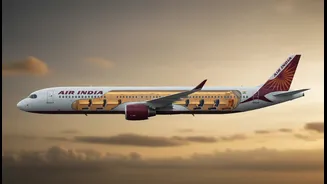
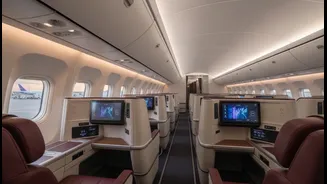
Air India is a prime example of this inconsistency. Since its takeover by the Tata Group, the airline has been undergoing a massive transformation, introducing new Airbus A350s and retrofitting its older Boeing 777s and 787s. If you fly business class on a new A350, you'll likely find a state-of-the-art suite with a closing door and direct aisle access for every passenger. However, on an older, un-refurbished 777, you might still find an angled-flat seat in a more crowded 2-3-2 configuration, where window and middle-seat passengers have to climb over their neighbours. The brand on the ticket is Air India, but the experience is determined entirely by which aircraft operates your flight.
Case Study: The Emirates A380 vs. 777 Divide
Even globally renowned airlines like Emirates have significant product variations. For years, the gold standard for Emirates Business Class has been its Airbus A380. It features a spacious 1-2-1 layout on the upper deck where every passenger has a lie-flat seat with direct aisle access and, famously, access to an onboard bar. However, many of their Boeing 777s, which also fly long-haul routes, have a much-criticised 2-3-2 business class layout. This means angled seats, less privacy, and the dreaded middle seat in a premium cabin. While Emirates is refurbishing its 777 fleet, the process is slow, meaning for the foreseeable future, the aircraft type is the difference between a market-leading product and a compromised one.
Your Pre-Booking Checklist
So how do you avoid the seat lottery? By doing a little research before you click 'buy'. First, find the aircraft type. Most airline booking websites and apps, as well as Google Flights, will list the aircraft scheduled for that route (e.g., 'Boeing 787-9' or 'Airbus A321neo'). Once you have the aircraft model, use websites like SeatGuru or AeroLopa. These sites provide detailed seat maps for hundreds of airline configurations. They use colour-coding to highlight the best seats (in green) and warn you about ones with potential issues (in yellow or red), such as limited recline or proximity to the galley or lavatories. Cross-referencing between the airline's seat map and a third-party tool gives you the most accurate picture of what you are actually booking.
Know Your Seat Configurations
Understanding a few key terms can make all the difference. 'Lie-flat' means the seat becomes a fully horizontal bed. An 'angled-flat' seat slopes slightly, which can be less comfortable for sleeping. The cabin layout is also critical. A '1-2-1' configuration is the gold standard for long-haul business class, as it ensures every passenger has direct access to the aisle. A '2-2-2' or '2-3-2' layout means window and some middle seat passengers will not have that luxury, forcing them to awkwardly step over their seatmate. Vistara offers a great example of this even on narrow-body planes; its A321neo aircraft feature lie-flat seats, a true premium offering on shorter routes.