







The End of the Passport Stamp
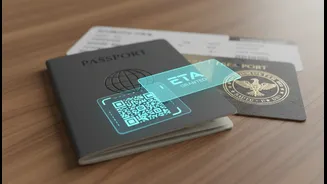
For decades, a passport filled with stamps was a traveller's badge of honour. Today, that is changing rapidly as countries around the world replace manual stamping with automated border control (ABC) systems. This global shift is driven by a need for
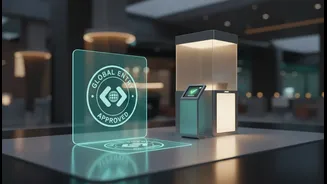
increased security and efficiency. Instead of a border officer manually checking your passport and stamping it, you will now increasingly interact with a self-service kiosk or an electronic gate (eGate). The most significant of these initiatives is the European Union's Entry/Exit System (EES), which became fully operational in 2026 across 29 European countries. This system, along with similar ones in the UK, Australia, and the US, marks a fundamental change in how borders are managed.
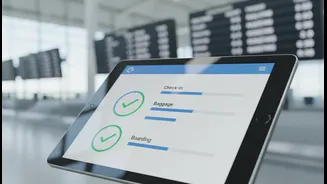
Step 1: The 'Scan' Process
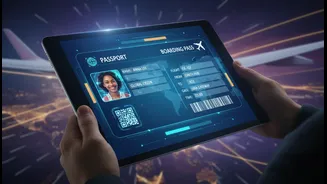
The first step in this new routine is the 'scan'. When you arrive at an international border, you'll be directed to a self-service kiosk. Here, you will scan your biometric passport. The system will then capture your biometric data, which primarily includes a scan of your face and your fingerprints. This process is designed to be quick and touchless. The kiosk's camera captures a live image of your face, while a scanner records your fingerprints. This is a crucial step, as it creates a digital link between you and your travel document for that specific entry. For most Indian travellers, this will be a new experience, especially on their first entry into a region like the Schengen Area after the system's launch. It's essential to ensure your passport is a modern, chip-enabled biometric one.
Step 2: The 'Verify' Stage
Once your biometrics and passport are scanned, the 'verify' stage begins instantly. The system compares the live facial image and fingerprints it just captured with the data stored on the chip in your passport. This is a 1:1 verification to confirm that the person holding the passport is its rightful owner. Simultaneously, the system checks your information against various national and international databases and watchlists. It verifies your visa status (if required) and checks for any alerts associated with your identity or travel document. If everything matches and no flags are raised, the automated gates will open, allowing you to proceed. If there's a mismatch or an alert, you will be directed to a border guard for a manual check.
Step 3: 'Keep Your Records' Digitally
The phrase 'keep your records' no longer refers to you holding onto physical documents. Instead, it means the system now creates and maintains a secure, digital record of your entry and exit. Each time you cross a border using this system, it logs the date, time, and location of your entry or exit. This digital log replaces the ink stamp and serves as the official record of your travel history for that region. This is particularly important for enforcing stay limitations, like the 90-day limit within any 180-day period for the Schengen Area. The system automatically calculates the duration of your stay, making it easy for authorities to spot overstays. This data is stored securely for a set period—three years in the case of the EU's EES—to facilitate faster border crossings on subsequent trips.
What This Means for Indian Travellers
For Indian passport holders, this new process is now the reality for travel to Europe and is becoming common elsewhere. While the need for a Schengen visa for Indians remains unchanged, the method of processing at the border has been transformed. The first time you enter the Schengen Area under the new EES, the registration process will take a few extra minutes, so it's wise to budget for additional time at the airport. On subsequent trips, the process should be faster. The key takeaway is the importance of compliance. With automated tracking, rules like the 90/180-day stay limit are enforced with precision. Overstaying, even by a day, will be automatically flagged and could result in fines, entry bans, or difficulties with future visa applications. The era of ambiguous, manually checked stamp dates is over, replaced by a clear and indisputable digital footprint.