





For years, a passport's power was measured by one thing: how many borders it could cross without a visa. But a new perspective is emerging, asking a more important question: what good is travel freedom if you don't have a high quality of life?
Redefining a Passport's Power
Traditional
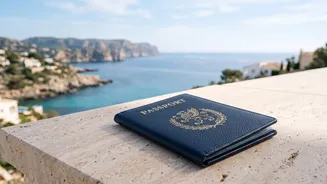
rankings, like the well-known Henley Passport Index, have long been the standard for measuring global mobility. They provide a straightforward count of how many countries a passport holder can enter visa-free or with a visa-on-arrival. In early 2026, Singapore held the top spot, granting its citizens access to 192 destinations. While useful for travellers, this number alone doesn't capture the full picture of a passport's value. A truly 'powerful' passport might also reflect the opportunities, safety, and happiness available to its holder in their home country. This has led to a new concept: the 'happy passport', which considers a nation's quality of life as a critical component of its passport's strength.
Introducing the Happy Passport Index
The 'Happy Passports Index', released by advisory firm Global Citizen Solutions, formalises this idea by merging mobility with wellbeing. Instead of just counting visa-free destinations, it scores 50 countries on four equally weighted pillars: wellbeing (based on life satisfaction scores from the World Happiness Report), freedom at home (civil liberties and personal choice), mobility (passport strength), and prosperity, health, and safety. This creates a more holistic view, recognising that a passport's true worth lies in the combination of global access and a secure, fulfilling life at home. The results show that while travel freedom is valuable, it doesn’t always correlate with happiness.
Finland: The World's Happiest Passport
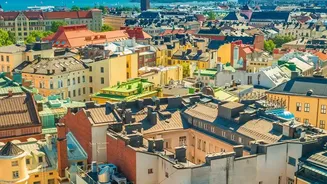
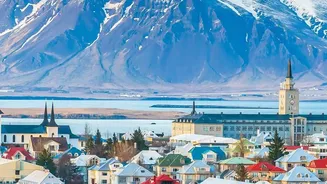
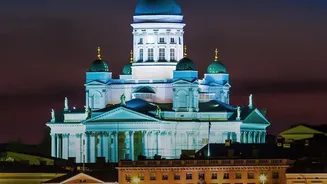
According to the 2026 Happy Passports Index, Finland holds the world's happiest passport. The nation has famously topped the World Happiness Report for nine consecutive years, and it excels in this new ranking by combining high life evaluation scores with strong civil liberties and a powerful passport. Following closely are Iceland and Denmark, with European and particularly Nordic nations dominating the top ten. These countries demonstrate a strong balance across all pillars. For example, Iceland is ranked as one of the most peaceful countries in the world, while Denmark is noted for its overall balance. The rest of the top ten includes Norway, Switzerland, Sweden, the Netherlands, New Zealand, Austria, and Singapore.
When Mobility and Happiness Diverge
Interestingly, the index reveals that having the strongest passport for travel doesn't guarantee the highest happiness score. Singapore, for instance, has one of the world's most powerful passports for mobility and scores high on economic metrics, yet it places 10th overall due to lower scores in wellbeing and personal freedom. Conversely, some countries with less travel freedom rank surprisingly high in happiness. Costa Rica, for example, reports life satisfaction levels that outperform many wealthier nations, landing it at 13th overall despite a passport in the lower half for mobility. This highlights that factors like social connection and a sense of personal freedom can be more crucial to overall life satisfaction than just income or travel access.
The Indian Passport in Context
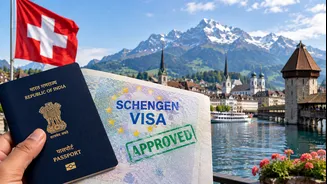
The Happy Passports Index for 2026 did not include India in its list of 50 countries. However, we can use the index's core components to understand where India stands. In the latest Henley Passport Index for 2026, the Indian passport climbed ten spots to rank 75th, offering visa-free or visa-on-arrival access to 56 countries. This shows improving mobility. On the other hand, in the 2026 World Happiness Report, India was ranked 116th. This significant gap between its mobility score and its happiness ranking illustrates the very dilemma the Happy Passports concept aims to address. While India's global access is on an upward trend, the broader quality of life metrics suggest there are still many areas for improvement to enhance the overall 'happiness' of its passport.