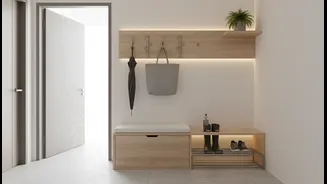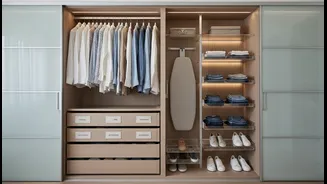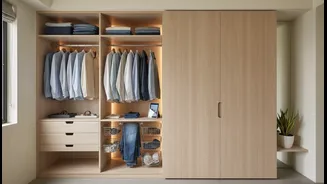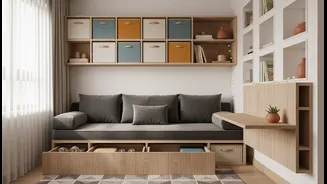







Verify Your Actual, Usable Space
Before falling in love with a piece of furniture online, get well-acquainted with your measuring tape. Don't just measure the floor space; check vertical height, as floor-to-ceiling units can dramatically increase storage. Use painter's tape on the floor to mark
the dimensions of a potential furniture piece. This simple step helps you visualize its footprint and ensures you leave enough walkway clearance—ideally at least 30 inches—for comfortable movement. Remember to also measure doorways, stairwells, and lifts to ensure your new purchase can actually make it inside your home.
Verify Your Lifestyle and Storage Needs
A storage solution is only as good as its ability to solve your specific clutter problem. Before buying, take inventory of what you need to store. Is it daily-use items, seasonal clothing like woollens, or rarely-used luggage? If you entertain often, an extendable dining table might be more valuable than a large, fixed one. If you work from home, a wall-mounted foldable desk could be a game-changer. Don't just buy storage; buy a solution tailored to your daily routines and the items that currently clutter your space. Avoiding generic solutions is key to effective organization.
Verify Material, Hardware, and Durability
In India, furniture must withstand humidity, dust, and significant wear and tear. For any furniture that folds, slides, or lifts—like a hydraulic bed or a modular drawer—the hardware is critical. Test the mechanisms in the showroom to ensure they are smooth and sturdy. For wood-based furniture, especially budget-friendly engineered wood, check if it is specified as HDMR (High-Density Moisture-Resistant) to prevent swelling during monsoons. While custom-made furniture can be excellent, its durability depends entirely on the carpenter's skill and the quality of plywood and edge banding used.
Verify the Value of Multi-Functionality
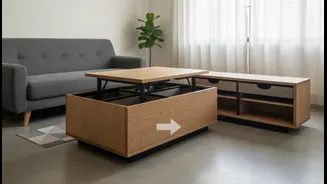
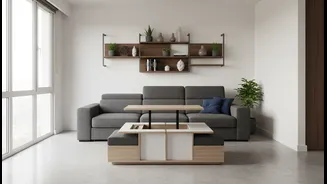
In a small flat, every piece of furniture should ideally serve more than one purpose. A simple ottoman can provide extra seating, act as a footrest, and offer hidden storage for toys or blankets. A sofa-cum-bed is a classic for a reason, saving enormous space in a studio or 1BHK. Similarly, a lift-top coffee table can double as a work surface and hide remotes and magazines. Before buying a single-purpose item, ask yourself if a multi-functional alternative exists. This approach reduces the total number of furniture pieces you need, making the home feel more open.
Verify Custom vs. Modular Options
The choice between custom-made and factory-made modular furniture depends on your priorities: speed, budget, and fit. Modular furniture is factory-produced with consistent quality and can be installed quickly, often within a week or two. It's great for standard spaces and functional areas like kitchens. Custom furniture, built on-site by a carpenter, takes longer (3-5 weeks) but offers a perfect fit for awkward corners, uneven walls, or non-standard ceiling heights. For a balanced approach, many homeowners use modular systems for kitchens and wardrobes, and custom pieces for visible areas like TV units in the living room.
Verify the Access and Convenience
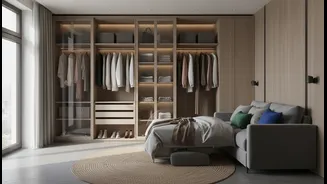
A storage unit is useless if it's too difficult to access. One common mistake is overloading storage or placing frequently needed items in hard-to-reach places. For instance, while box beds offer immense storage, a hydraulic lift is far more convenient for daily-use items than a manual board that needs to be fully emptied to lift. For items you only use seasonally, like heavy quilts or luggage, loft storage or the back of an under-bed compartment is perfect. For daily essentials, prioritize easy-access drawers, open shelves, or front-access cabinets. Plan your storage based on frequency of use to keep your home functional.