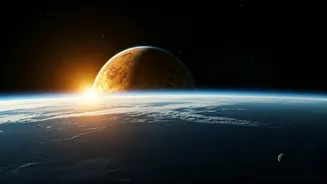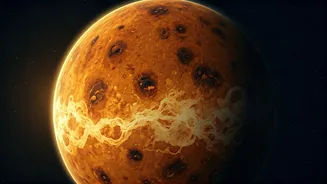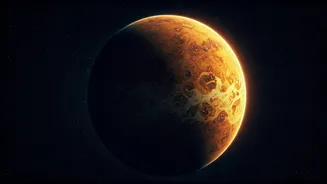

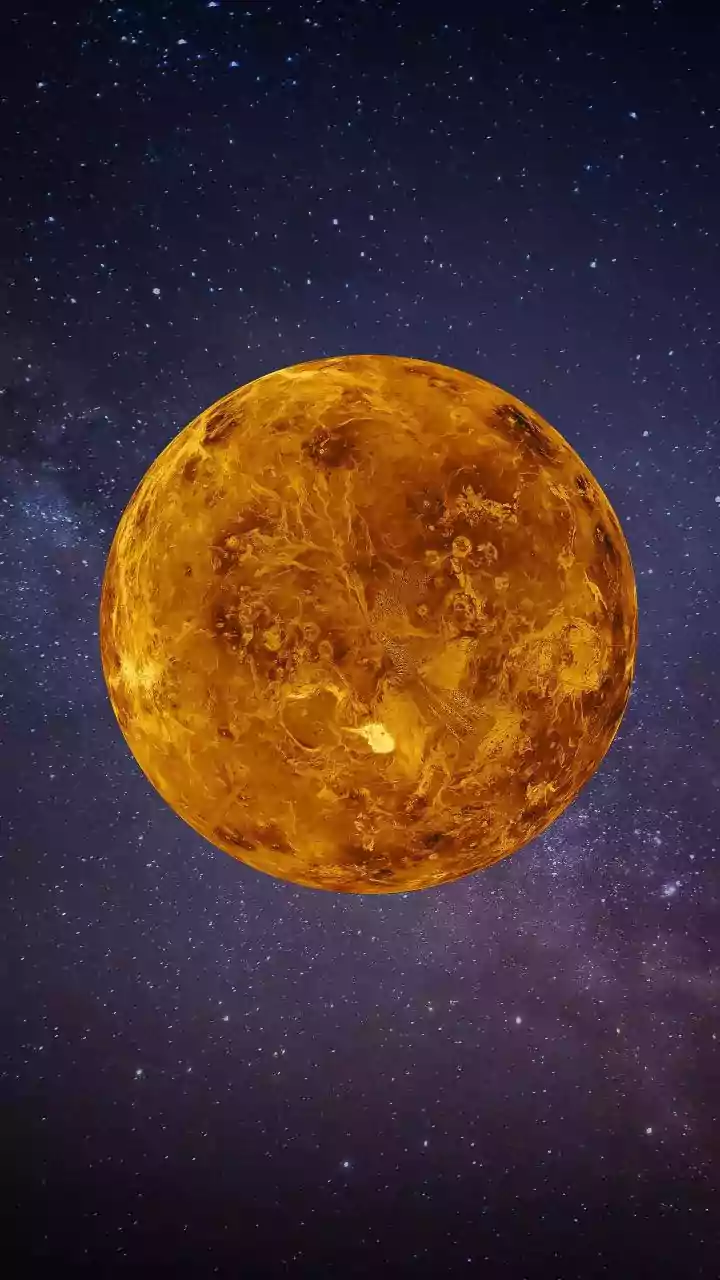





A Day Longer Than a Year?
It’s a statement that seems to break the rules of how we think planets should work. On Earth, our daily routine is governed by a simple rhythm: 365 days make up one year. This means our planet spins on its axis 365 times in the same period it takes to complete
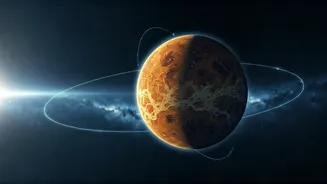
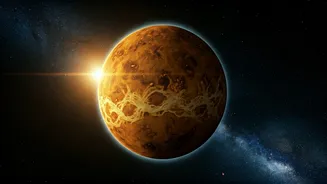
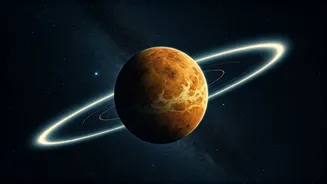
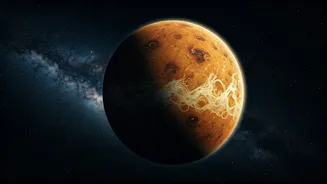
one full orbit around the Sun. On Venus, this relationship is flipped on its head in the most extreme way. Venus takes about 225 Earth days to complete one orbit around the Sun, which defines its year. However, it takes a staggering 243 Earth days for Venus to complete just one rotation on its axis. This is its 'axial day' or 'sidereal day'. So, yes, a single day on Venus is about 18 Earth days longer than its entire year. It’s the only planet in our solar system with this peculiar characteristic.
The Weirdest Clock in the Solar System
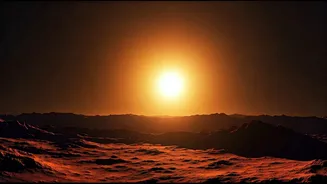
To make things even stranger, Venus spins backwards. Unlike Earth and most other planets, which rotate prograde (counter-clockwise when viewed from above the North Pole), Venus has a retrograde rotation. This means it spins clockwise. If you could stand on the surface of Venus, you would see the Sun rise in the west and set in the east. Because of this backward spin combined with its long orbital period, the length of a solar day on Venus—the time from one sunrise to the next—is different from its axial day. A solar day on Venus is about 117 Earth days. This means that after the Sun rises, you would have to wait nearly four Earth months for it to set. This slow, backward waltz makes Venus a planet of incredible extremes and a puzzle that scientists have been trying to solve for decades.
Why Is Venus So Slow?
The question of why Venus rotates so slowly and in the wrong direction is one of planetary science’s biggest mysteries. There is no single, confirmed answer, but several compelling theories exist. One leading hypothesis suggests that Venus may have been struck by a massive asteroid or another large celestial body early in its history. Such a cataclysmic impact could have been powerful enough to not only slow its rotation to a crawl but also reverse its direction entirely. Another theory points to Venus's incredibly dense and heavy atmosphere—more than 90 times the pressure of Earth's. Some scientists believe that this thick blanket of air, coupled with powerful solar tides, has created an atmospheric drag over billions of years. This friction between the solid planet and its thick, soupy atmosphere could have acted as a powerful brake, gradually slowing its spin and perhaps even flipping its orientation.
Living in a Slow-Motion World
This ultra-slow rotation has profound consequences for the planet's environment. The long days and nights contribute to the runaway greenhouse effect that makes Venus the hottest planet in the solar system, with surface temperatures soaring to around 465°C—hot enough to melt lead. With one side of the planet facing the Sun for nearly two Earth months at a time, it absorbs an immense amount of solar energy. Meanwhile, the other side is plunged into an equally long night. You might expect the night side to cool down significantly, but Venus's thick, carbon-dioxide-rich atmosphere is incredibly efficient at trapping and distributing heat. As a result, there is very little temperature variation between the day and night sides, or even between the equator and the poles. The entire planet is trapped in a state of perpetual, unforgiving heat, a toxic and crushing world sculpted by its strange, lazy spin.