

An Annual Spectacle from a Famous Comet
The Orionid meteor shower is one of the most beautiful displays of the year, active from early October to early November. These meteors are not random space rocks; they are tiny, fast-moving pieces of debris left behind by the famous Halley's Comet. As
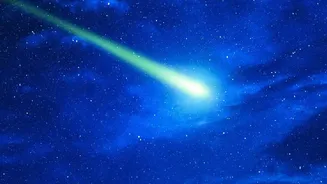
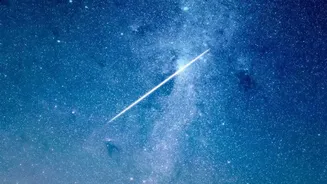
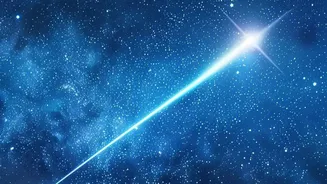
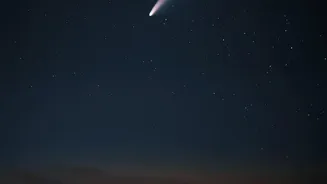
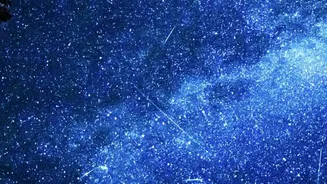
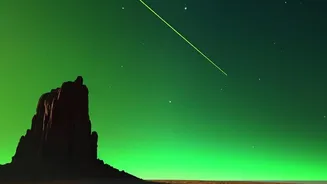
Earth passes through this cosmic dust trail each year, the particles burn up in our atmosphere at incredible speeds of around 66 kilometres per second, creating bright, swift streaks across the night sky. Some of these fast meteors can even leave behind glowing trails of incandescent gas that linger for a few moments, and the brightest ones may appear as dazzling fireballs.
Mark Your Calendar for the 2026 Peak
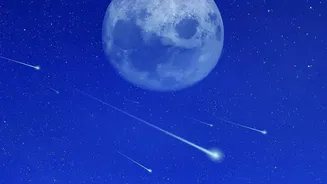
For 2026, the prime time to watch is during the peak, which occurs on the night of October 21-22. While you might spot meteors on nights before or after, the rate will be highest during this window. This year, there's a small challenge: a bright waxing gibbous moon will be in the sky for the first part of the night. However, it sets around 3 a.m. local time, opening up a perfect, dark window for viewing from then until dawn. Under truly dark skies, you could see 15 to 20 meteors per hour, but even in a city, this pre-dawn window gives you the best shot at seeing the show.
Scout the Best Urban Viewing Spot
The biggest hurdle in any city is light pollution, the glow from streetlights and buildings that washes out the night sky. But you can improve your odds significantly by finding a smarter location. Look for large open spaces that minimize direct light, such as a large park, a sports field, or even a high-rise rooftop with an open view. The goal is to get away from immediate, glaring lights and give your eyes the widest possible view of the sky. Even moving to a spot shielded by a building or a line of trees can make a difference. The key is to reduce the amount of direct light hitting your eyes.
Let Your Eyes Adjust to the Darkness
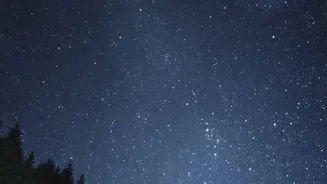
This might be the most important tip of all: be patient. Your eyes need at least 20 to 30 minutes to fully adapt to the dark and begin to see fainter objects. During this time, you must avoid looking at any bright lights, especially your phone screen. White light from a screen will instantly reset your night vision. If you need to use a light, use a red flashlight, as red light is less disruptive to your eyes' dark adaptation. Many stargazing apps have a red-light mode for this exact reason. Once your eyes have adjusted, you'll be surprised at how many more stars—and meteors—become visible.
The No-Telescope Toolkit
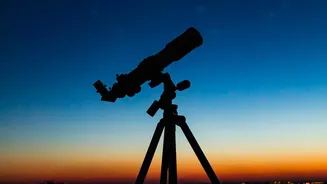
You don't need any magnification to watch a meteor shower. In fact, telescopes and even binoculars are a disadvantage because they restrict your field of view. The best tool you have is your own eyes, as they can take in the largest possible patch of sky. Instead of optics, focus on comfort. Bring a reclining lawn chair or a thick blanket so you can lie on your back and look straight up without straining your neck. Dress in warm layers, as even mild evenings can get chilly when you’re sitting still after midnight. Pack a thermos with a warm drink and some snacks, and settle in for the show.
Know Where to Look (and Where Not To)
The meteors are called Orionids because they appear to radiate from a point near the constellation Orion the Hunter. You can find Orion by looking for its three bright stars in a row, which form its belt. However, you should not stare directly at Orion. While the meteors originate from that direction, they will appear as short, quick streaks near the radiant. For the most spectacular views, look about 45 to 90 degrees away from Orion. From this perspective, the meteors will have longer, more dramatic trails as they streak across the sky. The best advice is to simply lie back, look up, and take in as much of the sky as you can.