






The Hidden Cost of Manual Logging
Every project manager and team member knows the routine. You spend an hour in a productive brainstorming session, only to spend another thirty minutes translating notes, Slack messages, and email chains into tasks on a Kanban board like Trello, Asana,
or Jira. This isn't just tedious; it's a significant drain on resources. It introduces the risk of human error, where crucial action items are missed or mis-assigned. More importantly, it pulls your most valuable people away from strategic, creative, and high-impact work, bogging them down in low-value administrative upkeep. This repetitive cycle can lead to burnout and a sense that team members are data-entry clerks rather than innovators.
Enter the AI Scribe: Your Automated Assistant
An "AI scribe" is a new class of software tool designed to eliminate this administrative burden. Think of it as a hyper-intelligent assistant that joins your virtual meetings (on platforms like Zoom, Google Meet, or Microsoft Teams). Its job is to listen, transcribe the entire conversation in real-time, and, most powerfully, understand the context. Using natural language processing (NLP), these tools can identify key decisions, deadlines, and action items discussed during the call. They can even distinguish between speakers and attribute tasks to the correct person. The core function is to transform spoken words into structured, actionable data without any manual intervention.
From Conversation to Kanban in Minutes
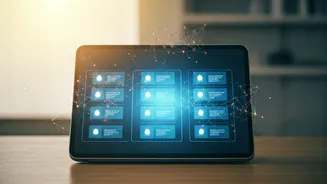
The real magic happens after the meeting ends. Instead of a team member spending their afternoon updating a project board, the AI scribe does it for them. The workflow is seamless. The AI generates a complete, searchable transcript of the meeting. From this transcript, it automatically suggests a list of tasks. For example, when someone says, “Priya, can you get the draft report to me by Friday?”, the AI identifies “Priya” as the owner, “draft report” as the task, and “Friday” as the deadline. With a few clicks to review and approve these suggestions, the AI can then push these tasks directly to your project management software, creating new cards on the appropriate board, complete with owners, descriptions, and due dates. The entire process, from the end of the meeting to a fully updated board, can take minutes instead of hours.
The Benefits Beyond Saving Time
While efficiency is the most obvious advantage, the ripple effects are far more profound. First, accuracy improves dramatically. An AI doesn't get distracted or forget a minor detail buried in a long discussion. This creates a single source of truth and enhances accountability, as every task is clearly documented and assigned. Second, it fosters a more inclusive and focused meeting culture. Team members can participate fully in the conversation, confident that they don't need to be taking meticulous notes. Finally, it creates a searchable archive of all decisions. Need to know why a certain path was chosen three months ago? You can search the transcript for the exact conversation, providing invaluable context that a simple task card could never capture.
Choosing the Right AI Tool
As with any emerging technology, the market is flooded with options. When evaluating an AI scribe, don't just look at transcription accuracy. Prioritise tools that offer deep and reliable integrations with the project management systems your team already uses. Security and data privacy are paramount, especially if you discuss sensitive information; ensure the provider has robust policies. Also, consider the user interface. Is it easy for your team to review and approve the AI's suggestions? Some tools offer more sophisticated features, like summarising key themes or identifying sentiment. Start with a pilot programme with a single team to test the tool’s real-world performance before rolling it out across the organisation.