




Create a Monsoon Welcome Station
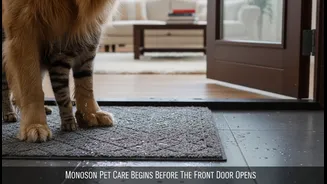
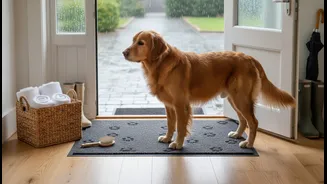
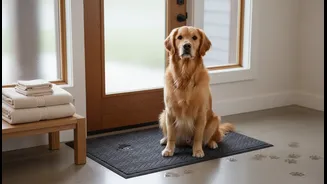
Your doorway is the first line of defence against monsoon muck. Designate an official ‘drying zone’ right at the entrance, a space where your pet knows to wait after a walk. Lay down highly absorbent doormats or old towels to catch the initial drips.
Keep a dedicated ‘monsoon kit’ here: a stack of clean, dry towels (microfiber ones are excellent for absorbing water quickly), a paw-cleaning cloth, and a brush. The goal is to contain the mess in one easy-to-clean area, preventing muddy footprints from trailing through your home. This simple setup makes the post-walk cleanup routine systematic and less stressful for both you and your pet.
Master the Post-Walk Wipe-Down
The most critical monsoon habit is to dry your pet thoroughly after every single outing, no matter how short. Damp fur is a breeding ground for fungal and bacterial skin infections, which are extremely common during the humid rainy season. Use a towel to vigorously dry their coat, paying special attention to the belly, underarms, ears, and any skin folds where moisture loves to hide. For thick-coated breeds, a hairdryer on a cool, low setting can be a lifesaver. Paw care is non-negotiable. Wash their paws with lukewarm water and a gentle cleanser, and be sure to dry completely between the toes to prevent yeast infections. Regularly trimming the hair between paw pads can also reduce the amount of mud and water they bring inside.
Guard Against Invisible Health Risks
Beyond visible dirt, the monsoon brings a surge in health threats. The high humidity causes a spike in tick and flea populations, which can transmit serious illnesses like tick fever. Conduct a daily tick check, carefully inspecting around the ears, neck, between the toes, and under the tail. Stagnant water is another major hazard. Never let your pet drink from puddles, which can be contaminated with bacteria and parasites, potentially leading to gastrointestinal problems or even serious diseases like leptospirosis. Ensure their vaccinations and deworming schedules are up to date, as their immune systems face extra challenges during this season.
Focus on Diet and Hydration
A strong immune system starts with good nutrition. The damp weather can sometimes affect a pet's appetite, so providing a high-quality, easily digestible diet is crucial. Some owners find that wet food is more palatable during this season and helps with hydration. Humidity can also make dry kibble spoil or go mouldy quickly, so store it in an airtight container. Always provide fresh, clean drinking water. With the increased risk of waterborne diseases during the monsoon, it is safest to use filtered or boiled water for your pet's bowl, changing it at least twice a day.
Beat the Indoor Boredom
The 'patience' in monsoon pet care extends to managing your pet's energy levels. Fewer and shorter walks mean you need to compensate with indoor activities to prevent boredom and destructive behaviours like chewing or excessive barking. Engage their minds with puzzle feeders, snuffle mats, or a simple game of 'find the treats' by hiding their favourite snacks around a room. A game of tug-of-war provides a great physical outlet without needing much space. You can also use this indoor time to reinforce training or teach them a new trick, which strengthens your bond and provides valuable mental stimulation.