





Peering Through the Cosmic Veil
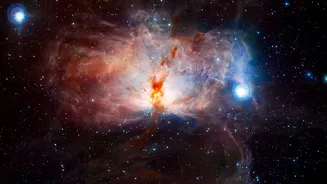
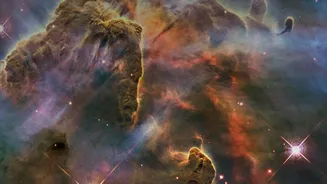
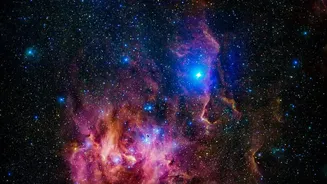
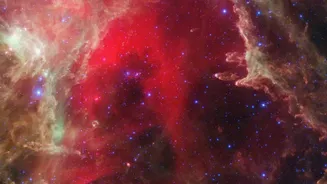
The places where stars are born are chaotic and beautiful, but they are also incredibly dusty. These vast stellar nurseries, like the famous Pillars of Creation, are composed of massive clouds of gas and dust that are opaque to traditional telescopes.
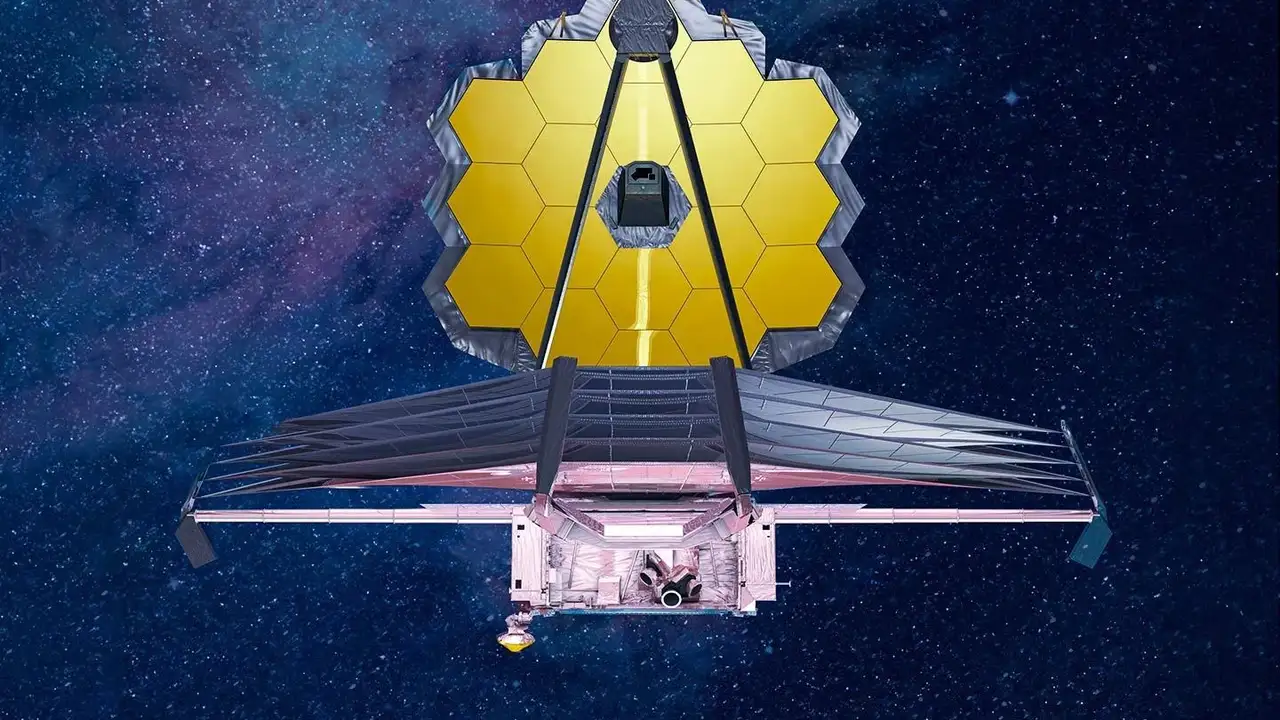
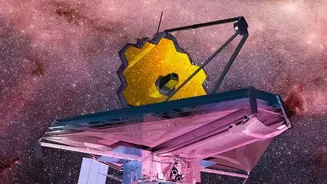
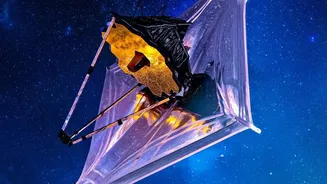
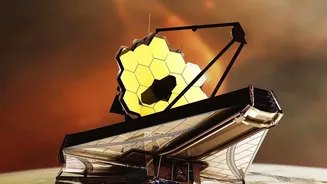
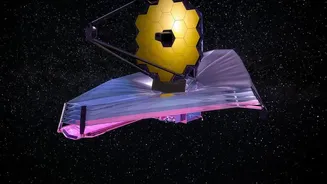
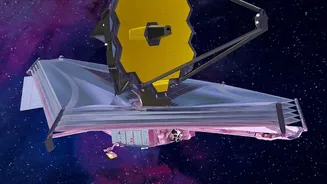
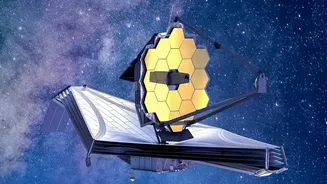
Visible light cannot penetrate these thick veils, leaving much of the star formation process shrouded in mystery. This is where the James Webb Space Telescope (JWST) changes the game. Its giant mirror and advanced instruments are specifically designed to detect infrared light. Infrared wavelengths can pass through cosmic dust much more easily than visible light, allowing the JWST to see what was previously invisible: the very beginnings of new stars and the material that will one day form planets. It gives astronomers an unprecedented ability to witness the earliest, most elusive stages of stellar development.
A Chemical Inventory of New Worlds
One of the most significant breakthroughs from JWST is its ability to create chemical maps of these nascent star systems. Using its sensitive Mid-InfraRed Instrument (MIRI), astronomers are not just taking pictures; they are performing a detailed inventory of the raw materials present in the icy dust grains surrounding protostars. These observations have confirmed the presence of a diverse range of complex organic molecules (COMs) — the building blocks for potentially habitable worlds. In the ice clinging to dust particles around young protostars, Webb has identified molecules like methane, ethanol (the alcohol in drinks), and even compounds like acetic acid, the key ingredient in vinegar. These findings help answer a long-standing question in astrochemistry: that many of these complex molecules form in the solid, icy phase on the surface of dust grains, rather than just in the gas phase.
From Icy Grains to Future Planets
Detecting these ingredients is crucial because their presence in ices has profound implications for how planets are built. Scientists believe that these icy COMs are more efficiently transported into the planet-forming disks that swirl around young stars. As the protostellar system evolves, these ices can become incorporated into comets and asteroids. These cosmic bodies then act as delivery vehicles, potentially colliding with newly forming rocky planets and depositing these crucial organic molecules and water ice. This process may be how planets like Earth received the ingredients necessary for life to flourish. By studying low-mass protostars that resemble what our own Sun may have looked like in its infancy, Webb is providing a glimpse into the early chemical conditions of our own solar system.
Rewriting the Story of Our Origins
Every new observation from the JWST adds another layer to our understanding of cosmic evolution. By mapping the jets and outflows from young stars with incredible clarity, scientists can better model how stars gather mass and interact with their environment. For example, observations have revealed that some jets from young stars wiggle with mirror symmetry, suggesting the protostar at the center might actually be a binary pair of stars. The telescope has also given us stunning new views of the Milky Way's most active star-forming region, Sagittarius B2, revealing hundreds of previously hidden stars and helping scientists understand why it is so prolific. Each data point, whether it's the chemical fingerprint of a distant ice grain or the structure of a stellar outflow, helps refine the theories of how not only other solar systems form, but how our own came to be.