




A Commute Interrupted by Wonder
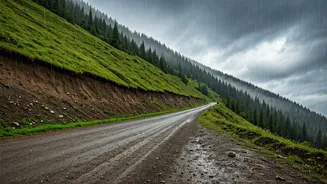
Imagine you’re navigating the familiar hairpin bends on your way to the office. The air is crisp, the sun is just beginning to warm the highest peaks. You round a corner, and the world as you know it disappears. Below you, where a deep valley and scattered
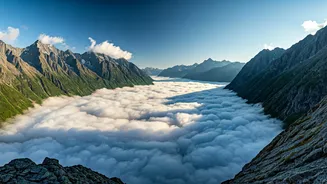
villages should be, there is only a solid, brilliant white blanket of clouds. It’s not a light mist, but a dense, sharply defined 'wall' of vapour, stretching from one side of the valley to the other, like a massive river of milk frozen in time. This was the reality for numerous commuters and residents in parts of Himachal Pradesh and Uttarakhand recently, who stopped their vehicles not for traffic, but for awe. Phones came out, and social media was instantly flooded with mesmerising videos of this seemingly solid sea of clouds, a spectacle that turned a mundane journey into a moment of pure magic.
The Science of a Cloud Sea
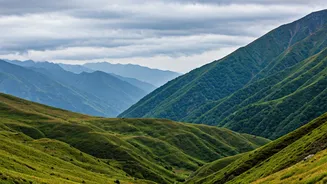
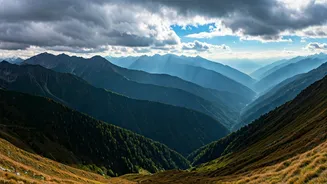
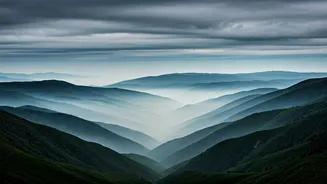
What these commuters witnessed is a stunning meteorological phenomenon, often caused by what is known as a temperature inversion. Typically, the air gets colder the higher you go. But under specific conditions, often during calm, clear nights in mountainous regions, this pattern flips. A layer of cold, dense air settles deep in the valleys, trapped by a layer of warmer, lighter air above it. As moisture in this trapped cold air condenses, it forms a vast, flat-topped layer of stratus clouds or fog. From above, looking down from a higher elevation, the top of this cloud layer appears as a perfectly flat, uniform surface, creating the illusion of an ocean or a wall. The surrounding mountains become islands and coastlines in this ethereal sea, a landscape that feels more like a fantasy epic than a real-world location.
A Himalayan Speciality
While breathtaking, this sight isn't entirely uncommon in the Himalayas. Hill stations like Shimla, Mussoorie, and Nainital are famous for offering vantage points to witness this effect, especially during the post-monsoon and winter months. Locals and seasoned travellers know the signs: a chilly, still night followed by a clear, sunny morning is the perfect recipe. Locations like Jakhoo Hill in Shimla or Lal Tibba in Mussoorie are pilgrimage sites for photographers hoping to capture the 'Winterline', a similar phenomenon where a distinct false horizon of cloud forms at dusk. What made recent sightings so special was their sheer scale and the number of everyday people who were able to capture and share the experience live, thanks to the ubiquity of smartphones. It transformed a recurring natural event into a shared, viral moment of collective wonder.
Nature's Viral Moment
In an age of curated perfection, there's something deeply authentic about these videos. They are often shaky, filmed through a car windscreen, with the unfiltered gasps of the person behind the camera audible. This rawness is part of the appeal. It’s not a professional documentary; it’s a genuine, spontaneous reaction to overwhelming beauty. Social media platforms like Instagram and Twitter became a digital gallery, showcasing dozens of different angles of the same phenomenon. Each post, whether from a local resident, a truck driver, or a tourist, added a piece to a larger mosaic, telling the story of a morning when nature decided to put on a show. It’s a powerful reminder that even in a hyper-connected world, the most compelling content often requires no filter, no script—just being in the right place at the right time.