



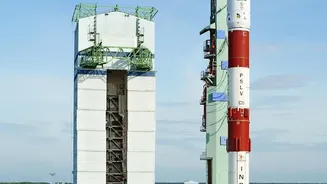
The Challenge: Rockets are Expensive
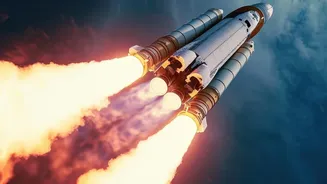
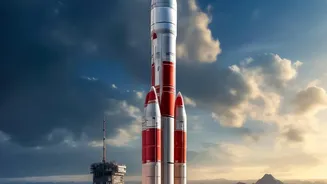
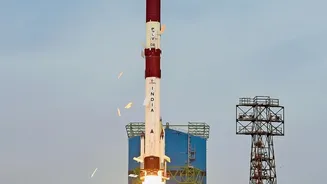
Traditionally, sending anything to space has been a costly affair. A huge part of the expense comes from the launch vehicle—the rocket—itself. For decades, these powerful machines were single-use only. Imagine buying a brand-new car, driving it once to your
destination, and then throwing it away. That's essentially been the model for space launches. The rocket's intricate stages, powerful engines, and complex electronics, which can make up around 80% of the total launch cost, are discarded after a single mission. This 'expendable' model has been the biggest barrier to making space access more affordable and frequent.
Enter the Reusable Launch Vehicle (RLV)
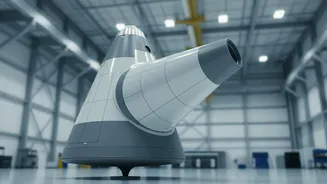
The solution to the cost problem is reusability. This is the core idea behind ISRO's Reusable Launch Vehicle (RLV) program. The goal is to create a launch vehicle that can be used multiple times, much like an airplane. By recovering and refurbishing the most expensive parts of the rocket, ISRO aims to dramatically slash the cost of launching satellites. ISRO is developing a winged vehicle, named 'Pushpak', which is designed to take off vertically like a rocket but land horizontally on a runway like a plane. This approach, known as a Two-Stage-to-Orbit (TSTO) system, is India's unique path towards sustainable space access.
The Critical Landing Test Explained
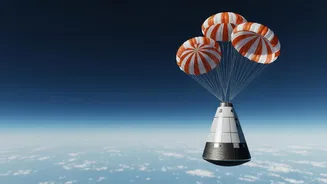
This is where the autonomous wing landing re-entry tests, or Landing Experiment (LEX), come in. These tests are designed to perfect the most challenging part of the RLV's mission: returning to Earth and landing safely on a specific runway without a pilot. During the most recent tests, the winged Pushpak vehicle was carried to an altitude of 4.5 km by a helicopter and released. From there, it had to navigate its own way back to the runway, manage its speed—approaching at 350 kmph—and execute a perfect autonomous landing. By successfully demonstrating this capability, ISRO has proven it can master the complex guidance, navigation, and control systems needed for a vehicle to return from space and land precisely.
The Direct Link to Lower Costs
Every successful autonomous landing is a direct step towards cost reduction. When a launch vehicle can land itself reliably, it means the hardware can be recovered. This saves the immense cost of building a new rocket from scratch for every launch. Former ISRO Chairman K. Sivan estimated that reusability could reduce launch costs by as much as 80%. This isn't just a small saving; it's a game-changer. Lower costs will make ISRO and India incredibly competitive in the global satellite launch market, which is projected to grow significantly. It opens the door for more frequent launches, supporting satellite constellations for communication, navigation, and Earth observation.
A Stepping Stone to Bigger Ambitions
The RLV technology is a crucial part of ISRO's long-term vision. The ongoing demonstrations are part of a series of experiments. The program started with the Hypersonic Flight Experiment (HEX) to test the vehicle's behaviour at very high speeds and has now moved to the Landing Experiment (LEX). The next logical step is the Orbital Re-entry Experiment (OREX), where the vehicle will be launched into orbit and will then re-enter the atmosphere to land on a runway. Mastering this technology is not just about launching satellites cheaply; it's foundational for future ambitions like the Bharatiya Antariksh Station and even crewed missions to the Moon.