

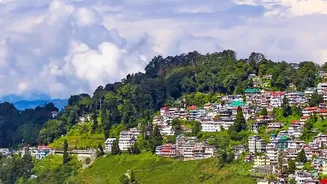

Understanding Sikkim's Permit System
Sikkim's proximity to international borders means access to certain areas is regulated for security and environmental reasons. For Indian travellers, most of Sikkim, including towns like Gangtok, Pelling, and Namchi, requires no special permit. However,
for high-altitude destinations like Tsomgo Lake, Nathu La Pass, and North Sikkim, a Protected Area Permit (PAP) is mandatory. These permits are generally arranged by registered local tour operators or travel agencies, not by individual tourists. Foreign nationals require a Restricted Area Permit (RAP), also known as an Inner Line Permit (ILP), just to enter the state. For visits to protected areas, they need an additional PAP and must typically travel in a group of two or more, arranged through a local agency.
The Essential Six-Day Sikkim Itinerary
A six-day trip is a fantastic introduction to Sikkim's beauty. This itinerary focuses on East and South Sikkim, balancing iconic sights with manageable travel times. A trip to North Sikkim's Gurudongmar Lake or Yumthang Valley generally requires more days due to the long and arduous road journeys.
Day 1: Arrival and Acclimatisation in Gangtok
Your journey begins with your arrival at Bagdogra Airport (IXB) or New Jalpaiguri (NJP) railway station. From there, a scenic 4-5 hour drive along the Teesta River will take you to Gangtok, Sikkim's capital. After checking into your hotel, spend the evening acclimatising. A leisurely stroll along the vibrant, vehicle-free MG Marg is a perfect way to soak in the local atmosphere. Use this day to submit the necessary documents to your tour operator for the following days' permits.
Day 2: Gangtok's Local Charms
Explore the sights and sounds of Gangtok. Start your day with a visit to the Rumtek Monastery (if time permits) or closer sites like the Dro-dul Chorten and the Enchey Monastery. Discover the region's rich culture at the Namgyal Institute of Tibetology and the Directorate of Handicrafts & Handlooms. For a breathtaking view of the city and surrounding hills, take a ride on the Gangtok Ropeway. This day of relatively low-altitude activity further helps with acclimatisation before your high-altitude excursion.
Day 3: Journey to Tsomgo Lake and Nathu La
This is the day for which you've secured your permits. Embark on a day trip to the stunningly beautiful, glacier-fed Tsomgo Lake, situated at an altitude of about 12,400 feet. Indian citizens with the appropriate permit can continue the journey to Baba Mandir and the historic Nathu La Pass on the India-China border. Remember, Nathu La is not open to foreign nationals and is typically closed to all on Mondays and Tuesdays. The entire trip is a full-day excursion from Gangtok.
Day 4: Travel to Pelling via Ravangla
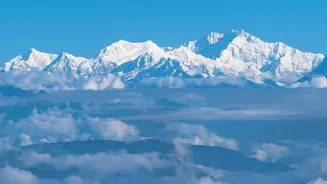
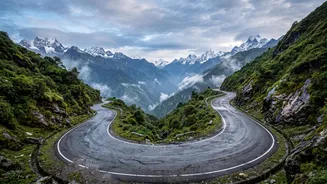
Check out from your hotel in Gangtok and begin the scenic drive to Pelling in West Sikkim. The journey is an experience in itself, with winding roads and changing landscapes. En route, stop at Ravangla to visit the serene Buddha Park, home to a majestic 130-foot statue of the Buddha. This stop breaks up the journey and offers a peaceful interlude before you continue to Pelling, a town famous for its spectacular views of Mount Kanchenjunga.
Day 5: Exploring Pelling's Wonders
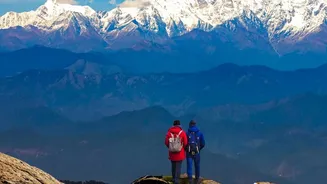
Wake up to potentially glorious views of the Kanchenjunga range. Today is dedicated to exploring Pelling's highlights. Visit the ancient Pemayangtse Monastery, one of the oldest in Sikkim. Walk among the Rabdentse Ruins, the former capital of the kingdom. Experience the thrill of the Pelling Skywalk, a glass bridge offering dizzying views, and visit the sacred Khecheopalri Lake, believed to fulfill wishes.
Day 6: Departure
After a final Sikkimese breakfast, begin your journey back to Bagdogra Airport (IXB) or NJP station for your departure. The drive from Pelling takes approximately 5-6 hours, so plan your departure time accordingly, leaving a buffer for any potential road delays. You'll carry with you memories of pristine lakes, towering peaks, and the serene spirituality of the Himalayas.
Permit Requirements in Detail
For Indian Citizens, a Protected Area Permit (PAP) is needed for Tsomgo Lake, Nathu La, North Sikkim, and Zuluk. You cannot apply for this yourself; it must be done through a Sikkim-registered travel agent. You'll need original photo ID like a Voter ID or Driving Licence (Aadhaar is often not accepted for permits), photocopies, and passport-size photos. For Foreign Nationals, a Restricted Area Permit (RAP/ILP) is required for entry into Sikkim itself. As of 2026, this process is largely online via the e-FRRO portal and paper permits at border checkposts have been discontinued. To visit places like Tsomgo Lake or North Sikkim (Lachung/Lachen), you need an additional PAP, must travel in a group of at least two, and use a registered local operator. Foreigners are not permitted to visit Nathu La, Baba Mandir, Gurudongmar Lake, or Zuluk.