



A Glimpse of Water Across the Stars
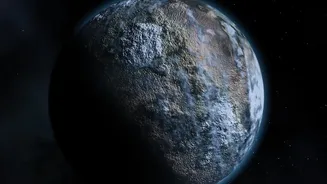
In a series of stunning observations, the James Webb Space Telescope has provided some of the strongest evidence to date for atmospheres on rocky planets outside our solar system, with tantalising hints of water vapour. One of the most significant finds
comes not from a fully formed planet, but from the inner region of a planet-forming disk around a young star called PDS 70, located 370 light-years away. Webb detected water vapour in the very zone where rocky, Earth-like planets are thought to be assembling. This implies that planets like ours could have water available from the very beginning of their formation. In another major finding, astronomers found unambiguous signs of water vapour and clouds around a rocky exoplanet just 48 light-years from Earth. While not every observation has been conclusive — with some signals potentially originating from the host stars themselves — these discoveries are transforming our understanding of planetary systems.
How Webb Reads an Alien Atmosphere
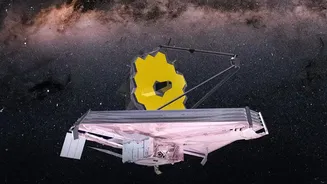
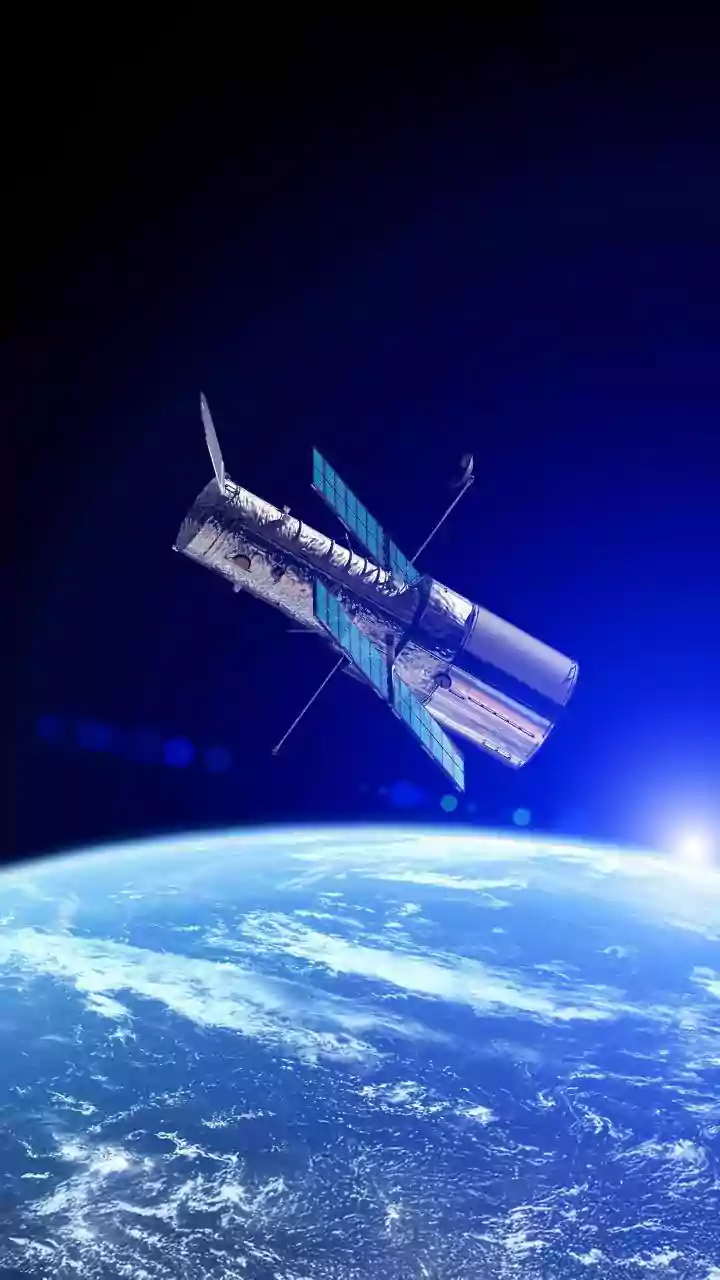
So, how does the telescope 'see' water hundreds of light-years away? It uses a technique called transmission spectroscopy. When an exoplanet passes in front of its host star from our point of view, a tiny fraction of the starlight filters through the planet's atmosphere, if it has one. The James Webb Space Telescope's powerful instruments, like its Near-Infrared Spectrograph (NIRSpec), can capture this filtered light and break it down into a spectrum, which is like a rainbow of infrared colours. Different molecules in the atmosphere absorb specific colours of light, leaving behind dark lines or 'absorption peaks' in the spectrum. By analysing this pattern of missing light, scientists can identify the chemical composition of the atmosphere, including the tell-tale signature of water (H2O).
Why Rocky Worlds Matter
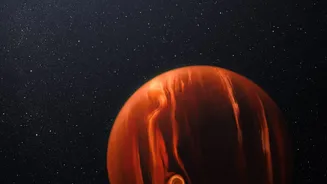
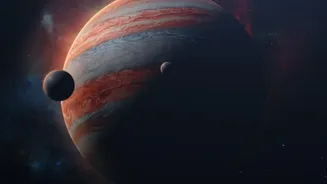
Scientists have detected water vapour on gas giant exoplanets before, but finding it associated with rocky worlds is a completely different ballgame. Gas giants like Jupiter and Saturn are fundamentally different from Earth. Rocky planets, especially those in the 'habitable zone' where temperatures could allow for liquid water, are the prime candidates in the search for life as we know it. The challenge is that these planets are much smaller, and their atmospheres are incredibly thin and difficult to detect. Many of the known rocky worlds orbit red dwarf stars, which are prone to violent flares that could strip away any atmosphere. Discovering that a rocky planet, even a scorching hot one like GJ 486 b, could potentially maintain an atmosphere with water vapour is a massive breakthrough. It suggests that atmospheres on small, rocky worlds may be more resilient than previously thought.
The Caveats and the Next Steps
While the excitement is palpable, scientists are proceeding with caution. In some cases, like with the planet GJ 486 b, it's difficult to be certain whether the water vapour signature is from the planet's atmosphere or from cool, watery spots on the surface of the star itself. Furthermore, some highly anticipated targets have yielded disappointing results. The famous TRAPPIST-1 system, which has multiple Earth-sized rocky planets, has so far shown no evidence of thick, Earth-like atmospheres around the worlds studied by Webb. These results don't completely rule out thinner atmospheres but temper expectations. The next steps involve using Webb's other advanced instruments to conduct follow-up observations, hoping to disentangle the signals from the planet and its star and search for other key molecules like carbon dioxide and methane.