




An Enemy Unlike Any Other
Moon dust, or regolith, is fundamentally different from the dust we encounter on Earth. For billions of years, the Moon’s surface has been pulverized by micrometeorite impacts without the smoothing effects of wind, water, or organic processes. The result
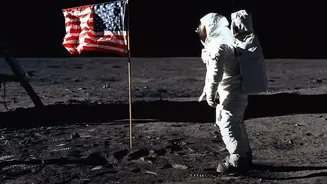
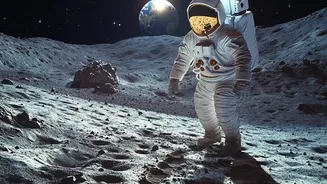
is a blanket of tiny, jagged particles that are as sharp as shards of glass. This material is also electrostatically charged by solar radiation, causing it to cling stubbornly to any surface it touches. Apollo astronauts discovered this firsthand, describing the dust's smell as being like spent gunpowder and finding it nearly impossible to remove from their spacesuits.
A Threat to Health and Hardware
The dangers of lunar regolith are twofold, affecting both human health and critical equipment. During the Apollo missions, astronauts who inhaled the fine powder that made its way into their lunar module experienced symptoms like sneezing, congestion, and sore throats—a condition informally dubbed “lunar hay fever.” Scientists are concerned that long-term exposure could lead to more serious respiratory issues, similar to silicosis on Earth. Beyond the health risks, the dust’s abrasive nature is a nightmare for technology. It can wear down the fabric of spacesuits, scratch helmet visors, and jam mechanisms. It also clogs seals, leading to potential depressurization risks, and can coat solar panels, drastically reducing their ability to generate power—a critical issue for a sustainable lunar outpost. The Apollo missions were short, but for the long-duration stays planned for Artemis, dust mitigation is not just a convenience; it's a mission-critical necessity.
NASA's High-Tech Countermeasures
To combat this persistent threat, NASA is developing a suite of innovative technologies. The most promising of these is the Electrodynamic Dust Shield (EDS). This system uses a series of transparent electrodes embedded in surfaces like solar panels, camera lenses, and even spacesuit fabrics. By creating a shifting electric field, the EDS can actively repel and clear away accumulated dust with the flick of a switch, removing up to 99 percent of particles in tests. This technology has already been successfully demonstrated on the Moon aboard a commercial lander, marking a significant milestone.
A Multi-Faceted Defense
The EDS is not the only tool in NASA's arsenal. Researchers are also exploring passive solutions, such as developing advanced nanocoatings that prevent dust from adhering to surfaces in the first place. Other concepts include specialized brushes, vacuums, and even a device called the Lunar SCRUB, which uses an electron beam to dislodge stubborn particles. For larger areas, such as landing pads and habitats, NASA is investigating UV-cured resins that could be sprayed onto the surface to essentially pave over the dust, preventing it from being kicked up by rocket exhaust or rover wheels. These varied approaches create an integrated strategy, with different solutions for different needs.
Unlocking a Sustainable Lunar Future
Successfully solving the dust problem is a key that unlocks the full potential of the Artemis program and the future of a lunar economy. With reliable dust mitigation, solar panels can operate at peak efficiency, extending mission durations through the long lunar night. Spacesuits and scientific instruments will have longer lifespans, reducing the need for costly replacements. Most importantly, astronauts will be safer, both inside their habitats and out on the lunar surface. These experiments are about more than just cleaning; they are about making long-term habitation on the Moon feasible. By neutralizing this tiny but formidable adversary, NASA is paving the way for a permanent human foothold on another world, setting the stage for even more ambitious journeys to Mars and beyond.