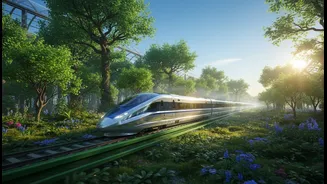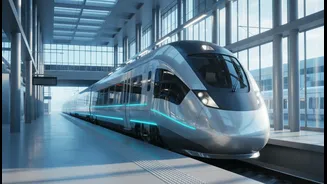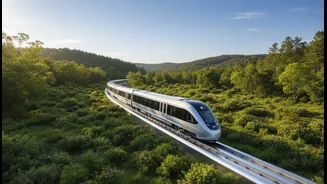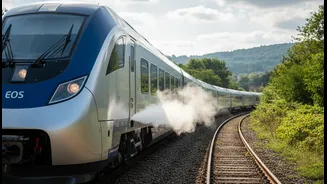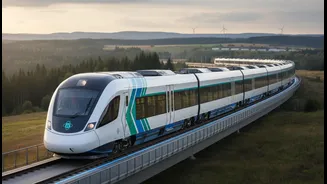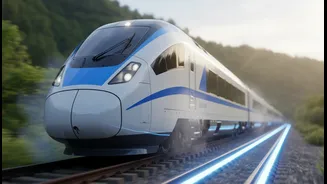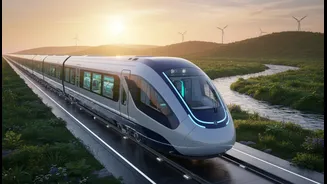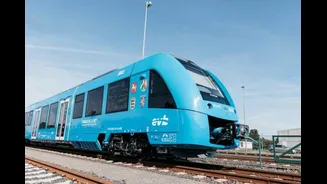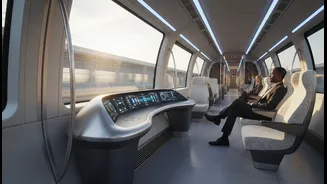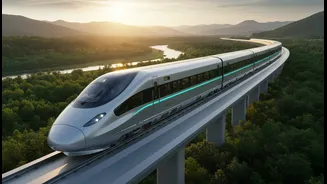






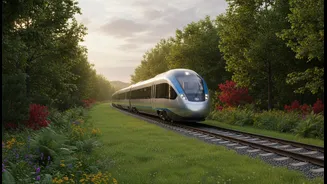
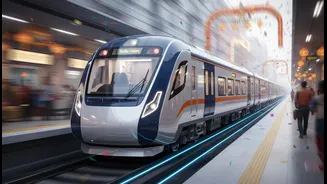
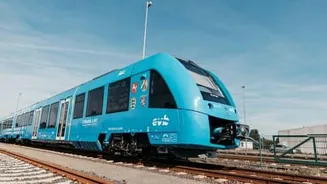


The Green Flag-Off
The much-anticipated moment for India's green transport ambitions is just around the corner. Prime Minister Narendra Modi is expected to flag off the country's first-ever hydrogen-powered train from Jind, Haryana, on July 17. Following successful and
extensive trials, this inaugural run will kickstart commercial operations on the 90-kilometer Jind-Sonipat route. The train is scheduled to make two round trips daily, marking a significant milestone in Indian Railways' mission to adopt cleaner energy solutions. This launch places India in a select group of nations, including Germany and China, that are actively exploring hydrogen technology for their rail networks.
How Does a Hydrogen Train Work?
So, what makes this train so special? Instead of a diesel engine, it's powered by hydrogen fuel cells. Think of a fuel cell as a mini power plant. It takes hydrogen stored in tanks on the train and combines it with oxygen from the air. This electrochemical reaction generates electricity to power the motors that turn the wheels. The best part? The only byproduct is pure water vapour, meaning no harmful pollutants like carbon dioxide, nitrogen oxides, or particulate matter are released into the atmosphere. It's an essentially silent, emission-free ride, a stark contrast to the noisy, smoky diesel engines it aims to replace.
A 'Make in India' Marvel
This isn't just an imported piece of technology; it's a testament to homegrown innovation. The train, a 10-coach marvel, is a retrofitted Diesel Electric Multiple Unit (DEMU) rake, developed indigenously. This 'Make in India' initiative showcases the country's growing capabilities in advanced green technology. The propulsion system features a hybrid model that combines the hydrogen fuel cells with lithium-ion batteries to provide consistent power. Extensive safety features, including hydrogen leakage detectors and advanced control systems, have been integrated to ensure passenger safety. During trials, the train reached speeds of 120 km/h, though it will operate commercially at a maximum speed of 75 km/h on the Jind-Sonipat line.
Hydrogen for Heritage and a Greener Future
The launch on the Jind-Sonipat section is just the beginning. This pilot project is a cornerstone of a much larger vision called 'Hydrogen for Heritage'. This initiative, announced in the 2023 Union Budget, aims to introduce 35 hydrogen trains on some of India’s most scenic and ecologically sensitive heritage routes. Imagine a silent, zero-emission train winding its way through the hills on the Kalka-Shimla or Darjeeling Himalayan Railway lines. The goal is to preserve the charm and history of these iconic 'toy trains' while making them environmentally sustainable. This strategy avoids the high costs and ecological disruption of electrifying these difficult terrains.
The Road Ahead: Challenges and Opportunities
The path to a hydrogen-powered rail network is not without its challenges. The initial cost is significant, with each train estimated to cost around ₹80 crore and the necessary ground infrastructure adding to the investment. The production and transportation of green hydrogen—hydrogen produced using renewable energy—also needs to be scaled up to be economically viable. However, officials are confident that as more hydrogen trains are introduced, the operational costs will decrease over time. The long-term benefits are compelling: reduced dependence on diesel imports, significant lifetime cost savings compared to diesel trains, cleaner air, and a major boost to India's goal of achieving net-zero carbon emissions by 2070.