






Ancient Roots in Spirit and Union
Yoga's story begins in India over 5,000 years ago. The earliest mentions appear in ancient sacred texts like the Rig Veda. Here, yoga was not about physical postures but was a comprehensive spiritual practice. The Sanskrit word 'Yog' literally means 'to
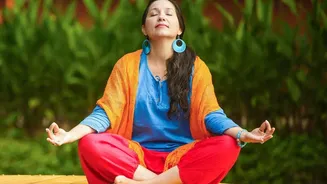
unite'. The ultimate goal was not a flexible body, but the union of individual consciousness with universal consciousness—a state of enlightenment or self-realization. This early yoga was a path of meditation, ethical principles, and breath control, passed down orally from teacher to student as a way to transcend worldly distractions and achieve inner peace.
Patanjali's Blueprint for a Yogic Life
Around the 2nd century BCE, a sage named Patanjali systematized yoga in his seminal work, the Yoga Sutras. This text provided a foundational framework known as the 'Eight Limbs of Yoga'. These limbs serve as a guide to living a purposeful and meaningful life. They include ethical standards (Yamas), self-discipline (Niyamas), breath regulation (Pranayama), sense withdrawal (Pratyahara), concentration (Dharana), meditation (Dhyana), and finally, enlightenment (Samadhi). Notably, physical postures, or 'Asana', were just one of the eight limbs. Its original purpose was primarily to create a steady and comfortable posture for long periods of meditation, not as a form of exercise.
The Journey West: A Philosophical Introduction
Yoga's journey to the Western world began in the late 19th century, but it wasn't the asana-focused practice we know today. In 1893, Swami Vivekananda made a powerful impression at the Parliament of Religions in Chicago, introducing Vedanta philosophy and the intellectual concepts of yoga. He spoke of yoga as a universal path to spiritual realization, largely avoiding the physical postures, which were at the time associated with street performers in India. This introduction was purely philosophical, attracting intellectuals and spiritual seekers who were drawn to its message of universal tolerance and inner connection.
The Physical Shift and Global Popularization
The 20th century marked a significant shift toward the physical practice of yoga. Pioneers like B.K.S. Iyengar and K. Pattabhi Jois, both students of the influential T. Krishnamacharya, developed dynamic and physically demanding styles of yoga. Iyengar, in particular, played a monumental role in popularizing yoga globally. He emphasized precise physical alignment and famously introduced the use of props like blocks and straps, making asanas accessible to people of all ages and abilities. His 1966 book 'Light on Yoga' became a bible for Western practitioners, and as the counterculture of the 1960s embraced Eastern spirituality, yoga's popularity soared.
From Niche Practice to a Global Industry
In recent decades, yoga has completed its transformation into a mainstream lifestyle movement and a massive commercial industry. The global yoga market, encompassing classes, clothing, teacher trainings, and wellness tourism, is now worth billions. Yoga studios have become as common as gyms, and social media influencers showcase aspirational yoga selfies. This commercialization has made the practice more accessible than ever, with an estimated 300 million practitioners worldwide. However, it has also sparked debate about the dilution of its spiritual essence, with critics noting that the modern emphasis on yoga as a physical workout often disconnects it from its deep philosophical roots.